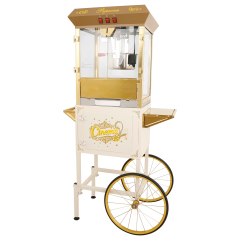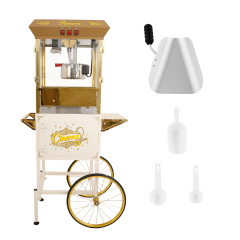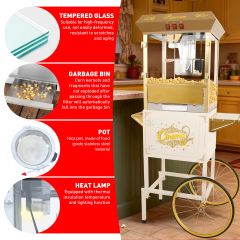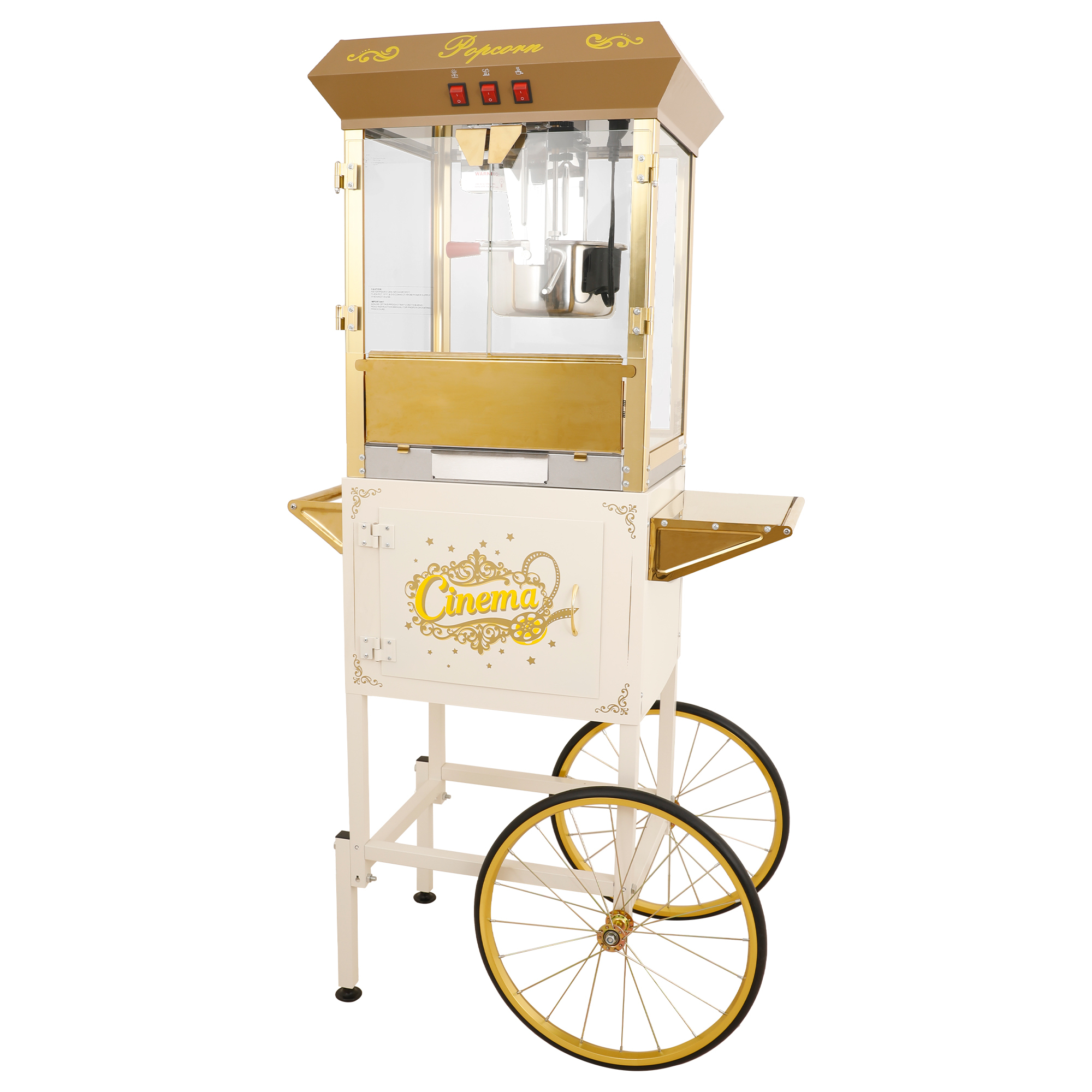
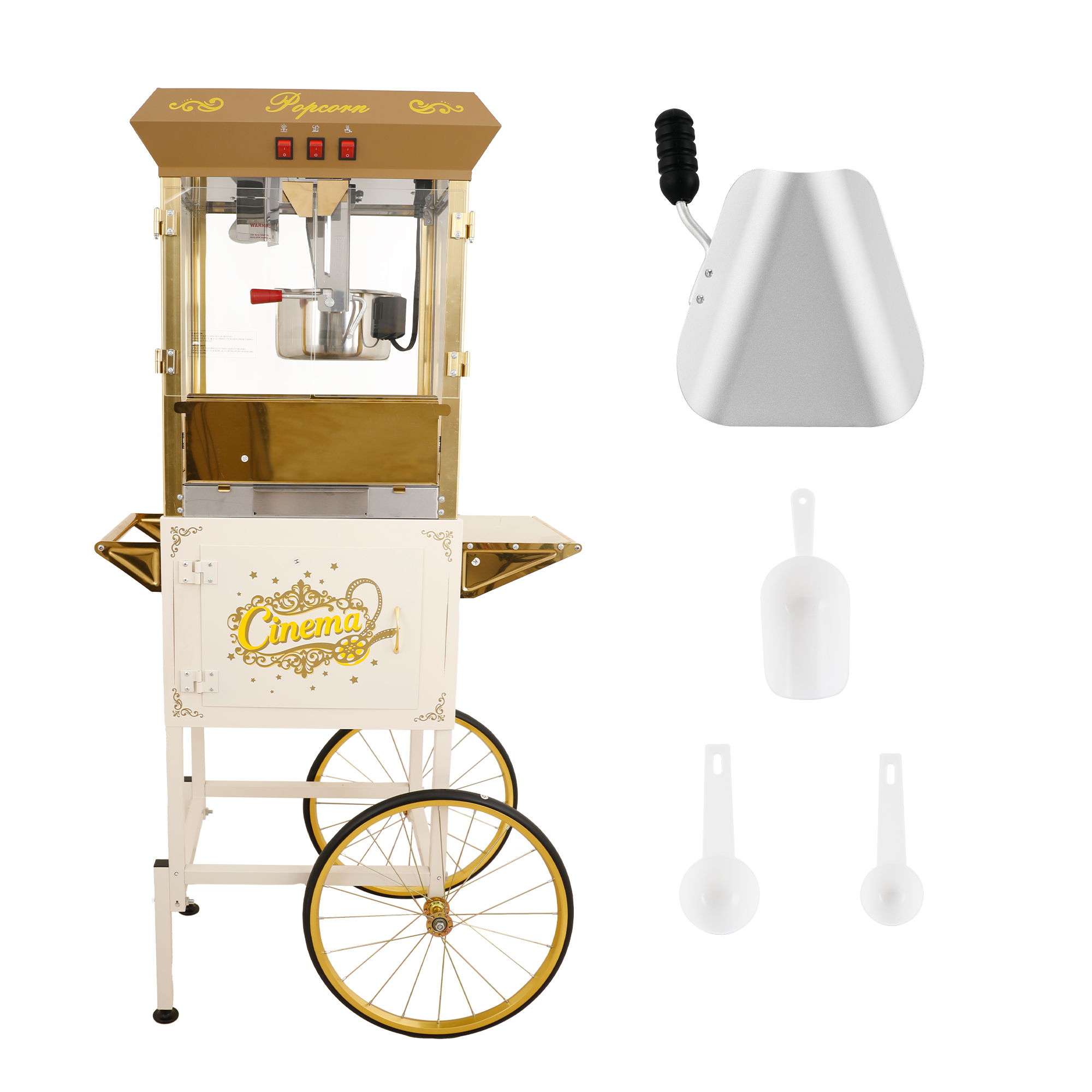
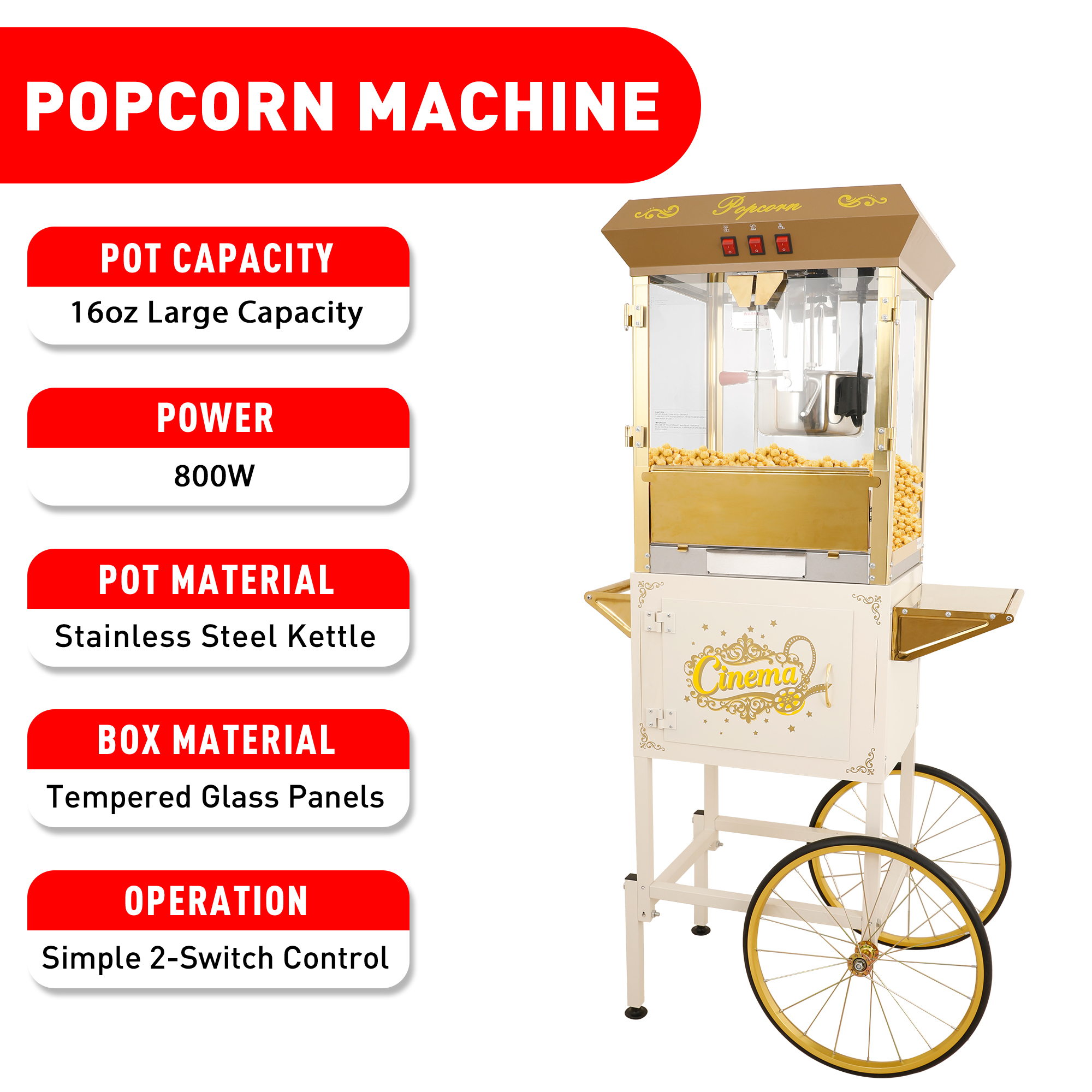
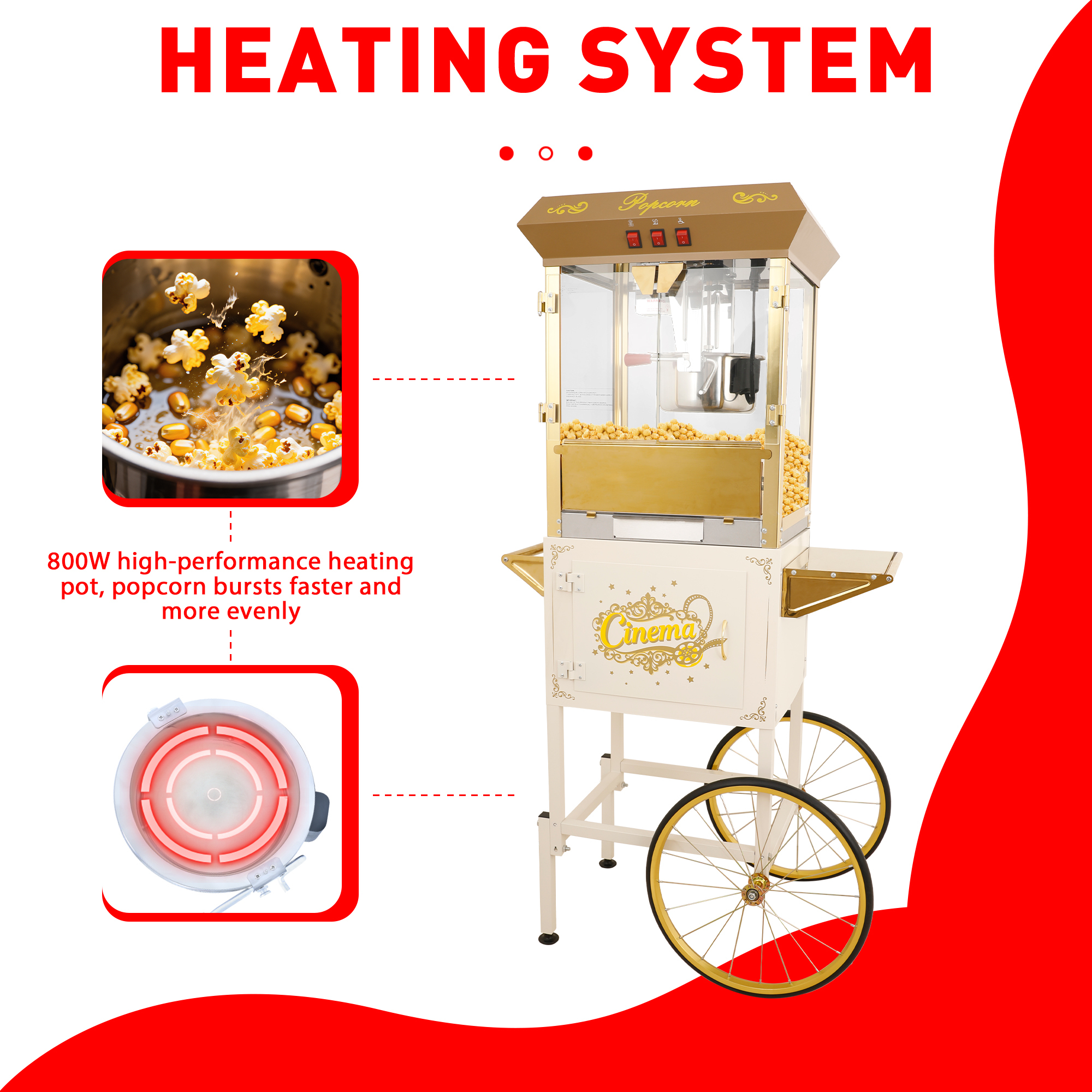
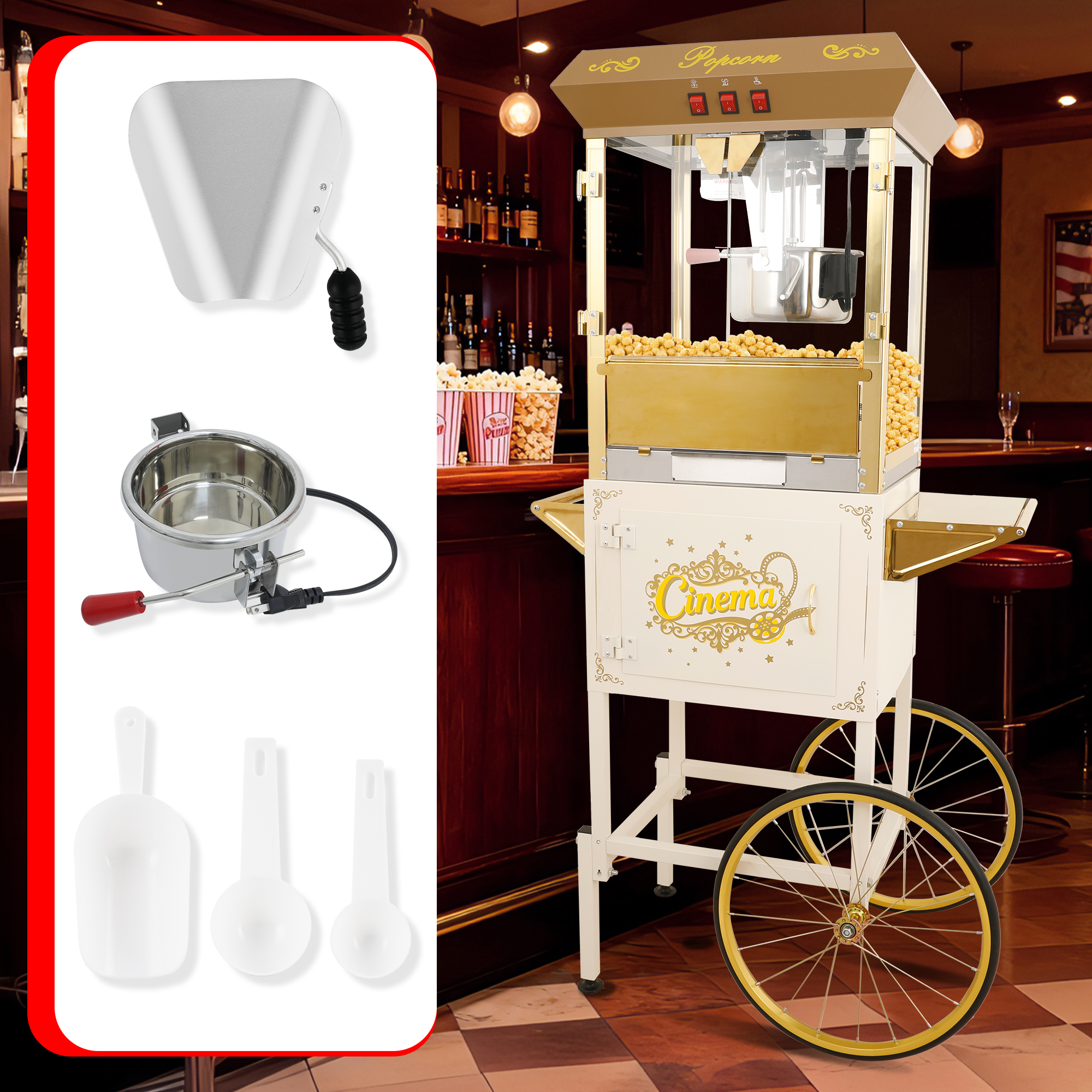
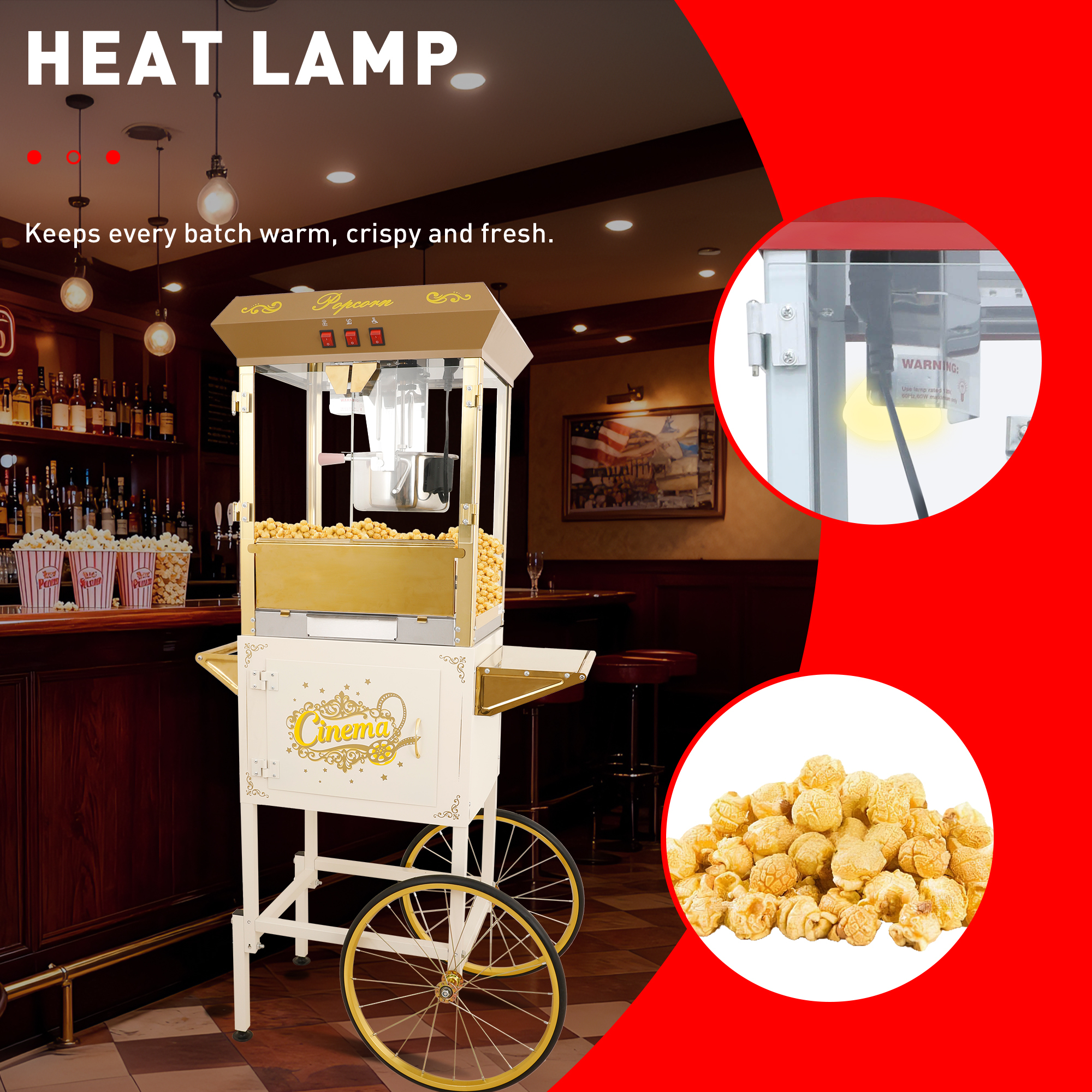
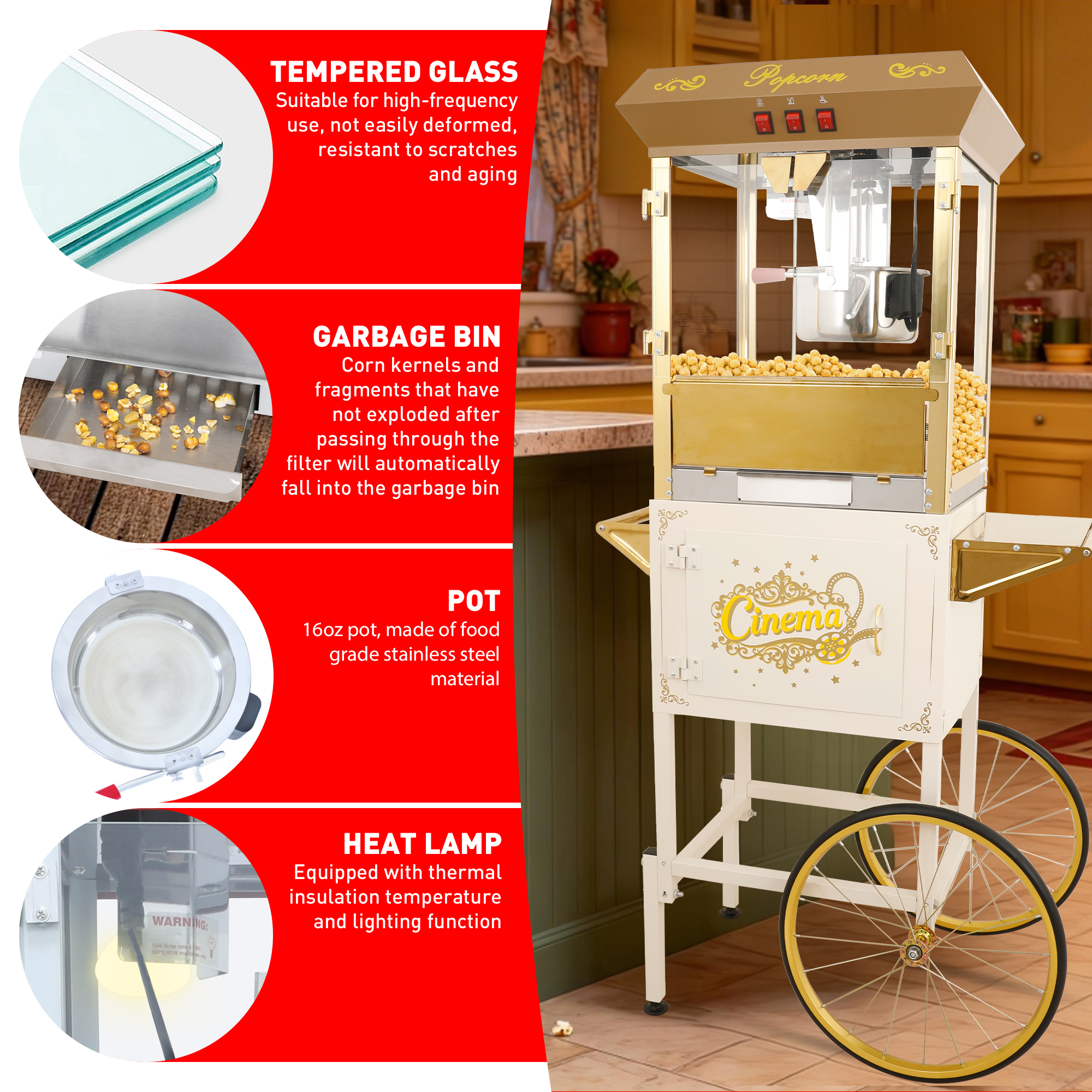
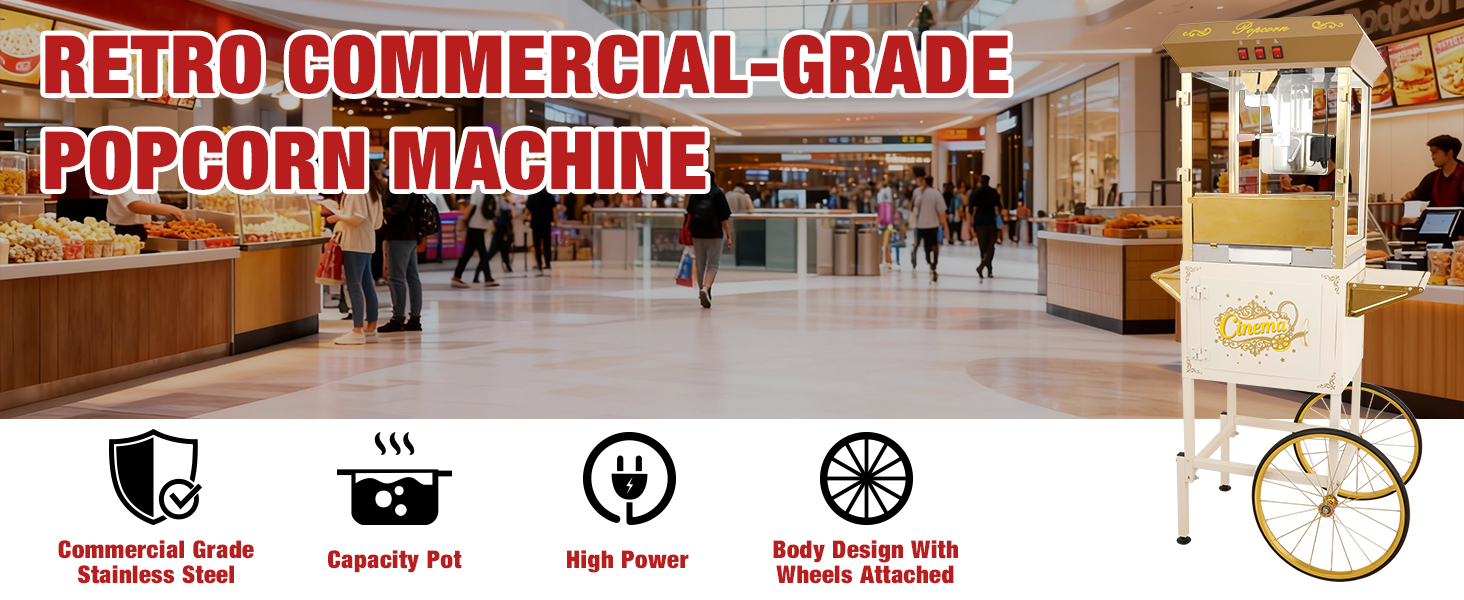
The Model 1003 combines retro design with commercial-grade functionality, providing an efficient popcorn machine manufacturer solution ideal for cinemas and events. This trolley-style popcorn machine for home and commercial use ensures reliable batch production.
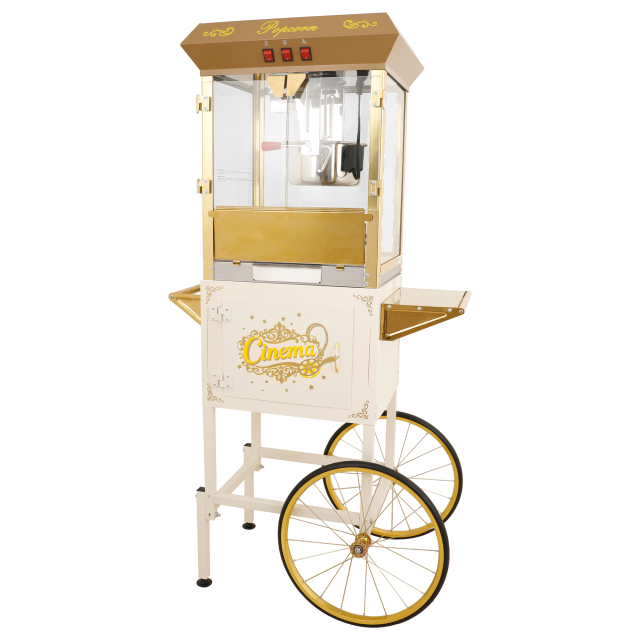
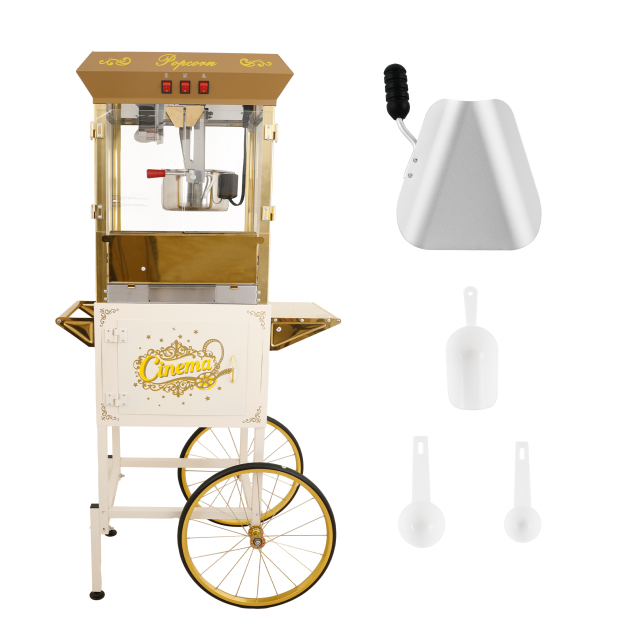
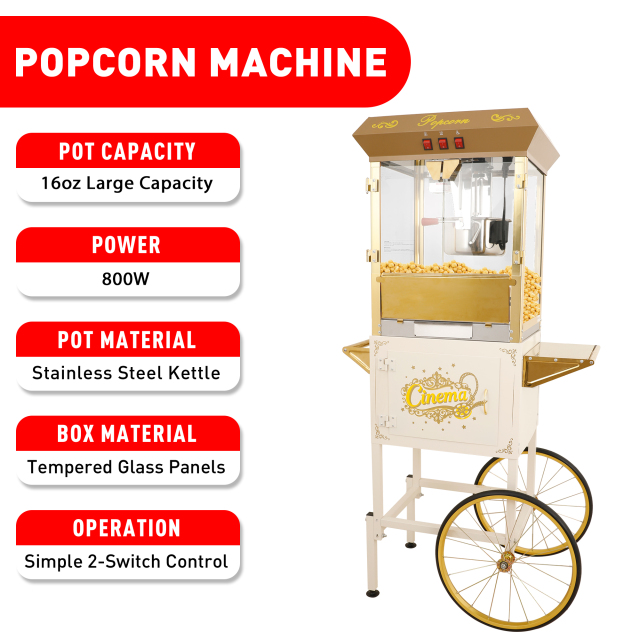
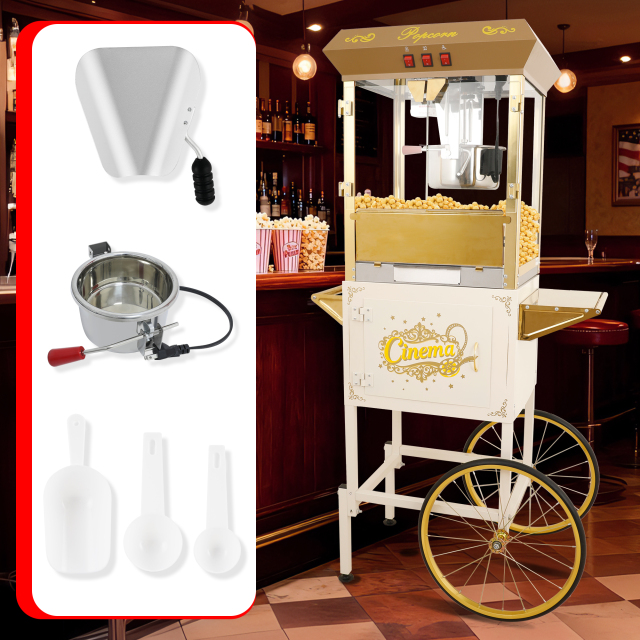
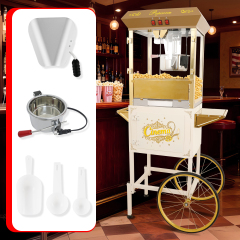
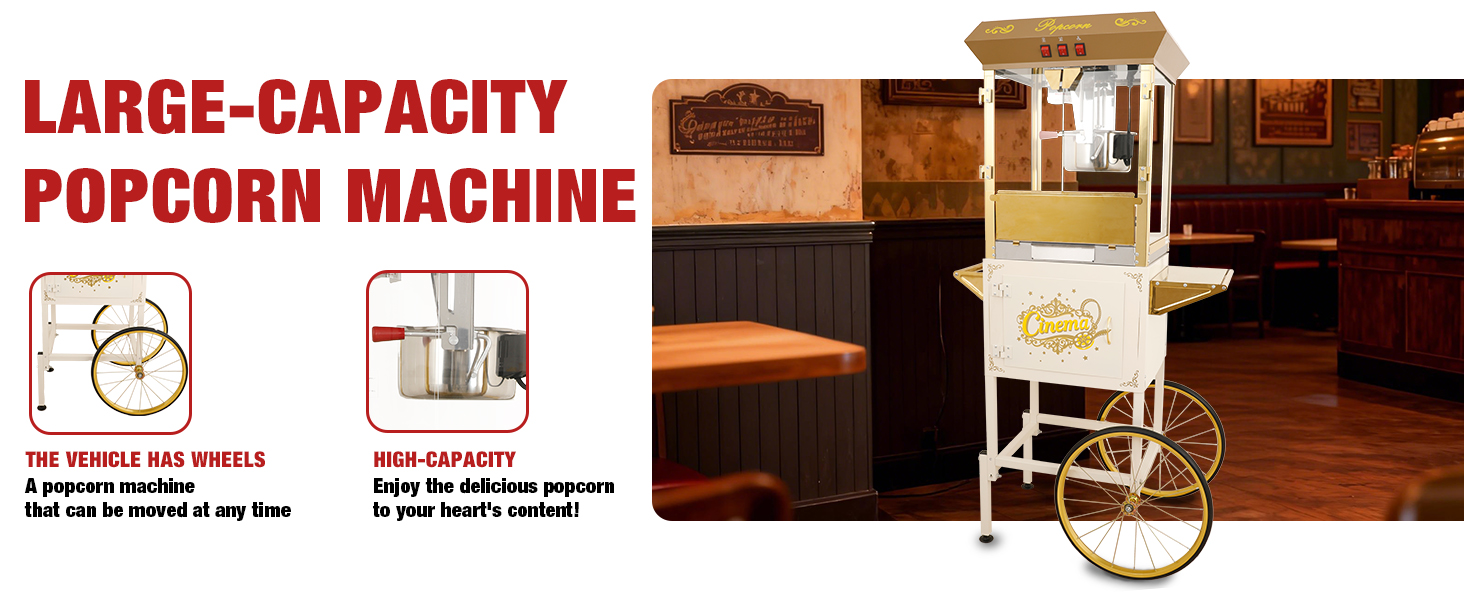
This cart is the mobile member of our dual use popcorn machine range: one stainless pot inside a clear chamber, set into a cream cabinet with gold mouldings and Cinema lettering across the top. It was built to be wheeled to where the people are, not parked beside a single outlet for its whole working life.
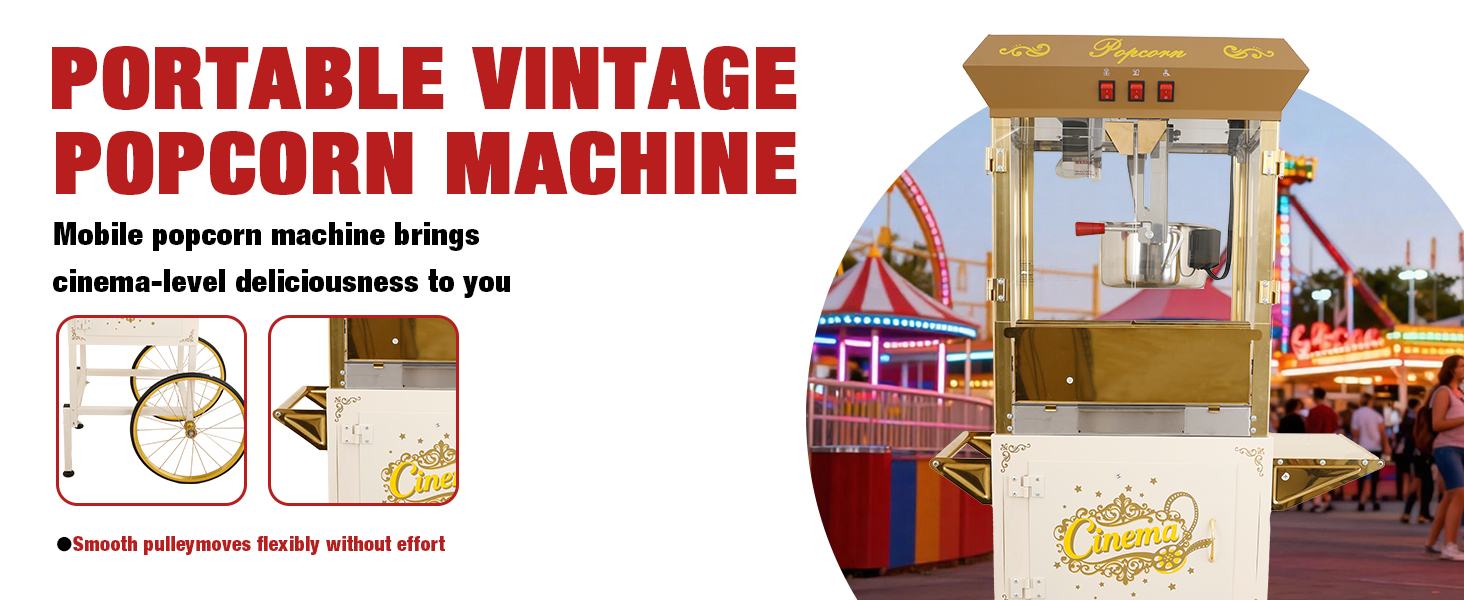
A countertop popcorn maker ties you to one stretch of bench. This one rolls into a cinema foyer before the evening screening, stands at the end of a bar, moves into a hall for a school fair, and goes back into the store room afterwards. The cabinet has real depth front to back, so from a few paces away it reads as concessions equipment rather than a kitchen appliance, and that matters when the machine is part of the room rather than hidden behind it.
Service on this commercial popcorn cart runs one pot at a time. Fill the pot, run the cycle, and the next pot can be loaded while the first batch is being handed out — the difference between keeping up with an interval and chasing it. The rhythm is predictable enough that staff can plan a serving window around it.
The same cart has a second life at home. Buyers looking for a popcorn machine for home use, but short of counter space or unwilling to give up a worktop, tend to put it in a finished basement, a converted garage or a home theatre room. Switched off, it still looks like it belongs in the corner.
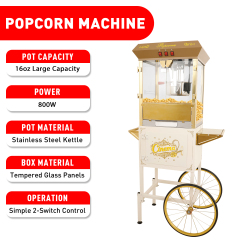
| Specification | Detail |
|---|---|
| Model | XH-P1003 |
| Machine type | 16 oz popcorn machine, wheeled dual use cart |
| Kettle capacity | 16 oz |
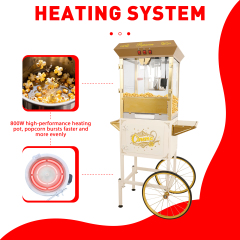
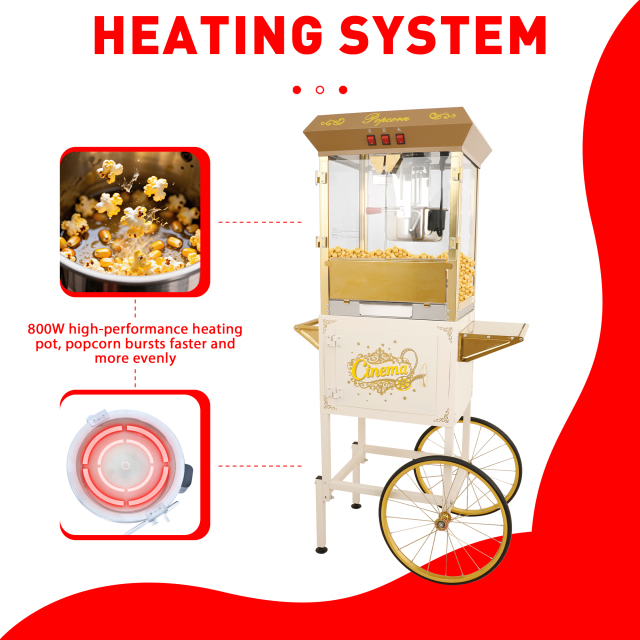
| Heating | Heating tube, 850 W |
| Power supply | AC 120 V 60 Hz |
| Batch output | About 500 g of popped corn per pot |
| Cycle time | About 7 minutes per pot |
| Cabinet size | 780 × 520 × 1495 mm |
| Weight | 25.42 kg |
| Body material | Food-grade stainless steel |
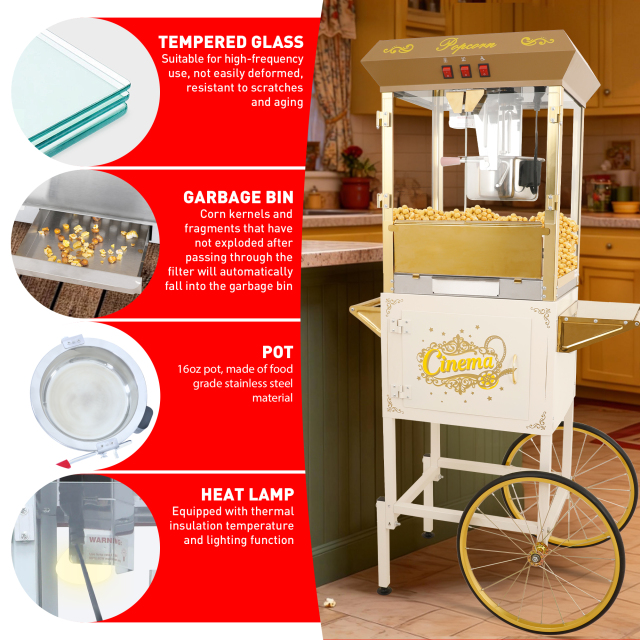
| Chamber panels | Tempered glass |
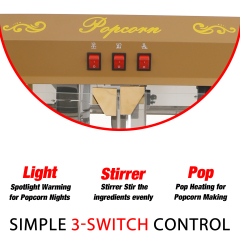
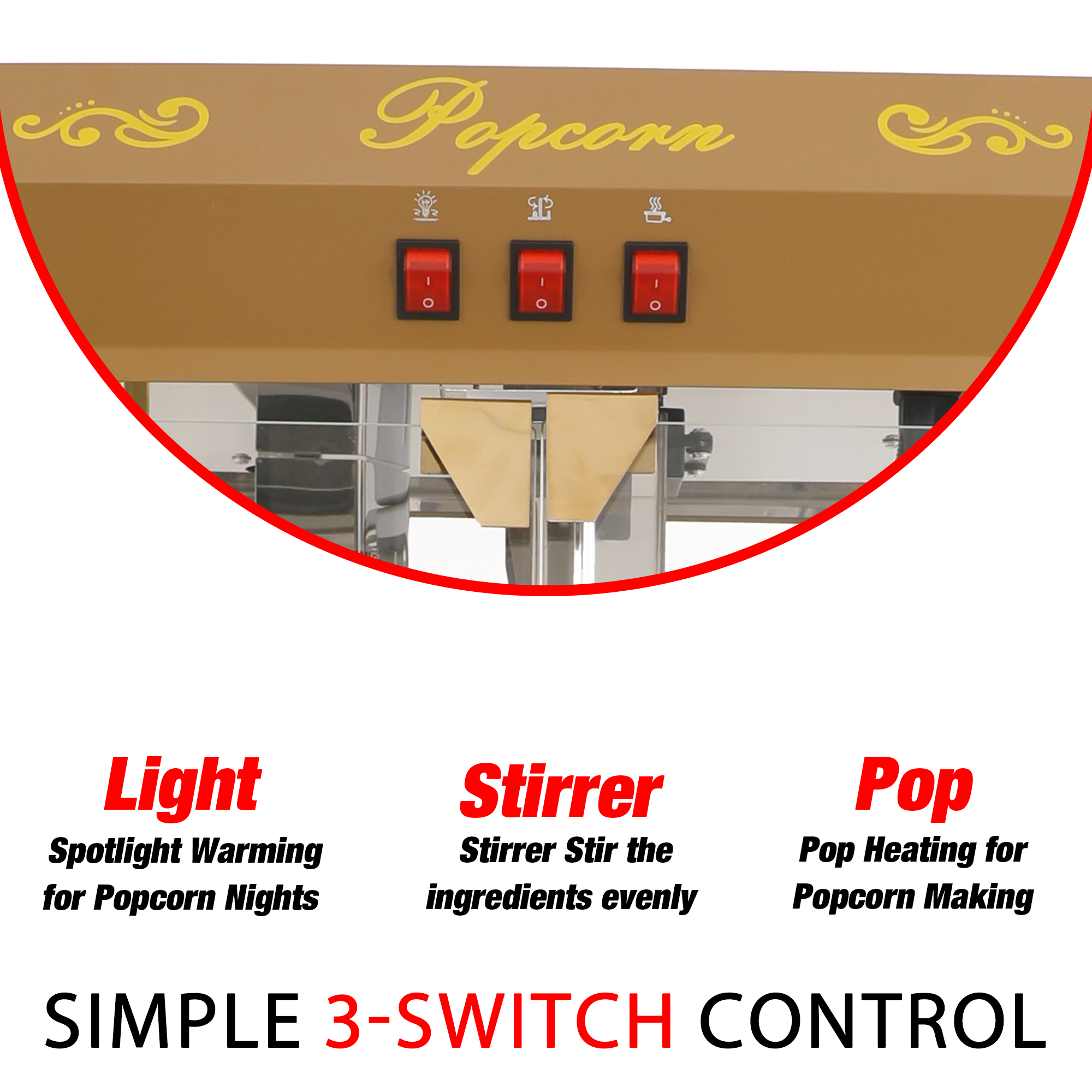
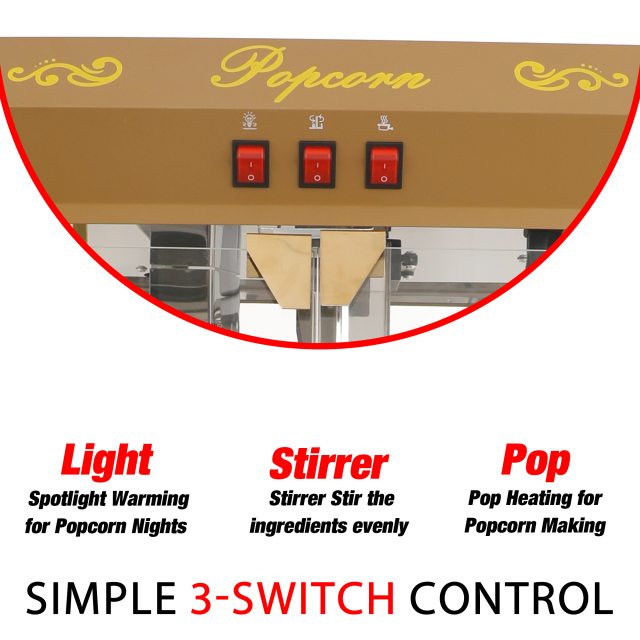
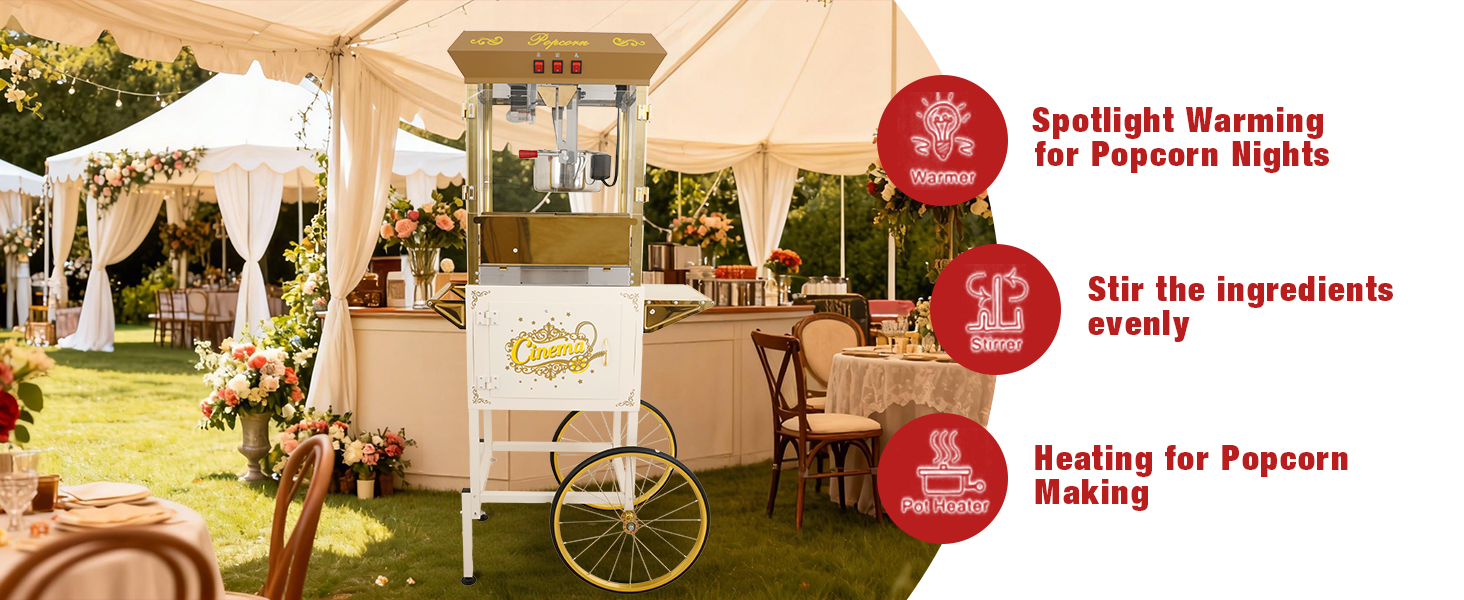
| Controls | Light, Stirrer and Pop rocker switches |
| Safety | Thermal protection and temperature control |
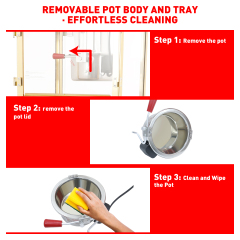
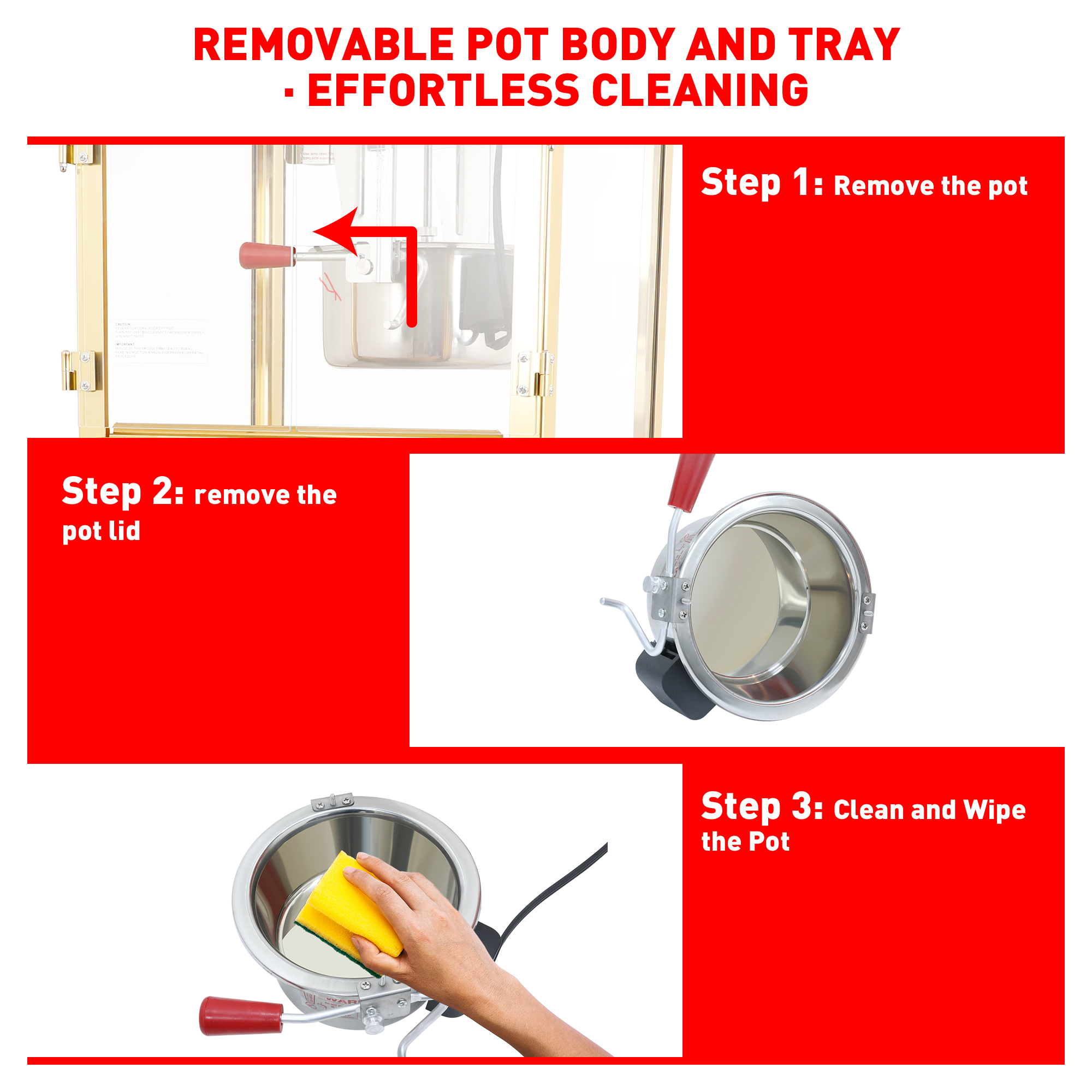
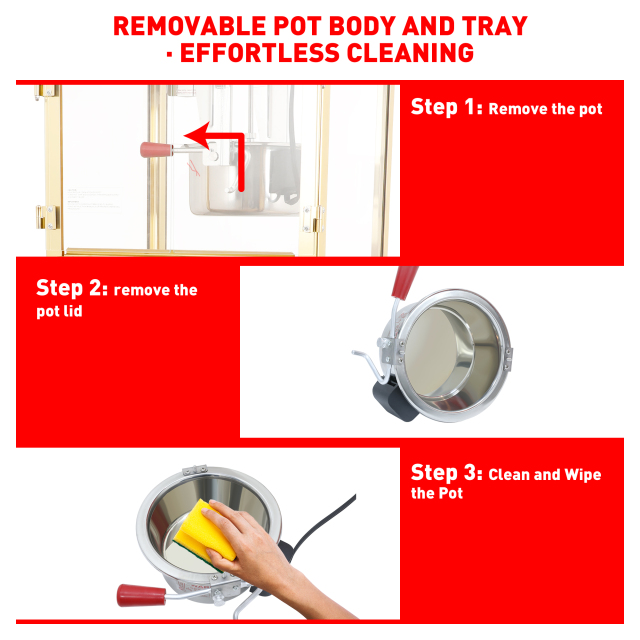
| Cleaning | Removable pot, lid and serving tray; washable contact parts |
The pot is the part that needs attention, and it comes out of the machine for it. Lift it clear, take the lid off, wash both in warm water with a mild detergent, then dry them properly before the pot goes back — a wet pot is what makes the next batch stick and scorch on the base.
Wipe the inside of the chamber and the glass with a soft cloth. Warm glass should be left to cool before it is wiped, and abrasive pads or ammonia-based cleaners will cloud a panel over time.
The serving tray lifts out. Empty and wash it at the end of every session, because old oil and crumbs in the tray are what make popcorn taste stale halfway through an evening. The cream body and gold trim need a damp cloth and nothing more — no polish, no scrubbing.
Keep water away from the switch panel, the heating tube and the wiring, and never put the cabinet under a tap. Only the food-contact parts go in a sink. If oil has baked onto the pot, soak it in warm water before washing rather than scraping the stainless with a metal tool.
A wheeled popcorn machine cleaned after each session takes a few minutes; one left until the morning takes longer and wears the pot out sooner.
MEPK has manufactured popcorn machines since 2005 and runs two factories of our own: a 60,000 m² plant in Zhejiang and a 20,000 m² plant in Thailand, together around 80,000 m², with more than 100 people on the team. The Thailand site works under a five-year tariff exemption, which keeps unit costs down and keeps supply steady when order volumes rise. We hold US and EU certification, release three to five new models each quarter, and take OEM and custom orders for the commercial popcorn cart from 100 pieces, with product visuals and installation videos supplied for launch.
No. The kettle runs on an electric heating tube and the cart is built for AC 120 V 60 Hz, so it needs a suitable outlet and nothing else — no gas connection, no hood, no ventilation work. Leave clearance around the cabinet so the chamber can release warm air, and keep the cart away from sprinkler heads and direct heat.
Use a proper popping corn rather than a microwave product, and an oil that can take kettle heat without smoking — coconut oil is the traditional choice for cinema-style corn. Measure to the pot's capacity and do not fill past it, because an overfilled pot pops unevenly and pushes oil out of the lid. Salt and butter go on after popping, not into the kettle.
Yes, with level ground and cover. The wheels handle paving, gravel and marquee flooring, but the machine should stand flat so the pot sits square, and it should be under an awning or in a gazebo rather than out in the open. Run it from an outlet protected for outdoor use, and bring it in if rain is coming — the glass, the switch panel and the painted cabinet are not built for weather.
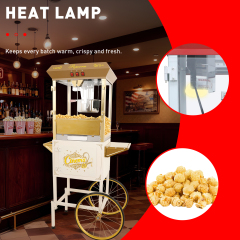
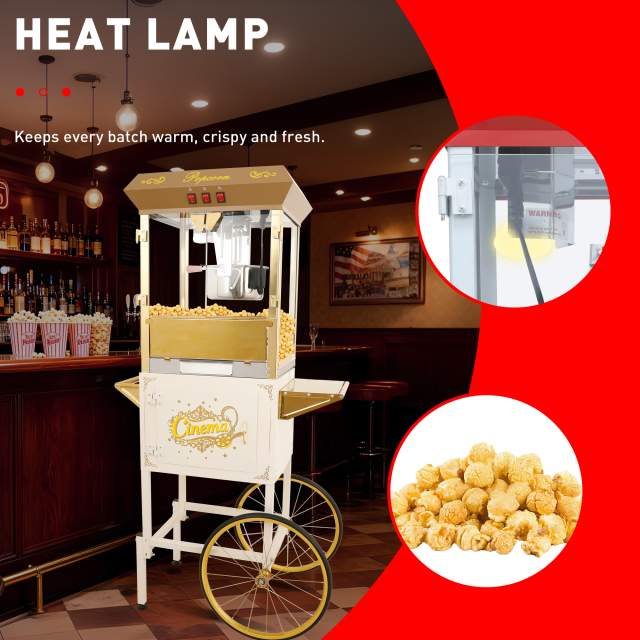
The lamp above the chamber holds a batch warm and crisp for the length of a normal service — through an interval or a busy hour. It is a holding lamp, not a reheater: corn that has stood too long softens rather than crisping up again, so pop to the queue rather than filling the chamber and leaving it standing.
Temperature control and thermal protection watch the heater, so an overheating pot is cut back before the element or the pot is damaged. Let it cool, then check for burnt oil and clean the pot before the next batch. Running a pot dry is still the quickest way to ruin one, so switch the heat off once the pot empties.