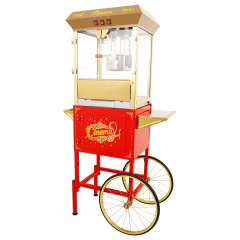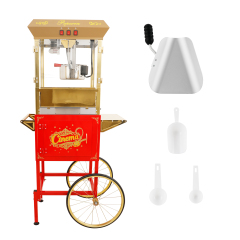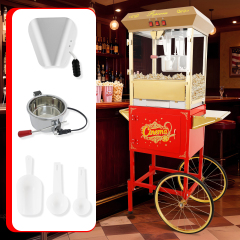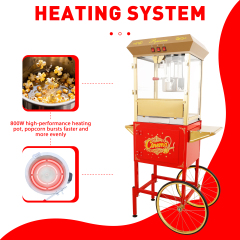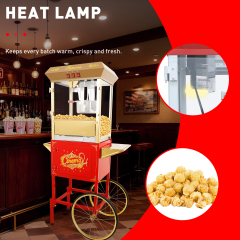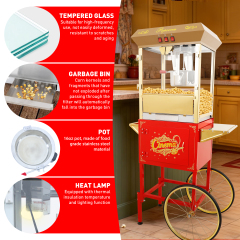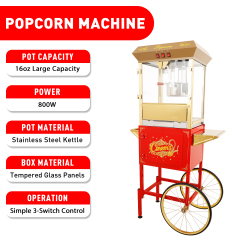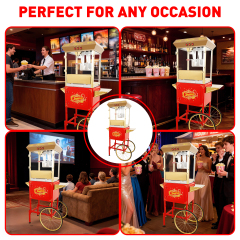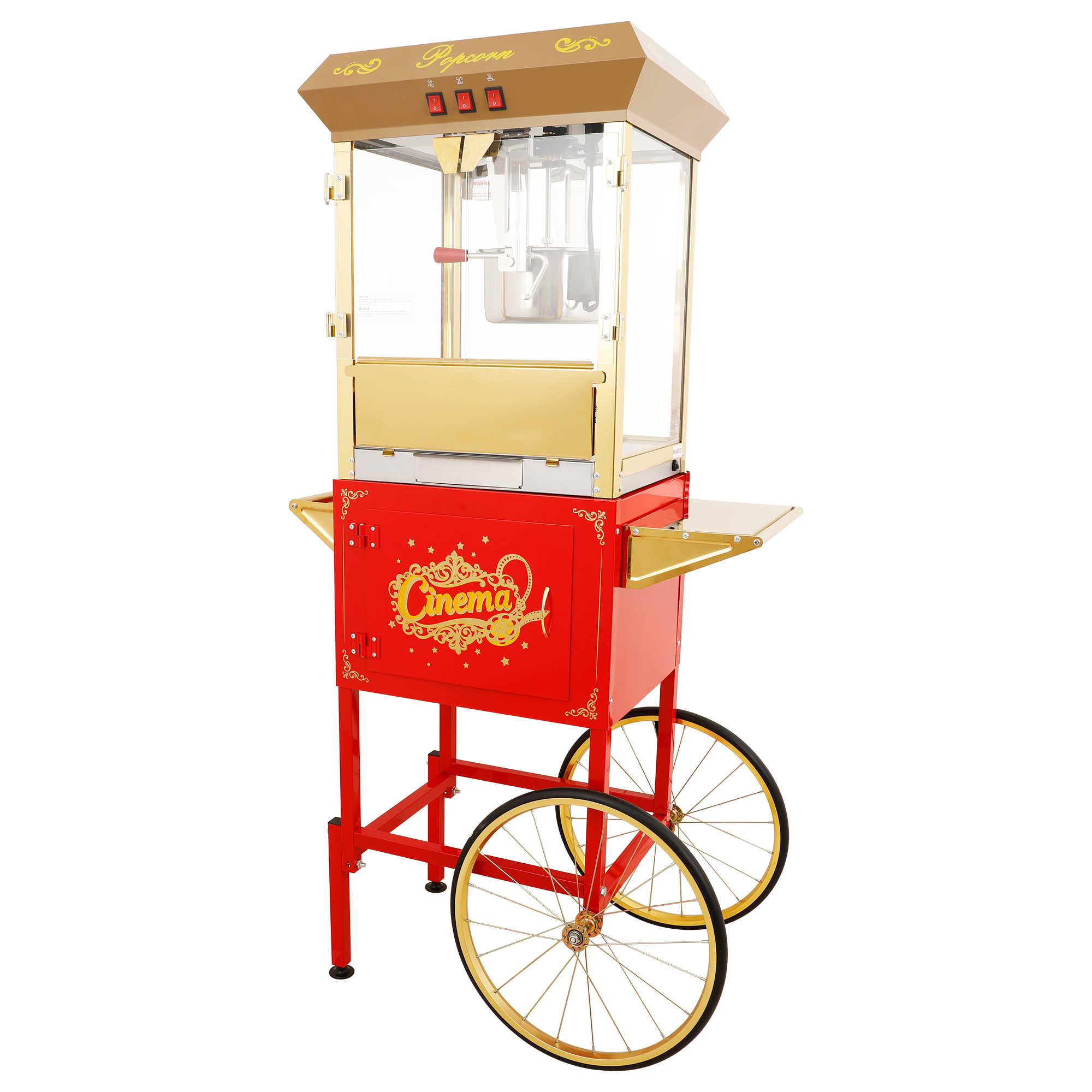
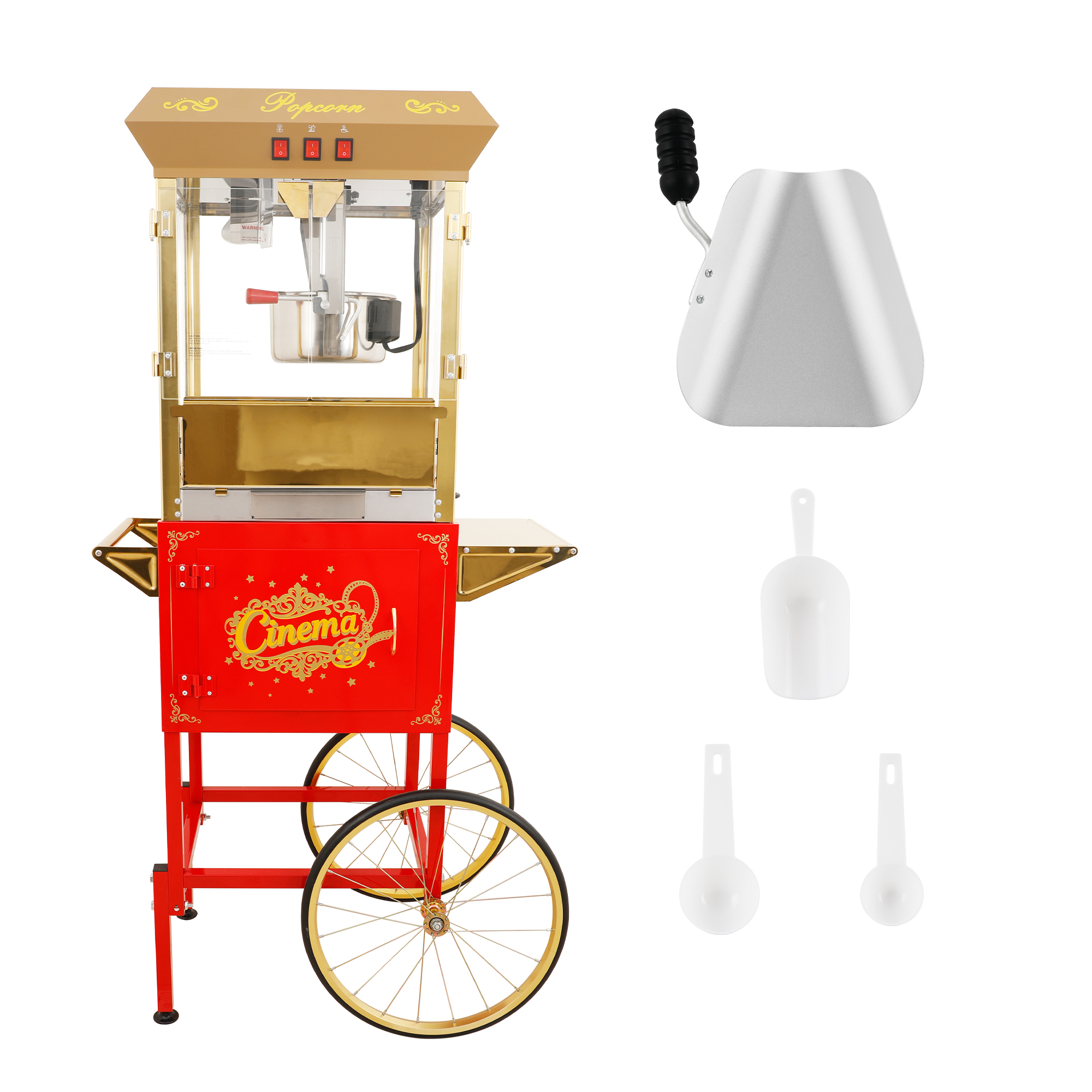
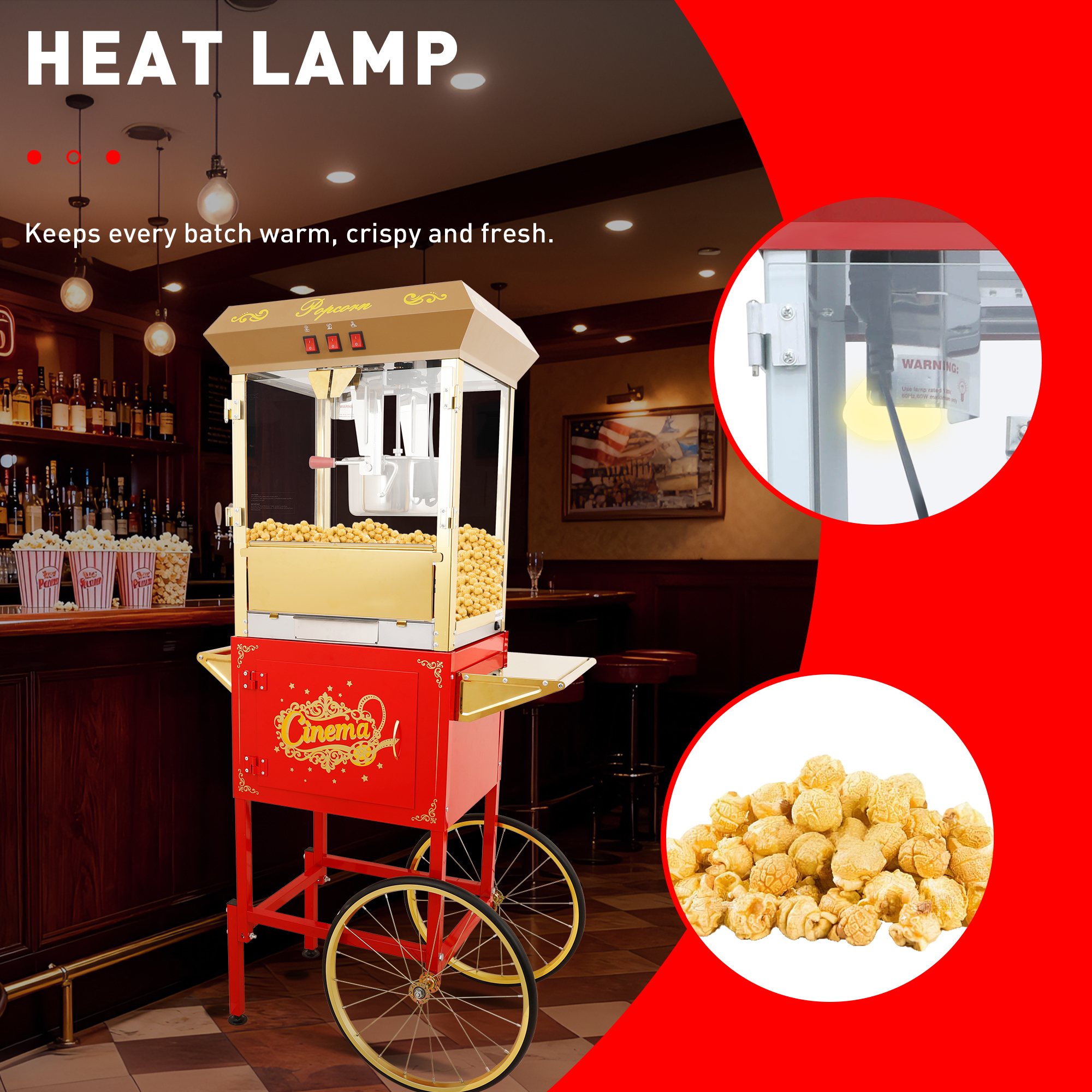
The Model 1001 Dual Use popcorn machine is engineered for versatility and efficiency, perfect for a professional popcorn machine setup. As a commercial popcorn machine, it offers precise temperature control and mobile convenience, ideal for diverse commercial venues.
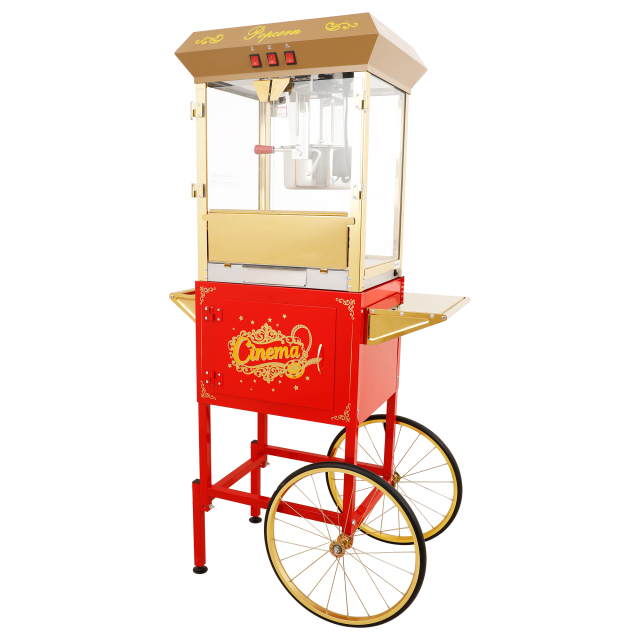
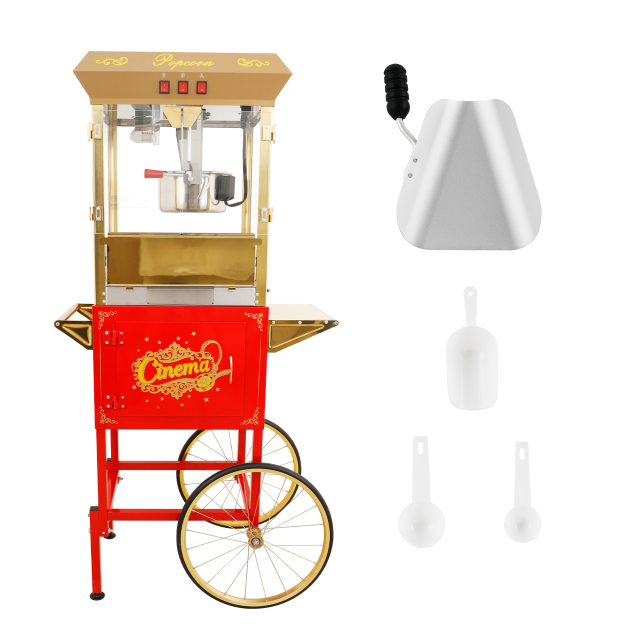
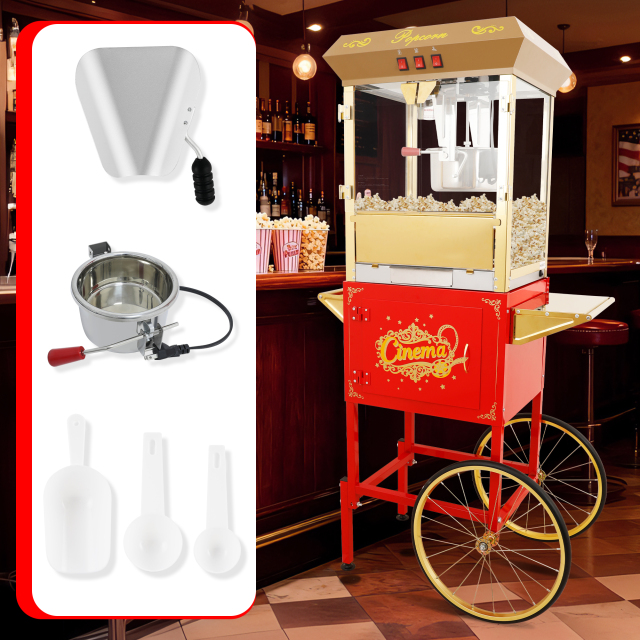
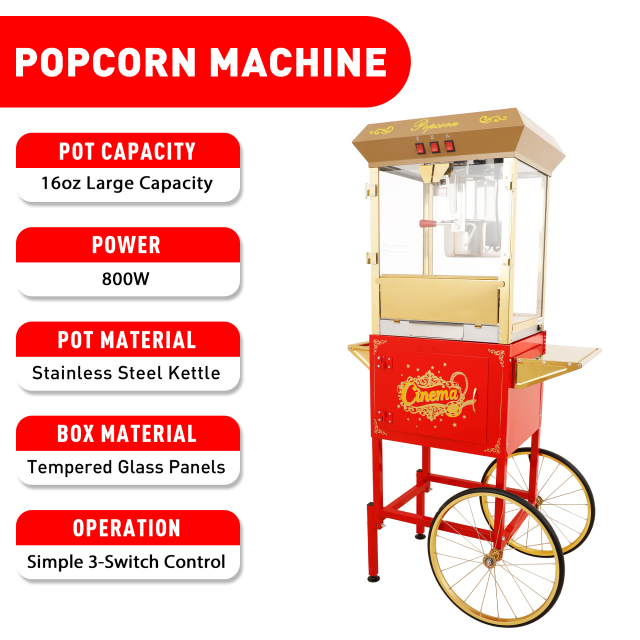
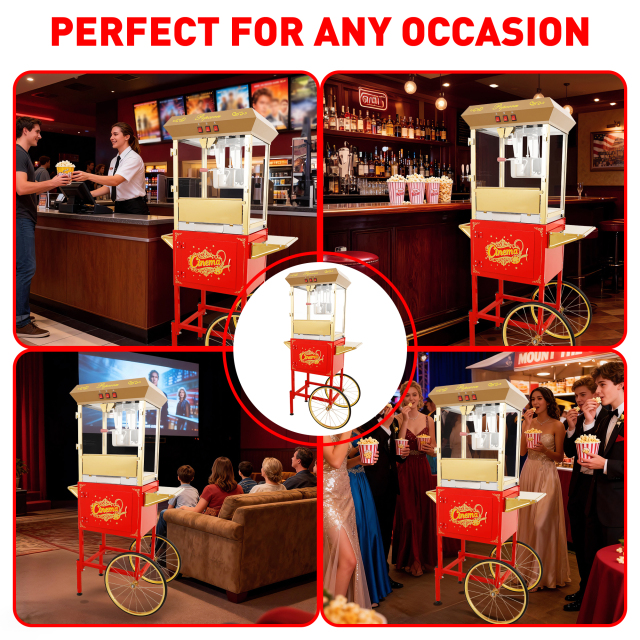
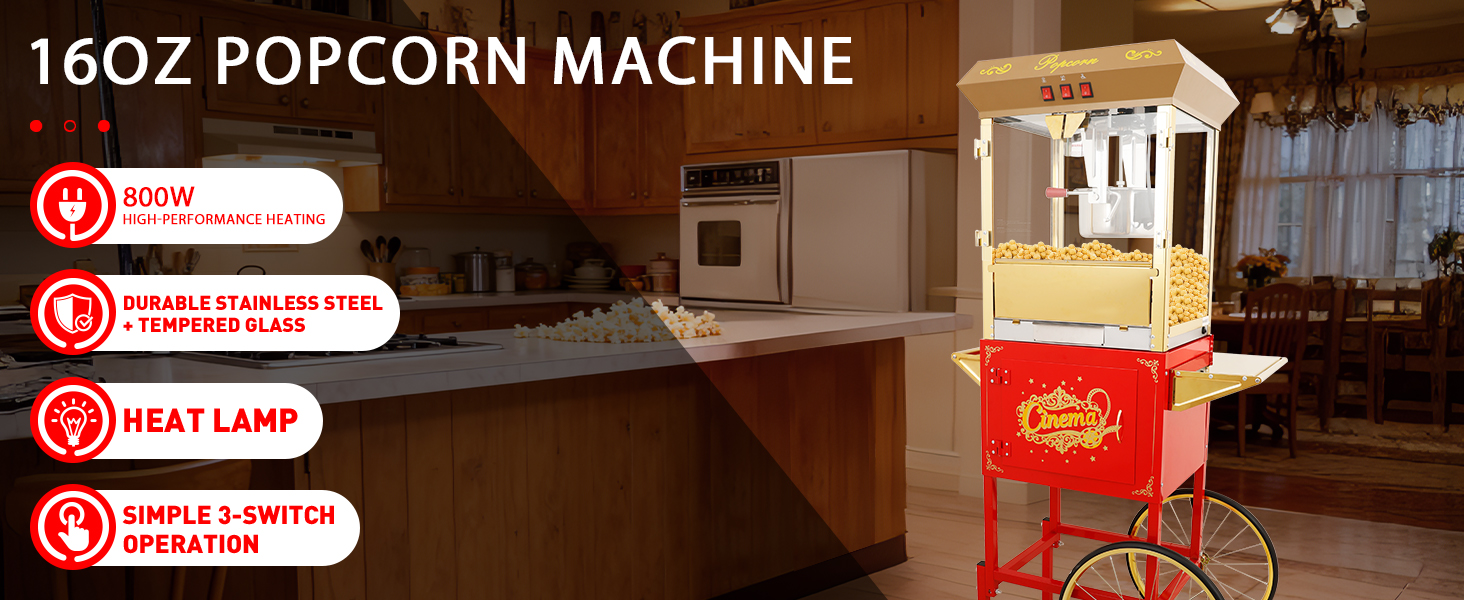
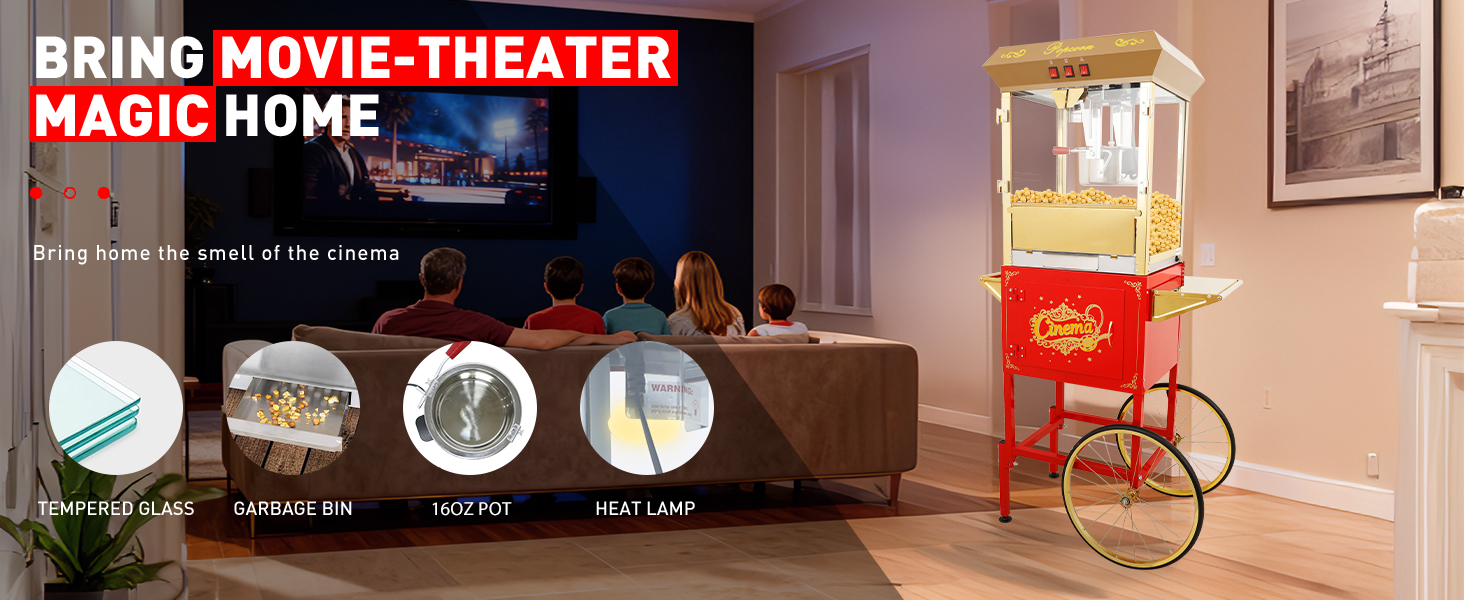
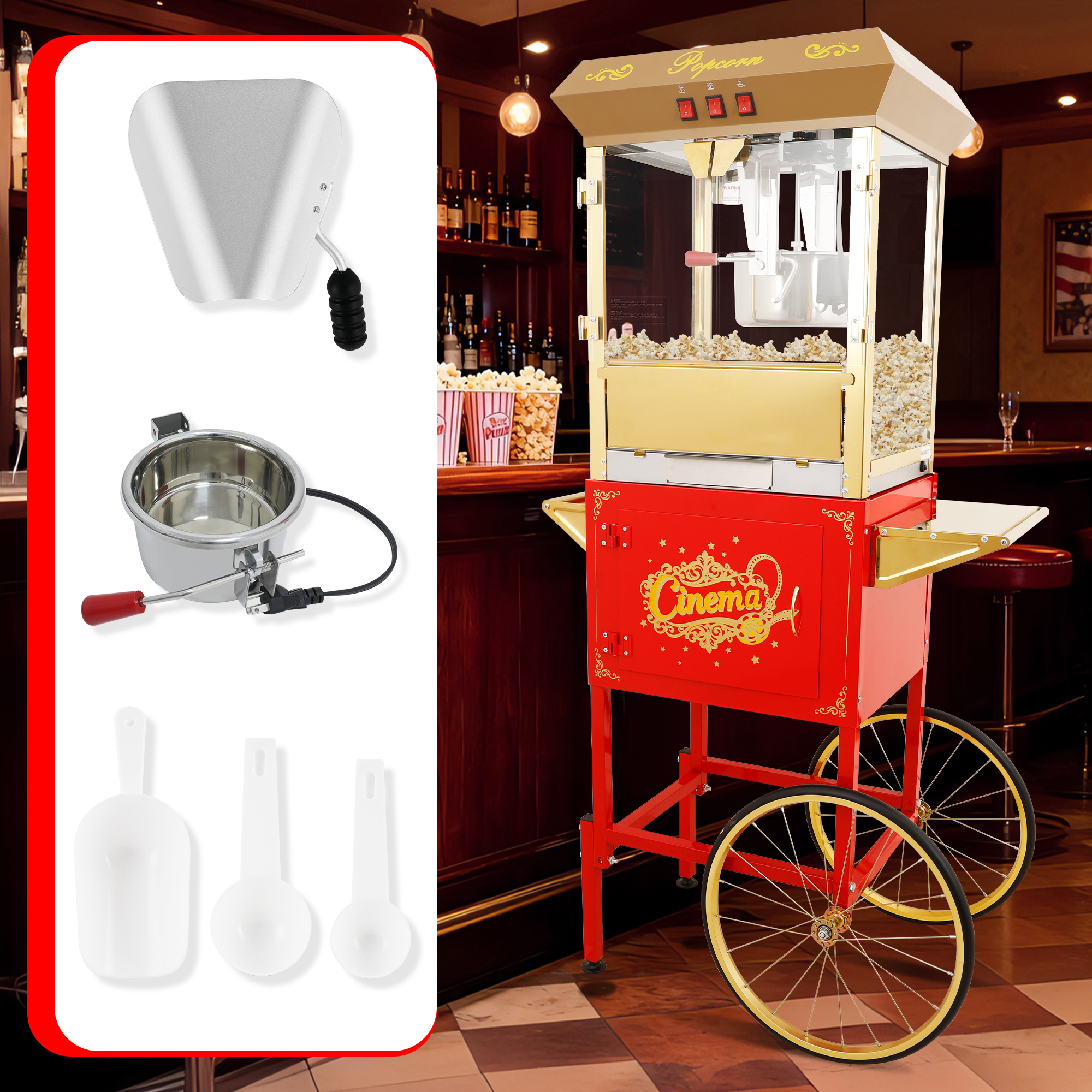
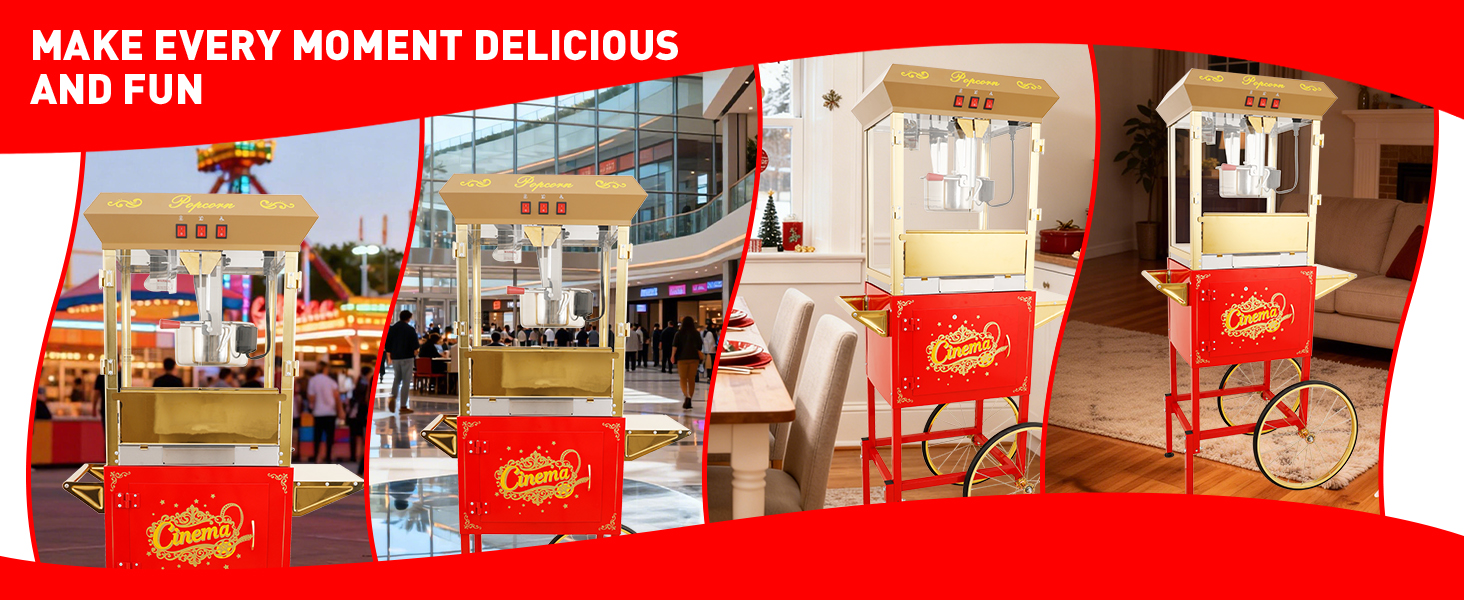
Some popcorn machines are made to sit behind a counter and be heard rather than seen. This one is built the other way round. The cabinet is finished in glossy red with gold trim, the popping chamber is clear glass, and a lit Cinema marquee sits above the kettle — the shape most people know from a picture-house counter, mounted here on spoked wheels.
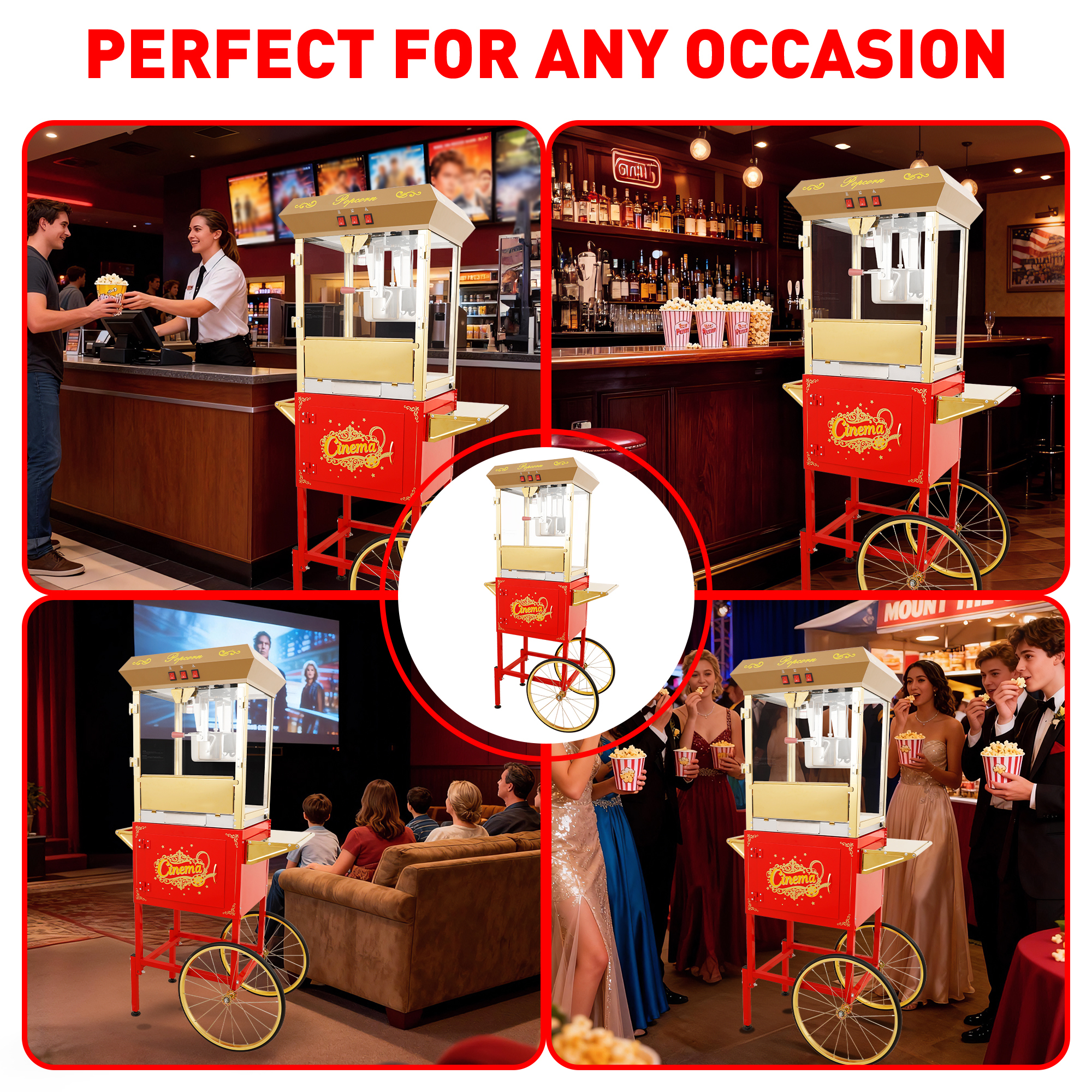
The cart is the point of it. Nothing about the machine has to stay in one place: the same unit can stand in a cinema foyer on a Friday evening and in a family room or basement bar at the weekend. That is what dual use means here — not a household popper wearing a commercial label, but a commercial popcorn machine that a household can live with and move.
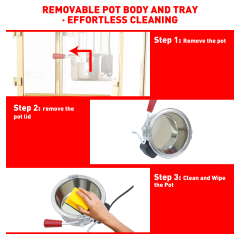
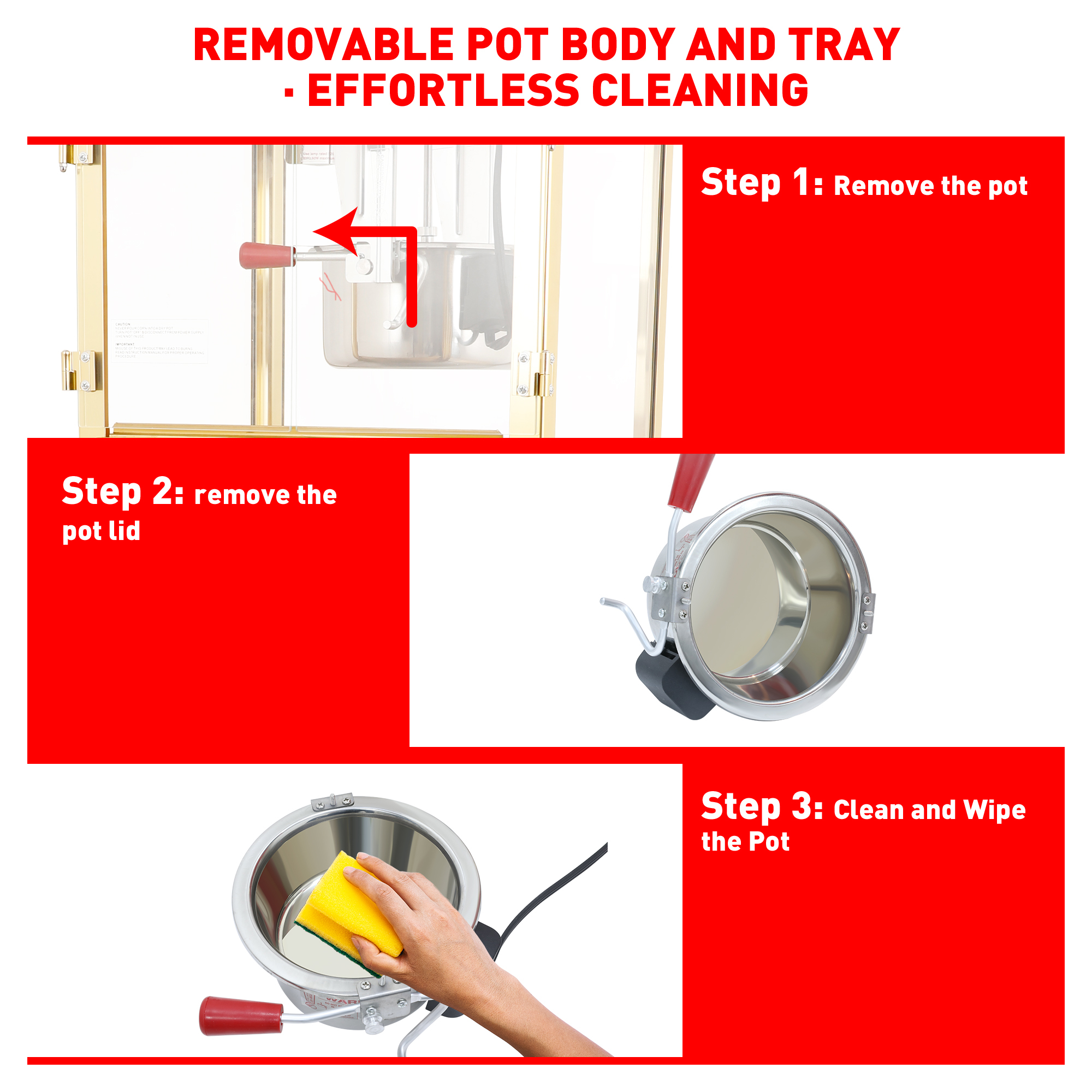
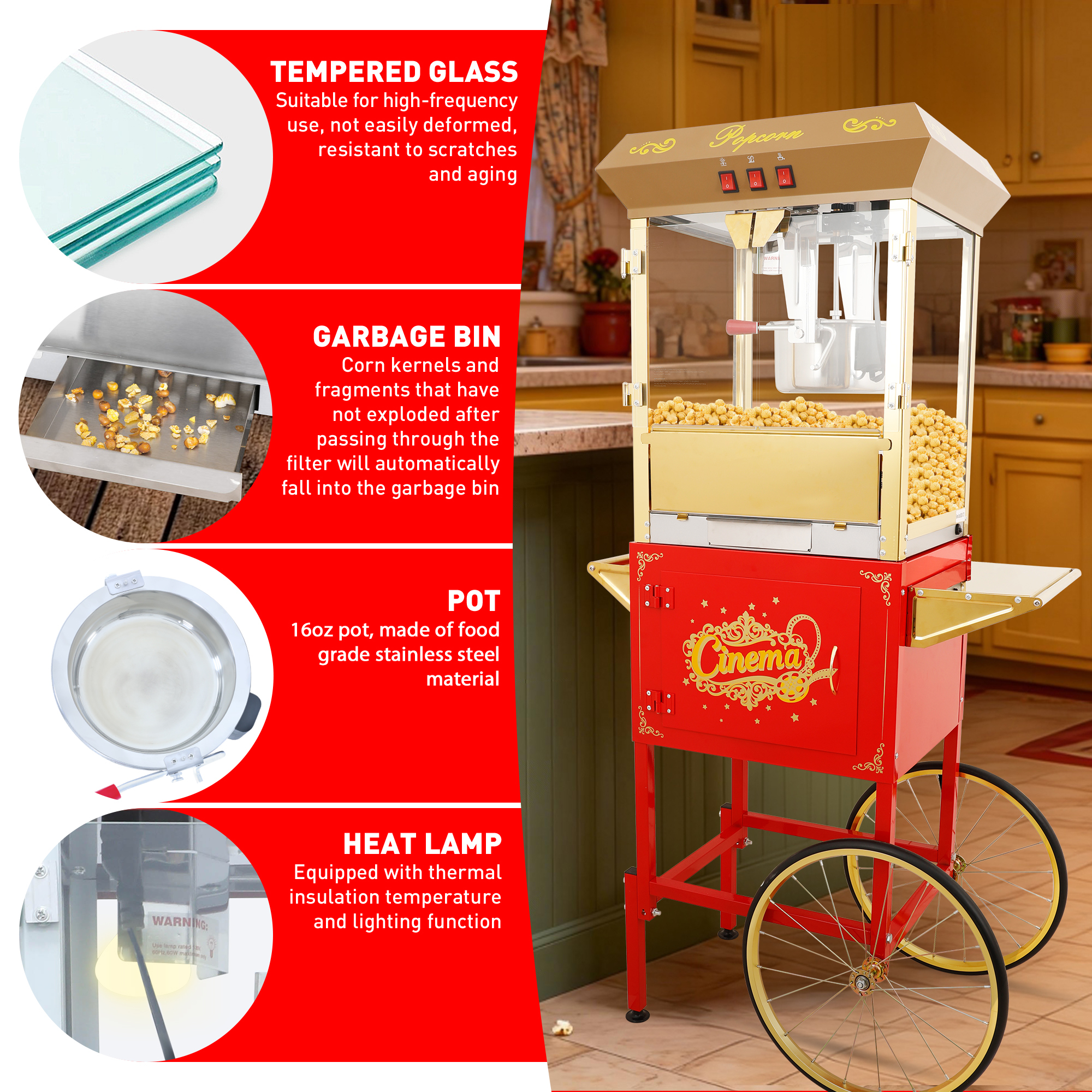
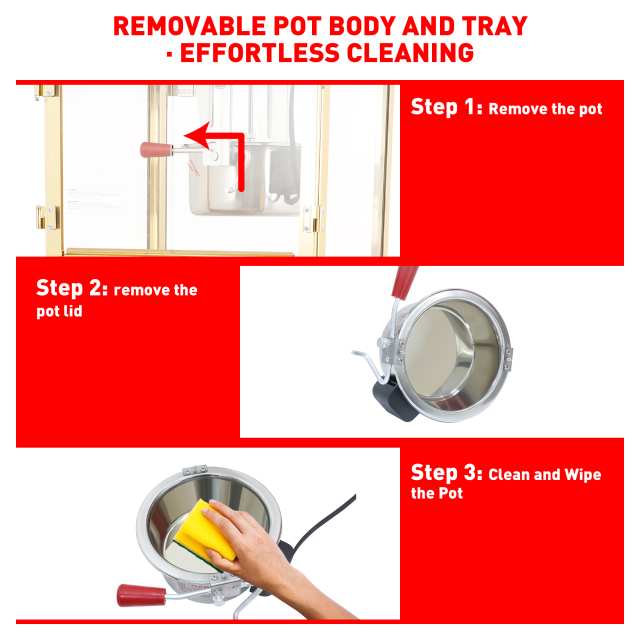
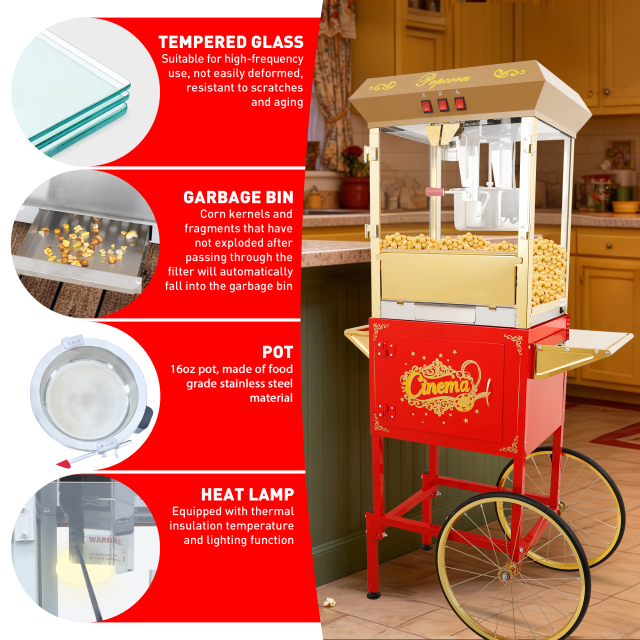
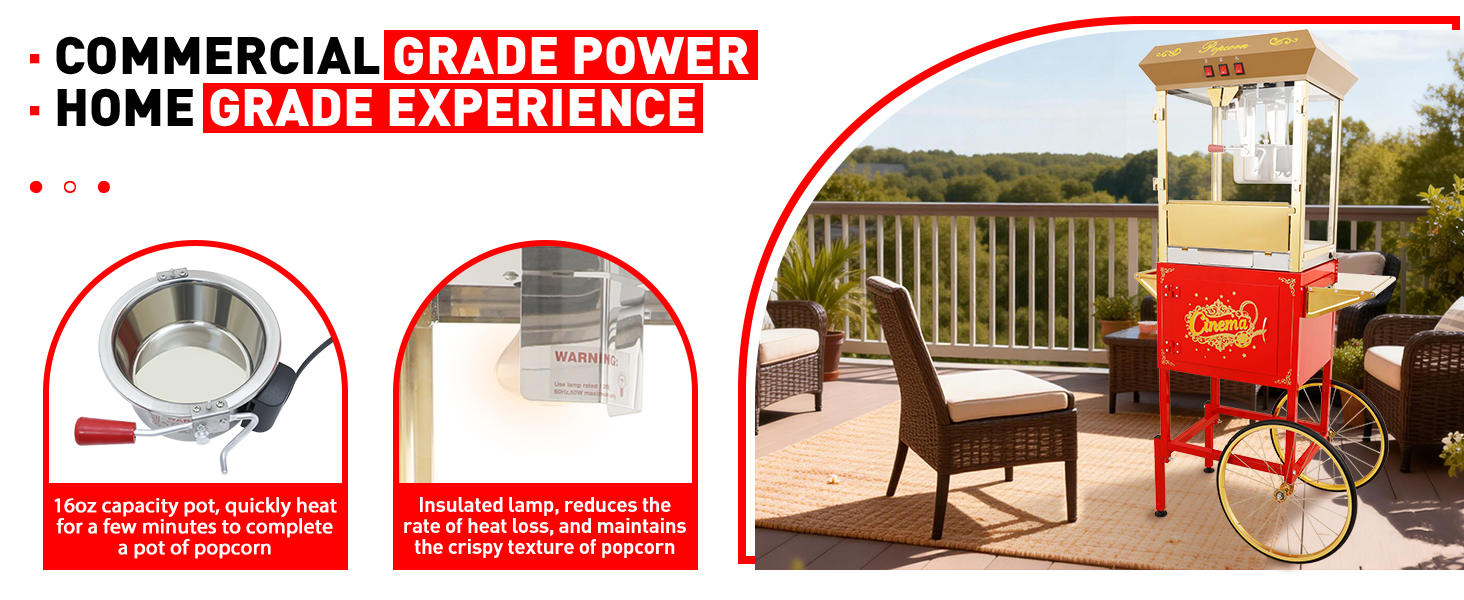
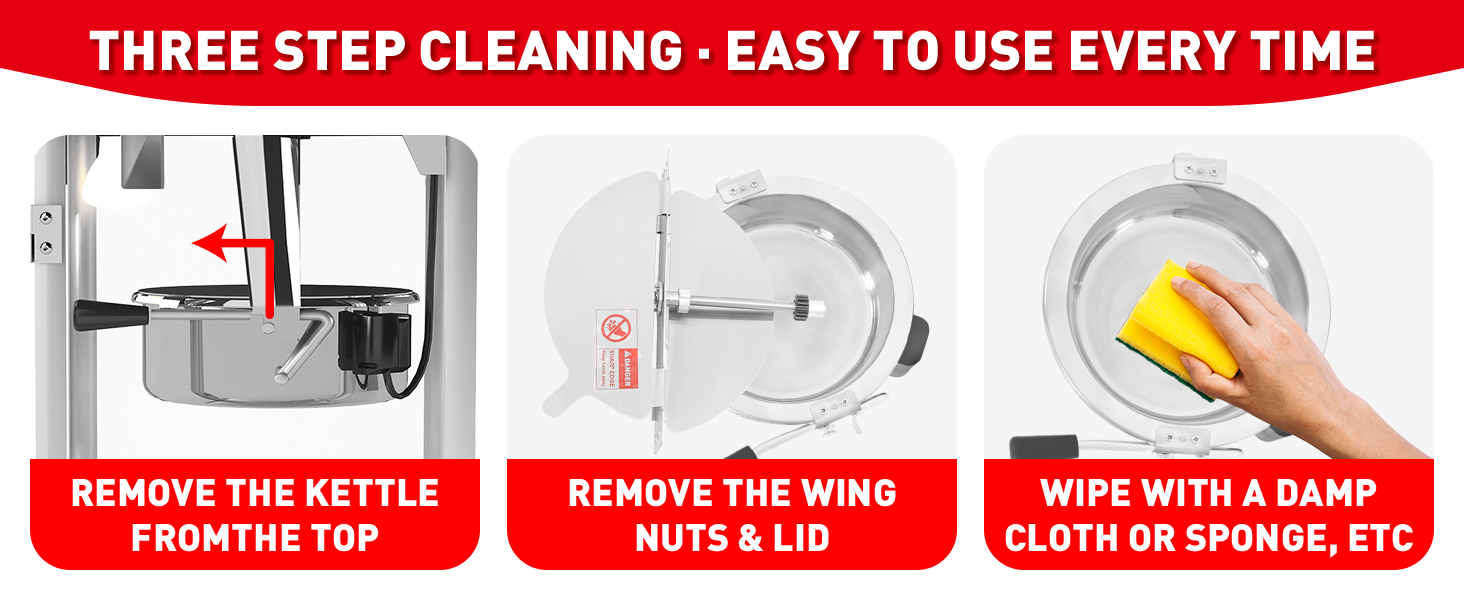
The working parts are food-grade stainless steel, the kettle and lid lift out for washing, and the heater runs under thermal protection with temperature control, so a long evening of batch after batch does not hang on someone remembering to watch the pot.
We build the cart ourselves as a commercial popcorn machine manufacturer, alongside countertop poppers and larger concession units, to the same food-contact standard right across the range. Buyers arrive from two directions — a venue that wants the machine in the room rather than behind a door, and a household that wants the look without building a counter for it. Both end up with the same popcorn cart.
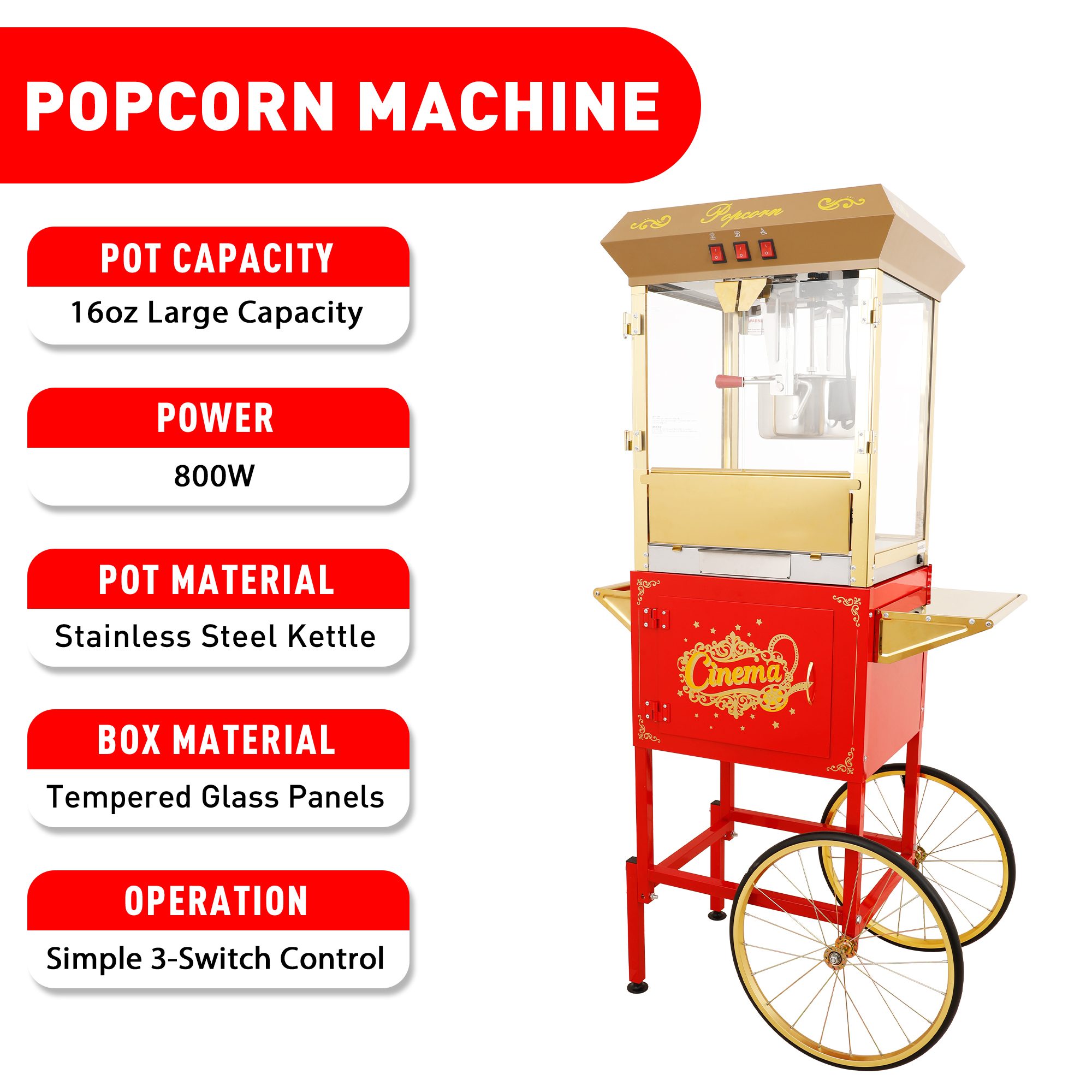
| Parameter | Value |
|---|---|
| Model | XH-P1001 |
| Power supply | AC 120 V 60 Hz |
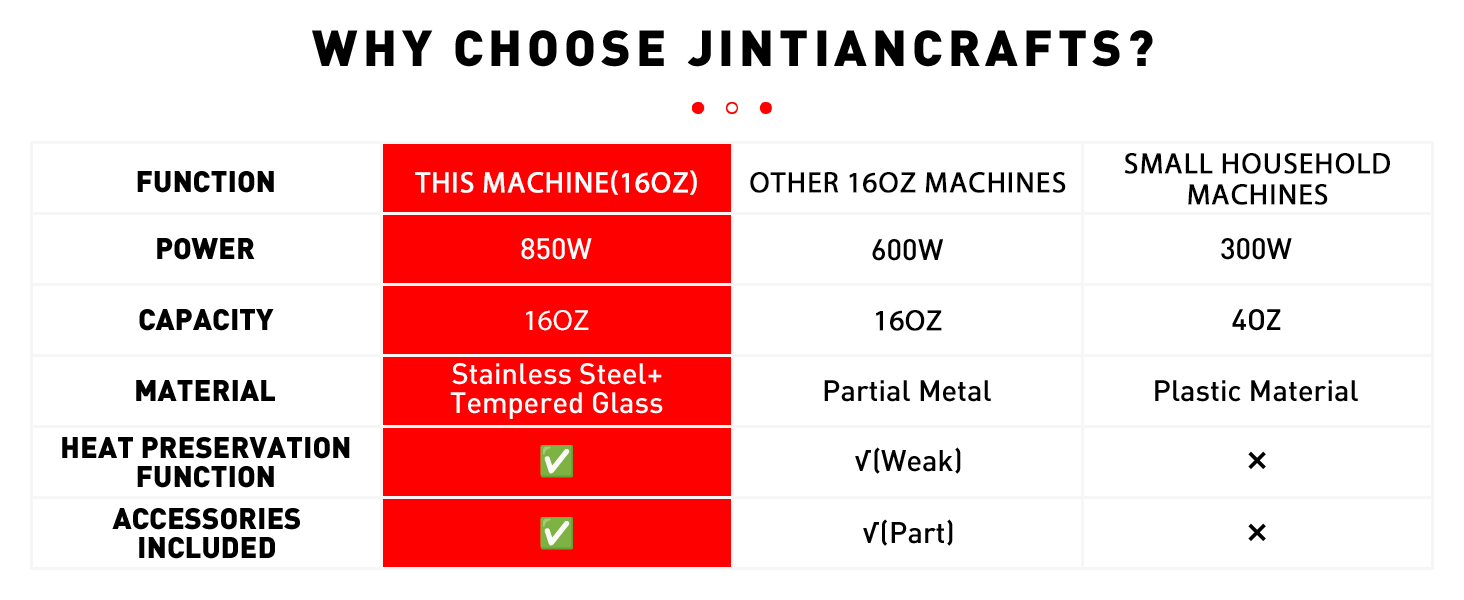
| Heating power | 850 W |
| Kettle capacity | 16 oz |
| Batch yield | About 500 g per kettle |
| Popping time | About 7 minutes |
| Heating method | Heating tube |
| Body material | Food-grade stainless steel |
| Cabinet glazing | Tempered glass |
| Kettle and lid | Removable and washable |
| Controls | Thermal protection and temperature control |
| Dimensions | 780 × 520 × 1495 mm |
| Weight | 25.42 kg |
Kettle And Heat
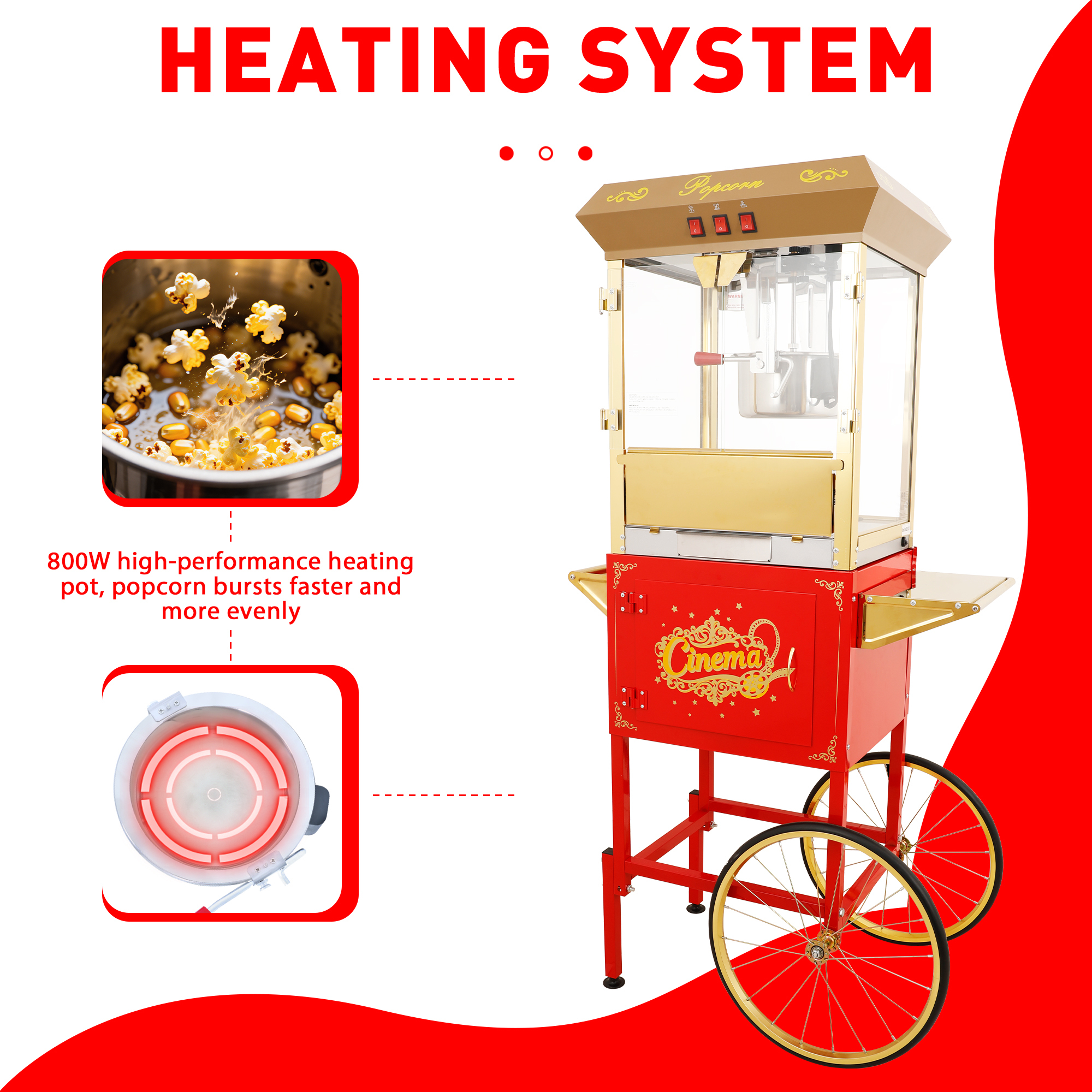
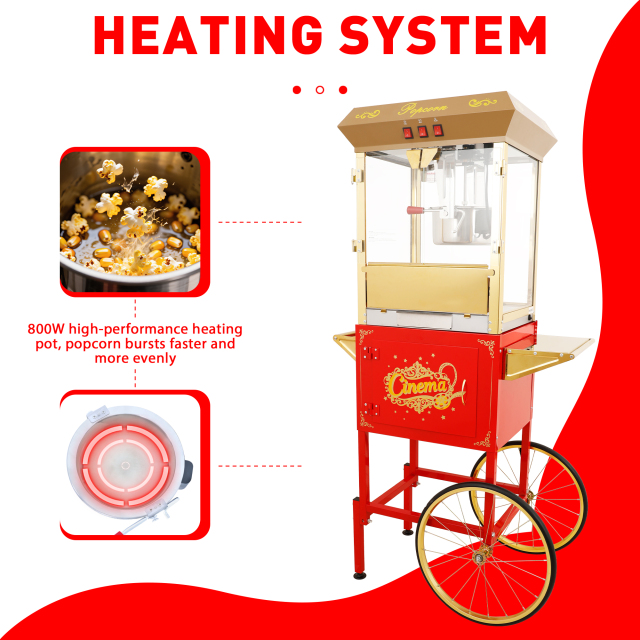
A 16 oz kettle is matched to an 850 W heating tube, and the two numbers belong together: a kettle this size needs a heater that brings it back up to temperature quickly between drops. That pairing is the first thing to weigh when you compare one professional popcorn machine with another, because a big kettle on a small heater gives you a slow, uneven cycle instead of a fast one.
What One Drop Looks Like
A full kettle yields roughly 500 g of popped corn — a display tray refilled in one go, or a room served without a second round — and the cycle takes about seven minutes. The stirrer keeps kernels turning through the heat rather than sitting against the base, so the batch colours evenly from first pop to last, and the tempered glass lets staff watch the chamber fill without opening it and losing the heat they have just paid for. Kernels that never pop fall through into the bin below the kettle instead of riding out into the serving tray.
Planning An Hour
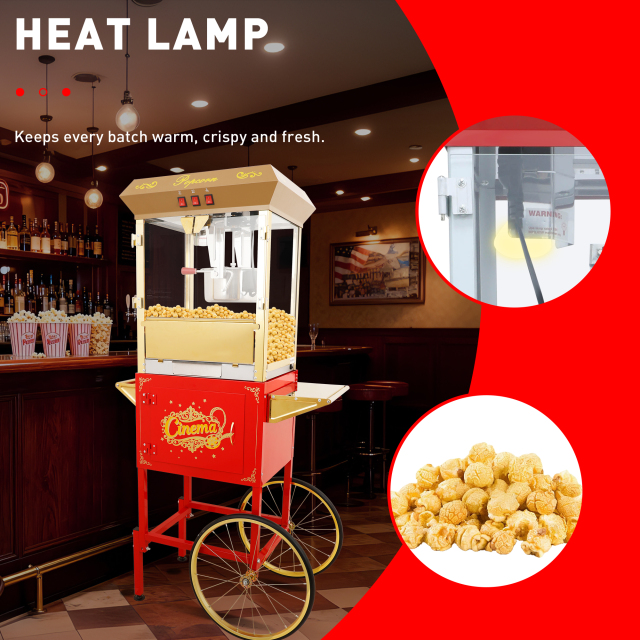
Seven minutes is the pop, not the whole turnaround. Allow a minute or two to empty the kettle, reload it and get the finished batch under the warming lamp, and plan on six or seven drops an hour from one cart. That is the number to size a queue against: a foyer with a steady trickle of customers is comfortable on one cart, while a venue that fills all at once either runs two carts or accepts a short wait.
Where It Stops
Output grows by adding a cart rather than by making each batch bigger, because one kettle works one batch at a time. If your numbers point at equipment that never stops, that is industrial popcorn machine manufacturer territory and no cart will keep up with it. The cart is a commercial popcorn machine for sites that sell in waves, and it earns its keep by being in the room where the customers already are.
MEPK has manufactured popcorn machines since 2005 and runs two factories of our own: a 60,000 m² plant in Zhejiang and a 20,000 m² plant in Thailand, together around 80,000 m², with more than 100 people on the team. The Thailand site works under a five-year tariff exemption, which keeps unit costs down and keeps supply steady when order volumes rise. We hold US and EU certification, release three to five new models each quarter, and take OEM and custom orders from 100 pieces, with product visuals and installation videos supplied for launch.
Batch, always. One kettle fills, pops and empties before the next cycle starts, which is why the cart suits foyers, stalls and parties where trade arrives in waves. We build it that way as a commercial popcorn machine manufacturer, and the kettle cycle is what you plan the counter around. Where a site needs popcorn running continuously through the day, that is a different class of equipment — the kind an industrial popcorn machine manufacturer supplies — and it is better to say so than to sell a cart that spends the evening catching up.
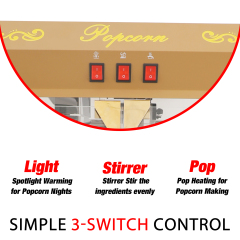
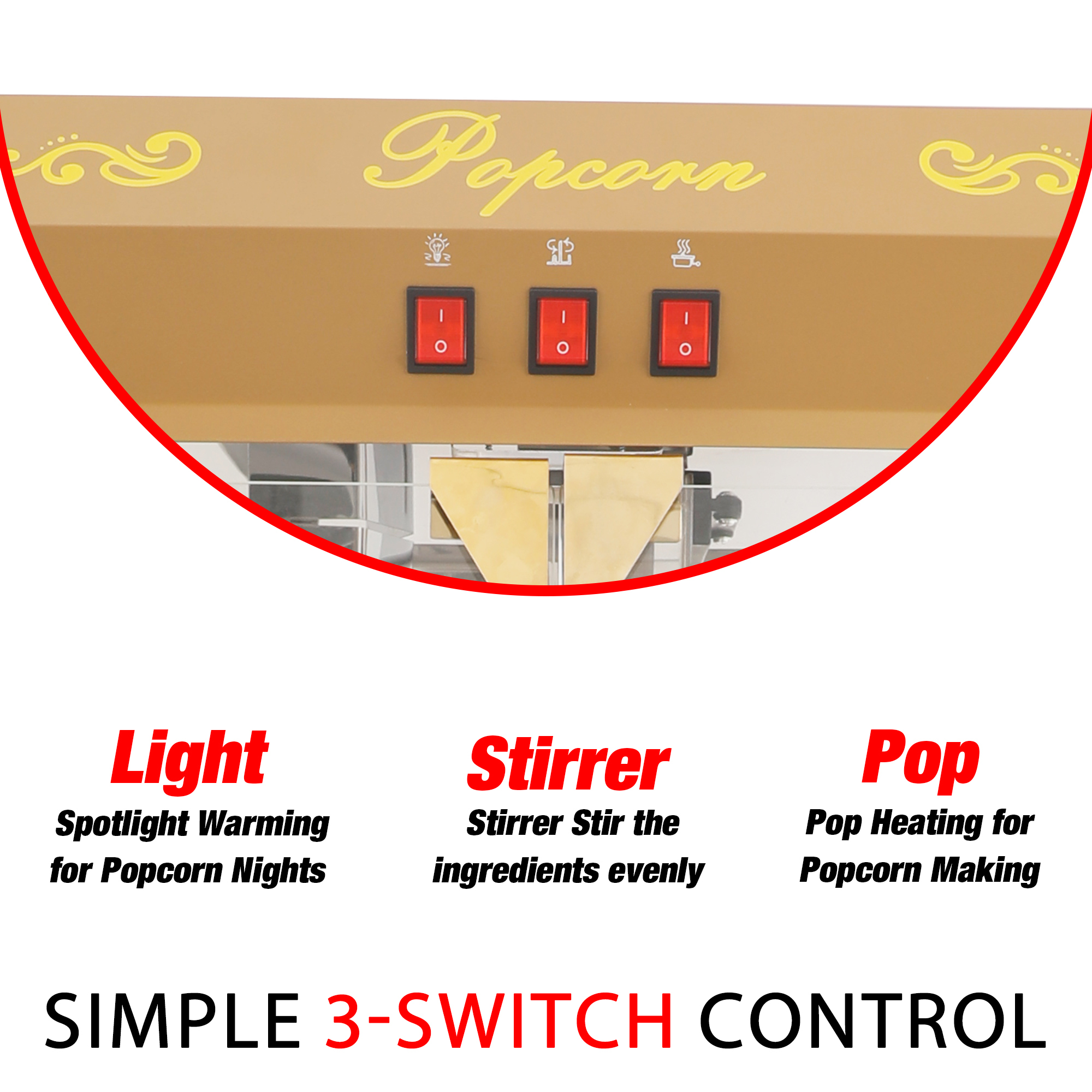
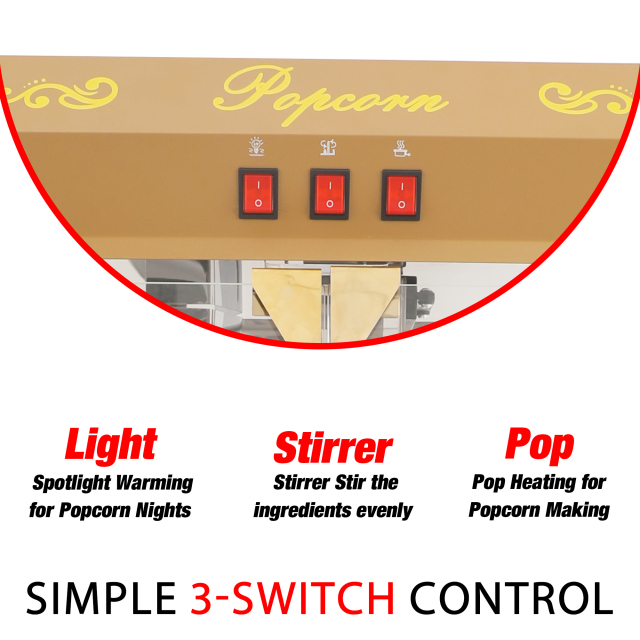
Pop Corn runs the heating element, Stirrer turns the paddle through the kettle, and Light switches the warming lamp above the chamber. Three switches, no menus and nothing to programme, which is why a new member of staff can be shown once and left to it. The lamp is the one people underuse: it is what keeps a finished batch warm and crisp while the next one goes through.
The cart runs on AC 120 V 60 Hz at 850 W, which is an ordinary circuit for a commercial popcorn machine of this size. Check the socket you intend to use and avoid sharing that circuit with other heavy kitchen equipment; if the venue's supply is unusual, have an electrician look at it before the event rather than during it.
A countertop popper suits a worktop and a household batch; the cart is for rooms where the machine has to be seen and has to keep a queue moving. It is not a large commercial popcorn machine with a permanent counter and a bank of kettles — it is one kettle on wheels, and that is exactly why it can go where the bigger machines cannot.
No. Plenty of these carts go into family rooms and basement bars, bought for the same reason a venue buys one: the machine is part of the evening. What you get over a domestic popper is a professional popcorn machine build — stainless contact parts, a stirrer, tempered glass and a warming lamp — in a cart that can be wheeled out of the way when the room is needed for something else.
Walk the space first: a level floor, a socket within reach of the cord, room behind the cart for staff to work and room in front for the queue. Then run a test batch at home base with your own corn and oil, so the first public batch is not the first batch you have ever made. We build these carts ourselves as a commercial popcorn machine manufacturer, so if a switch, the lamp or the kettle gives trouble, you are talking to the people who made it.