How to Vet Popcorn Equipment Suppliers

How to Vet Popcorn Equipment Suppliers

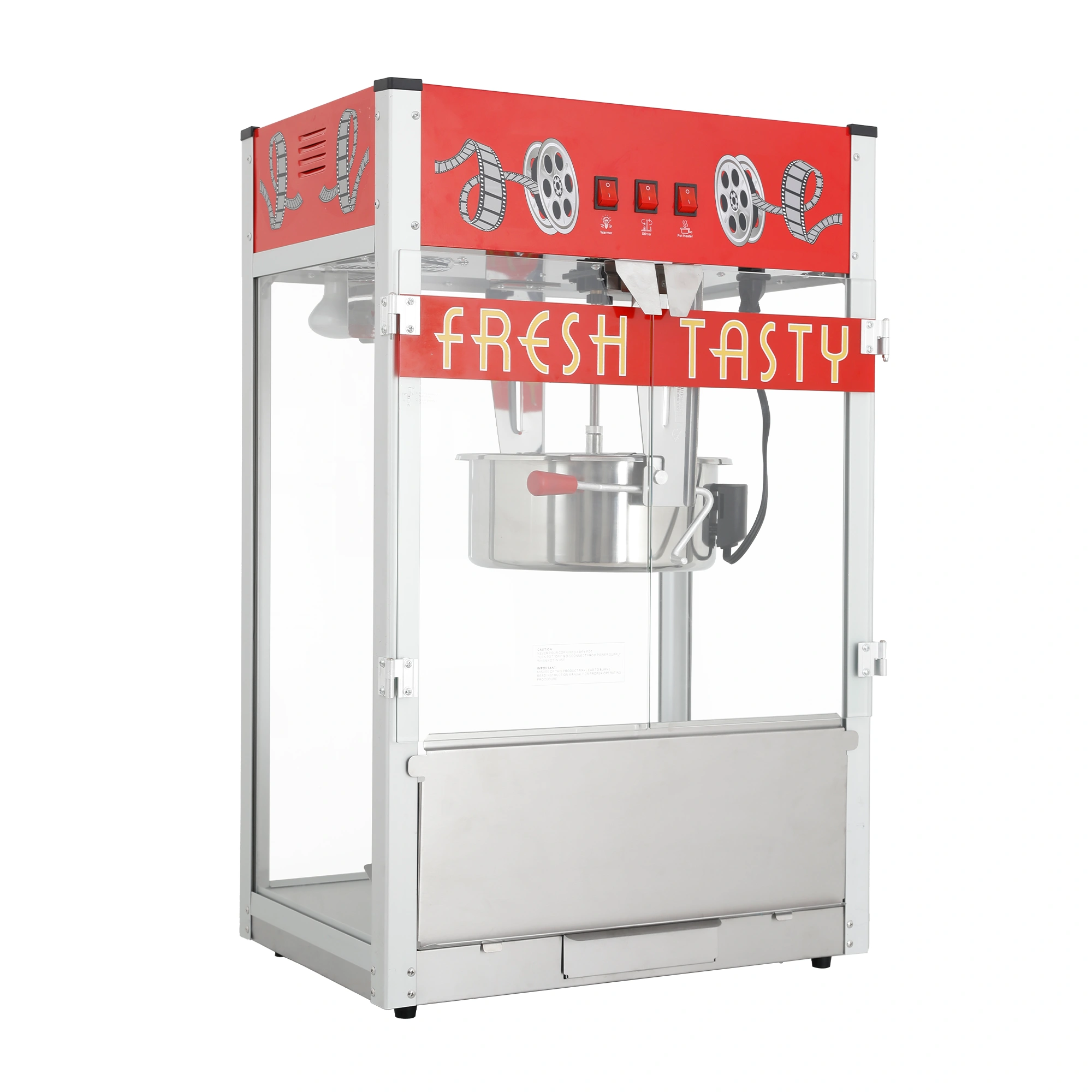
This guide is written for buyers who are still deciding who to order from, not yet which model to stock. Importers, distributors and marketplace sellers use it to score a potential popcorn machine manufacturer on capacity, MOQ, lead time, spare parts, warranty and customization — and then to read the returned quote the way a procurement team would. Every checkpoint below is applied to one live example, the XH-P824 countertop unit from a factory-direct popcorn machine supplier, so you can see what a defensible answer looks like before you write your own RFQ.

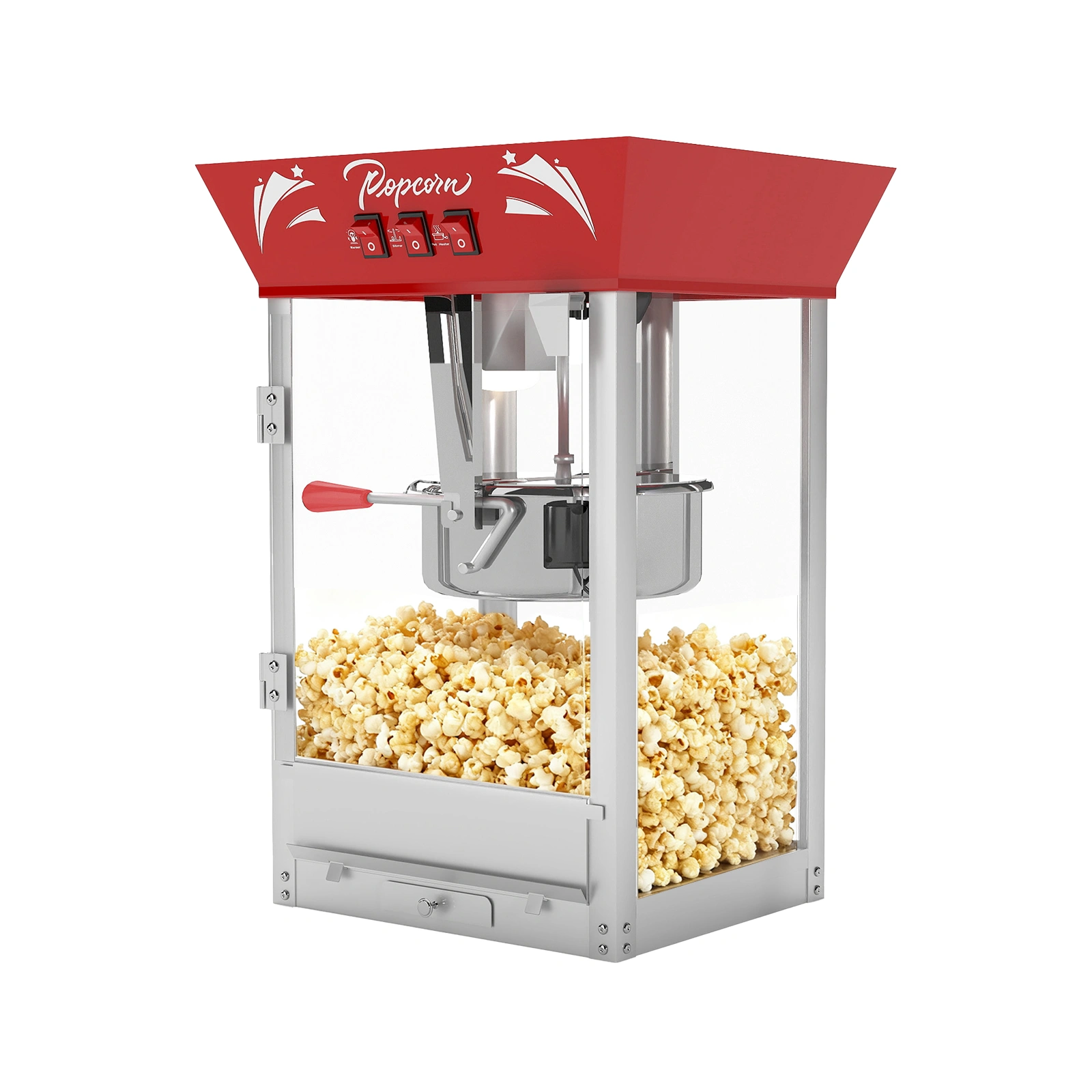
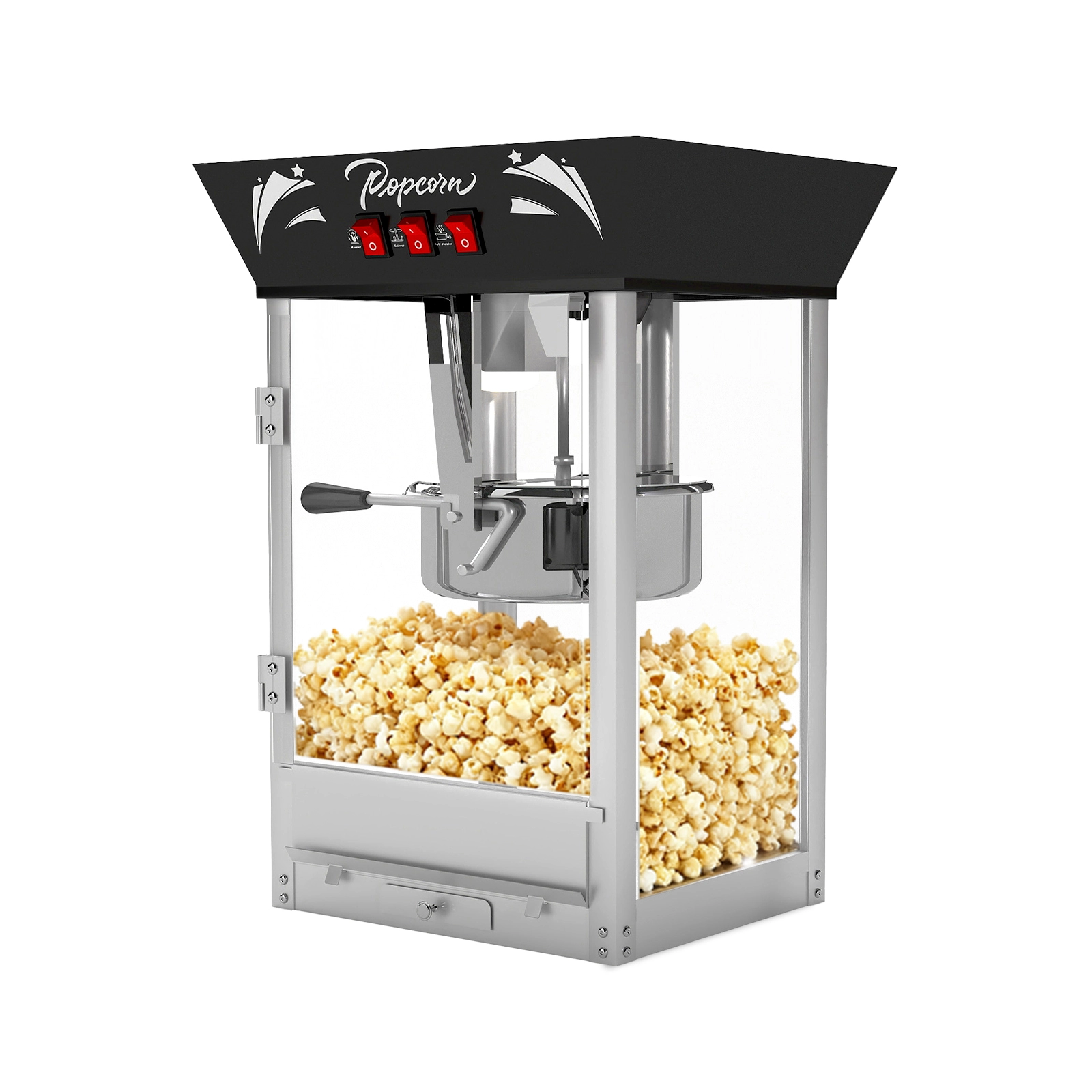
Model 823 Household Popcorn Maker

Who This Vetting Guide Is For

Vetting is a procurement exercise, not a product-browsing one. You are comparing entities, not photos: who owns the tooling, who inspects the goods, who fixes a fault in year two, and who absorbs the cost when a container arrives with damaged cartons. The three buyer profiles below each face a different failure mode, so each one needs a different set of questions answered before a purchase order goes out.

01
Importer / Wholesale Buyer

You book containers, not sample singles

Your risk is concentrated in freight and customs. A single missed voltage question or an unlisted certification can strand a whole shipment at port, and re-packing at destination wipes out the margin you negotiated.

Decision to lock in: destination market, plug standard and the exact certificate set your customs broker needs — all confirmed in writing before deposit.
02
Distributor / Dealer

You are building a line that has to be serviced

Your risk is after-sales. If a washable pot or a heating tube fails in the field and no spare part exists, the dealer takes the reputational hit, not the factory.

Decision to lock in: the service-kit list, part pricing and lead time on spares, plus whether the range covers both countertop and higher-output tiers for different venue types.
03
First-Time Wholesale Buyer

You cannot yet tell a factory from a reseller

Your risk is paying a trading margin for a product you could have bought factory-direct, and inheriting QC problems you have no leverage to fix.

Decision to lock in: one video walkthrough of the line that builds your model, one named inspection point before packing, and one written warranty — before you place a first order.

Supplier Evaluation Checklist

Score a candidate supplier row by row. Each row pairs the question to ask, the answer pattern that should worry you, and where MEPK stands on the same criterion. A supplier that answers four of six rows convincingly, with documentation, is worth a sample order.

Checkpoint Question to ask Red flag Position on record
Production capacity Which line builds this model, and what monthly output does that line run? No named line and no output figure — the model is sourced from an undisclosed third party. ✓ Documented
Countertop and higher-output tiers sit on separate product pages, including a 1600W commercial unit.
MOQ & price breaks What is the MOQ, and which quantity bands change the unit price? One flat price regardless of volume, or an MOQ given verbally and never repeated in the quote. ✓ Quote-based
Pricing is requested rather than published; bulk and factory-direct wholesale orders run through a quote flow, so quantity bands are negotiable.
Lead time What is production lead time after deposit, and is it printed on the proforma invoice? Lead time promised in chat only, with no PI line and no ship-window commitment. ⚠ Confirm per order
Lead time is not published on the product page — insist it appears on the PI before you pay a deposit.
Spare-part availability Which components ship as a service kit, and what does each part cost? A sealed assembly with no part numbers, which turns a small fault into a write-off. ✓ Supported
The XH-P824 lists washable key components and a build that allows component replacement or upgrade.
Warranty What period is covered, what does it exclude, and who pays freight on a claim? Warranty stated only in conversation, with no duration, no exclusions and no claim process. ⚠ Request in writing
Warranty terms are not published on the product page — make them a written line item in your RFQ.
Customization willingness Can you change voltage, plug, logo and retail packaging? "We only sell as-is" on a model that clearly carries a printed brand mark on the cover. ✓ OEM/ODM offered
The site publishes OEM manufacturing guidance for small appliance brands, and the XH-P824 ships with a printed top cover.

Manufacturer vs. Trading Company vs. Agent

Entity type decides who you can hold accountable. Read the four signals below across the three columns: strong signals mean the entity controls the outcome, partial signals mean it depends on a third party, and weak signals mean nobody in the chain owns your problem.

Entity A

Manufacturer / Factory

Factory audit access

Agrees to a floor walkthrough or scheduled live video tour of the line building your model.

Strong

Tooling ownership

Owns the moulds and fixtures for its own models, so a design change is an internal decision.

Strong

QC control

Runs its own inspection points before packing, including functional and appearance checks.

Strong

Price structure

You see the factory price. Resale margin belongs to you, not to an intermediary.

Strong
Entity B

Trading Company

Factory audit access

Can arrange a visit to a partner factory, but it is not their own floor and not their own staff.

Partial

Tooling ownership

Sources from several factories; owns no tooling, so a model can disappear from the range.

Weak

QC control

Depends on the factory's own inspection unless it funds an independent QC team.

Partial

Price structure

Adds a trading margin on top of the factory price, usually without disclosing the base.

Partial
Entity C

Agent / Broker

Factory audit access

Introductions only. No floor, no tour, no accountability for what happens after the introduction.

Weak

Tooling ownership

None. You are buying from an entity with no production assets at all.

Weak

QC control

No control over inspection. Defects surface at your warehouse, not at origin.

Weak

Price structure

Commission layered on top, and you rarely see the underlying factory quotation.

Weak

Evidence You Can Check on the Product Itself

Adjectives do not survive a claim. The details below are visible on the listed XH-P824 unit and on the specification sheet beside it, which means you can point at them in a claim, a marketplace listing or a packaging brief rather than repeating a sales promise.

Build material

Food-grade stainless steel body

Stated as compliant with food-contact safety standards, durable and easy to clean. For a buyer, that answer covers two decisions at once: kitchen hygiene compliance and a housing that resists the daily wipe-down routine of a shared room.

Cover design

Transparent glass cover

The cover lets an operator watch the popcorn expand, keeps dust off the product between batches and helps hold heat during popping. That matters where the unit sits in a public or semi-public space all day rather than under a closed counter.

Control & safety

Temperature control with thermal protection

The listing describes temperature control alongside heat protection that prevents the pot burning out through overheating or equipment damage. Whenever staff turn the machine over between shifts, an automatic safety cut-out is what protects your maintenance budget.

1. Confirm the housingAsk for the material grade in writing, not just the words "stainless steel".
2. Check the cover specGlass cover, dust protection and heat retention should all be listed items.
3. Verify the control setTemperature control and thermal protection belong in the spec sheet, not the brochure.
4. Plan the cleaning routineWashable key components decide how fast a venue can turn the unit around.

Anatomy of a Good Quote: RFQ Blueprint

A vague enquiry gets a vague price. The filled-in RFQ below is built around the XH-P824 so you can copy the field structure directly into your own enquiry; the panel beside it shows what a professional reply should contain before you treat it as a real quotation.

Filled-in RFQ example

Model XH-P824 countertop popcorn maker
Electrical AC 120V 60Hz, 850W heating tube
Pot & output 12 oz pot, approx. 400 g per pot, 8 minute popping time
Quantity bands Give two or three bands (pilot order, container order, repeat programme) so the reply can show real price breaks
Destination Target port and Incoterm — state FOB or CIF preference explicitly
Plug & certification Plug standard for the destination market, plus the certificate set your broker or marketplace requires
Packing & branding Carton marking, pallet pattern, logo artwork for the top cover, retail packaging if needed
Service terms Spare-part kit contents and warranty terms, requested as written line items

What a professional reply should return

If any of the following is missing, you do not yet have a quotation — you have an opening number.

  • Unit price per quantity band, tied to the bands you supplied rather than a single figure.
  • MOQ and the smallest order the factory will actually schedule.
  • Production lead time after deposit receipt, with a ship window.
  • Port and Incoterm, matching the destination you specified.
  • Packing data: carton dimensions, units per carton, net and gross weight, CBM.
  • Warranty statement and the spare-parts price list with part names.
  • Quote validity period and payment terms.
Tier 1 — pilot quantityHighest unit price
Tier 2 — container quantityStep-down price
Tier 3 — repeat programmeLowest unit price

Specification, Compliance and Logistics Risk

The published specification below is the baseline you quote against. The risk cards that follow are the decisions that specification does not settle — the ones that most often turn a profitable container into a discounted one.

Specification Listed value Why a buyer cares
Dimensions 375 × 325 × 595 mm Sets your counter allocation and your carton plan in one figure.
Power AC 120V 60Hz, 850W Determines which markets you can list the model in without a variant.
Capacity 12 ounce pot Defines your batch size target and the retail claims you can make.
Single-pot discharge About 400 g Turns the pot size into an expected yield for venue planning.
Popping time 8 minutes Drives your batches-per-hour estimate for event and catering use.
Heating method Heating tube Tells you which replaceable part to stock as a service item.
Material Food-grade stainless steel Supports hygiene claims and a cleanable, long-life housing.
Special features Thermal protection, temperature control, washable components Reduces operator error and speeds up the cleaning routine.
Weight 10.50 kg Affects handling on arrival, storage and freight cost calculations.

Voltage & frequency

High risk

The listed build is AC 120V 60Hz. Any market on 220–240V needs a confirmed variant before you print packaging, book freight or promise a delivery date.

Plug & cord standard

Medium risk

A voltage figure does not fix a plug type. Name the plug standard your market requires in the RFQ and have it repeated on the proforma invoice.

Certification documents

High risk

Certificates are not published on the product page. Request the specific document set your customs broker and marketplace require, and confirm which entity holds them.

Carton durability for sea freight

Medium risk

A countertop appliance with a glass cover is the classic transit-damage profile. Specify carton grade, inner protection, drop-test standard and pallet pattern before booking.

Spare-part kits

Medium risk

Stocking one heating tube and one set of washable components per container protects your after-sales margin far more cheaply than air-freighting a single part later.

Warranty paperwork

Medium risk

Warranty duration, exclusions and claim freight are not published. Treat a written warranty line as a condition of the order, not a favour.

Match the Venue to the Specification

Vetting tells you who can supply. This module tells you whether the XH-P824 is the right unit for the buyer you are supplying — and gives you the one number that decides it in each case.

Venue 01

Home theater & lounge

Relevant fact: a 12 oz pot discharging around 400 g per pot on an 8-minute cycle, in a 375 × 325 × 595 mm footprint.

One batch comfortably covers a household or a private screening room, and the unit is small enough to live on a side counter.

Buyer decision: confirm the venue has an AC 120V 60Hz supply and enough clearance above the unit for the glass cover to be lifted and cleaned.
Venue 02

Small office snack provision

Relevant fact: a 10.50 kg unit with washable key components and thermal protection for unattended use.

Weight matters more than output here — someone has to move it for cleaning and storage, and nobody wants a burnt pot at the end of the day.

Buyer decision: confirm a single person can handle the 10.50 kg unit safely and that the washable parts fit the venue's existing cleaning routine.
Venue 03

Compact event catering & pop-up stands

Relevant fact: an 8-minute popping time producing about 400 g per pot, running back to back.

Back-to-back cycles stack up to roughly seven batches an hour — around 2.8 kg — before loading and serving time is counted.

Buyer decision: compare that hourly yield against expected guest numbers; if demand exceeds it, price the higher-output commercial tier instead.
Venue 04

Retail, marketplace and Amazon resale

Relevant fact: food-grade stainless steel body, transparent glass cover, washable components and a printed top cover.

These are the details that carry a listing: hygiene wording, a cleanable appliance story, and a body colourway you can describe accurately.

Buyer decision: confirm documentation, retail carton quality and spare-part availability before committing to a marketplace launch date.
Venue 05

Distributor line building

Relevant fact: the countertop XH-P824 sits alongside a higher-capacity commercial unit within the same range.

A distributor needs two or three tiers to cover different venue sizes rather than one model stretched across every customer type.

Buyer decision: standardise one voltage and plug standard per market, then split the order across the countertop and high-capacity tiers.

Turn the Checklist into a Quotation

You now have the six checkpoints, the entity signals, the RFQ fields and the risk matrix. The next step is to send one enquiry that contains all of them, and to compare the replies on price bands, lead time, packing data, spares and written warranty terms rather than on a single headline unit price.

Related Reading

Three notes to help clarify product requirements before contacting the supplier.

OEM Popcorn Machine Manufacturing for Small Appliance Brands

Small appliance brands evaluating an OEM popcorn machine project need a clear view of what can be customized, what order volume starts production, and how samples and repeat orders are managed.

Read article

How to Keep a Washable Popcorn Machine Clean in Shared Kitchens

In a shared kitchen, a washable popcorn machine stays hygienic when daily cleaning follows a repeatable cool-down, degrease, and support-check sequence.

Read article

What Does an 850W Heating Tube Do in a Countertop Popcorn Maker?

An 850W heating tube supplies the heat that turns a 12 oz kettle of oil and kernels into about 400 grams of popcorn in roughly eight minutes.

Read article

Frequently Asked Questions

How do I tell a popcorn machine manufacturer from a trading company?

Ask three things: a walkthrough of the line that builds your model, who owns the tooling for that housing, and where inspection happens before packing. A manufacturer can answer all three on its own behalf. A trading company can usually arrange a visit to a partner factory but cannot describe its own floor, its own tooling or its own QC points.

What should a complete RFQ for the XH-P824 include?

Model and colourway, electrical specification (AC 120V 60Hz, 850W heating tube), pot size (12 oz) and expected output (about 400 g per pot on an 8-minute cycle), two or three quantity bands, destination port and Incoterm, plug standard, required certificate set, carton marking and branding artwork, and a spare-parts and warranty line. One image of the exact model helps remove any mismatch.

Can I order the XH-P824 for 220V markets?

The published specification lists AC 120V 60Hz 850W, so a 220–240V build is not confirmed on the product page. Ask your contact directly whether a variant exists for your market before you commit to tooling, packaging artwork or certification plans — and have the answer written into the quotation rather than agreed in chat.

What MOQ and price breaks should I expect?

Pricing is requested rather than published, and the order path is a request-for-quote flow rather than a cart checkout, consistent with factory-direct wholesale for bulk orders. Supply two or three quantity bands in your enquiry so the reply can show genuine step-down price bands instead of a single figure, and ask for the quote's validity period.

Are spare parts and washable components available?

The XH-P824 lists washable key components and a build that allows component replacement or upgrade, which is the practical basis for after-sales service. Ask for a service-kit list with part names and prices, confirm which parts cover the heating tube and the pot assembly, and decide how many kits travel with each container order.

How should I plan cartons and freight for a countertop unit?

The unit measures 375 × 325 × 595 mm and weighs 10.50 kg, and it ships with a transparent glass cover. Before booking sea freight, confirm carton grade, inner protection, drop-test standard and pallet pattern, and request net weight, gross weight and CBM per carton in the quotation so your landed-cost calculation is built on real packing data.