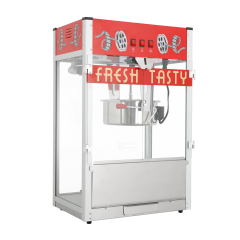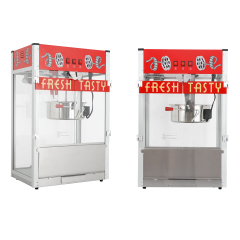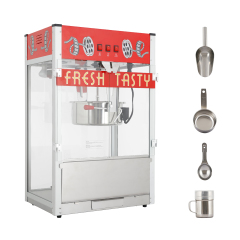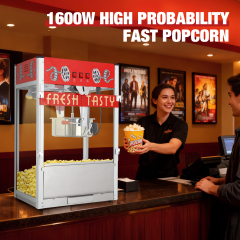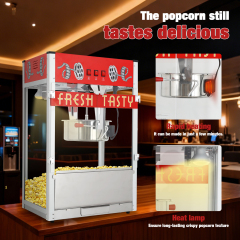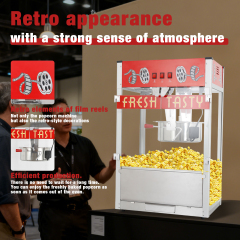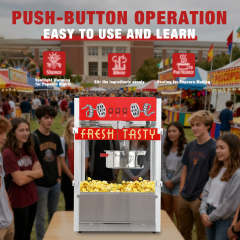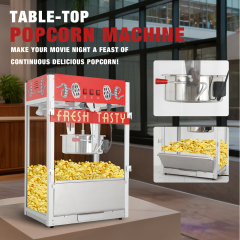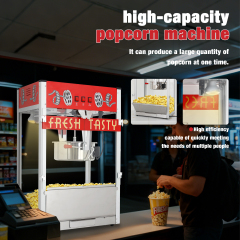
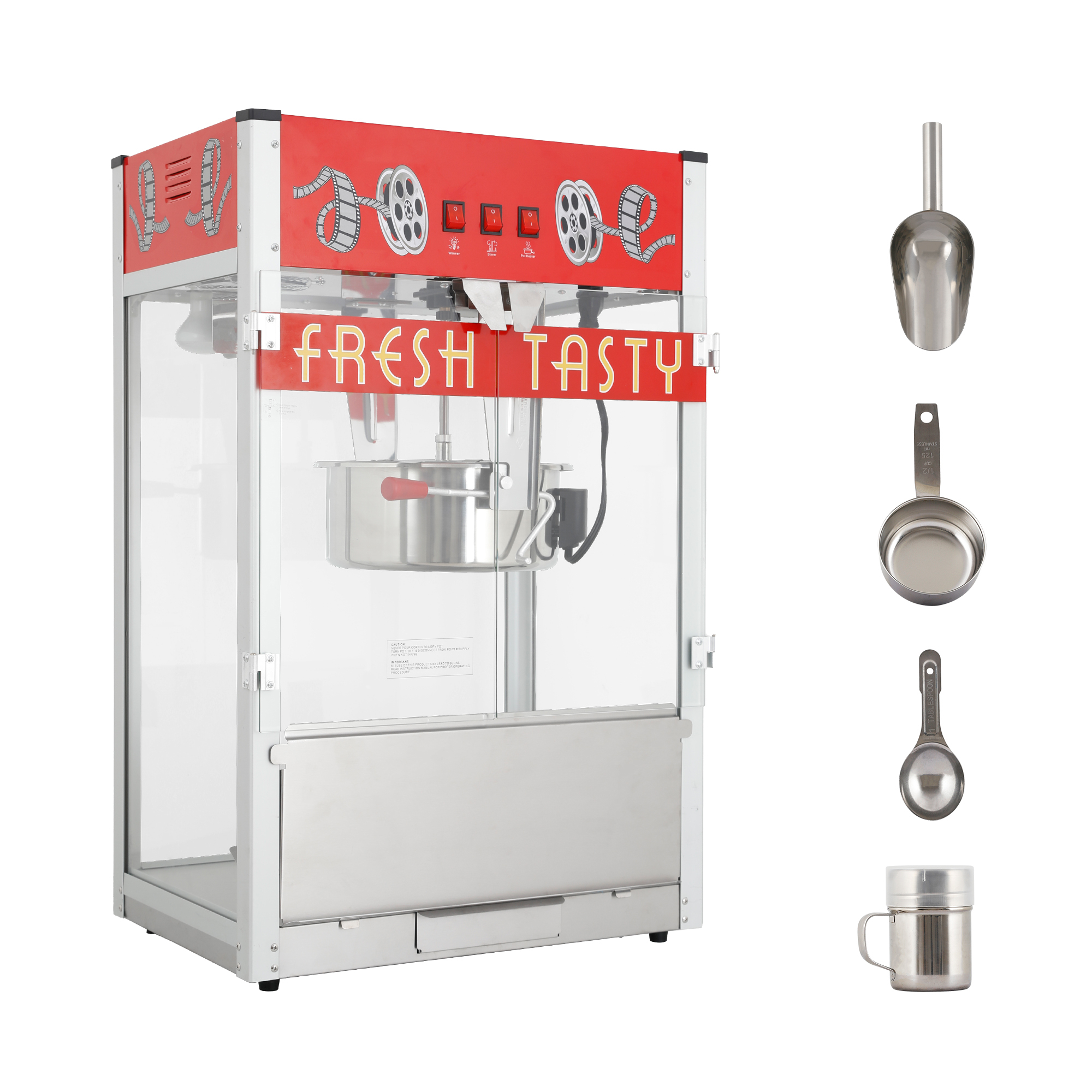
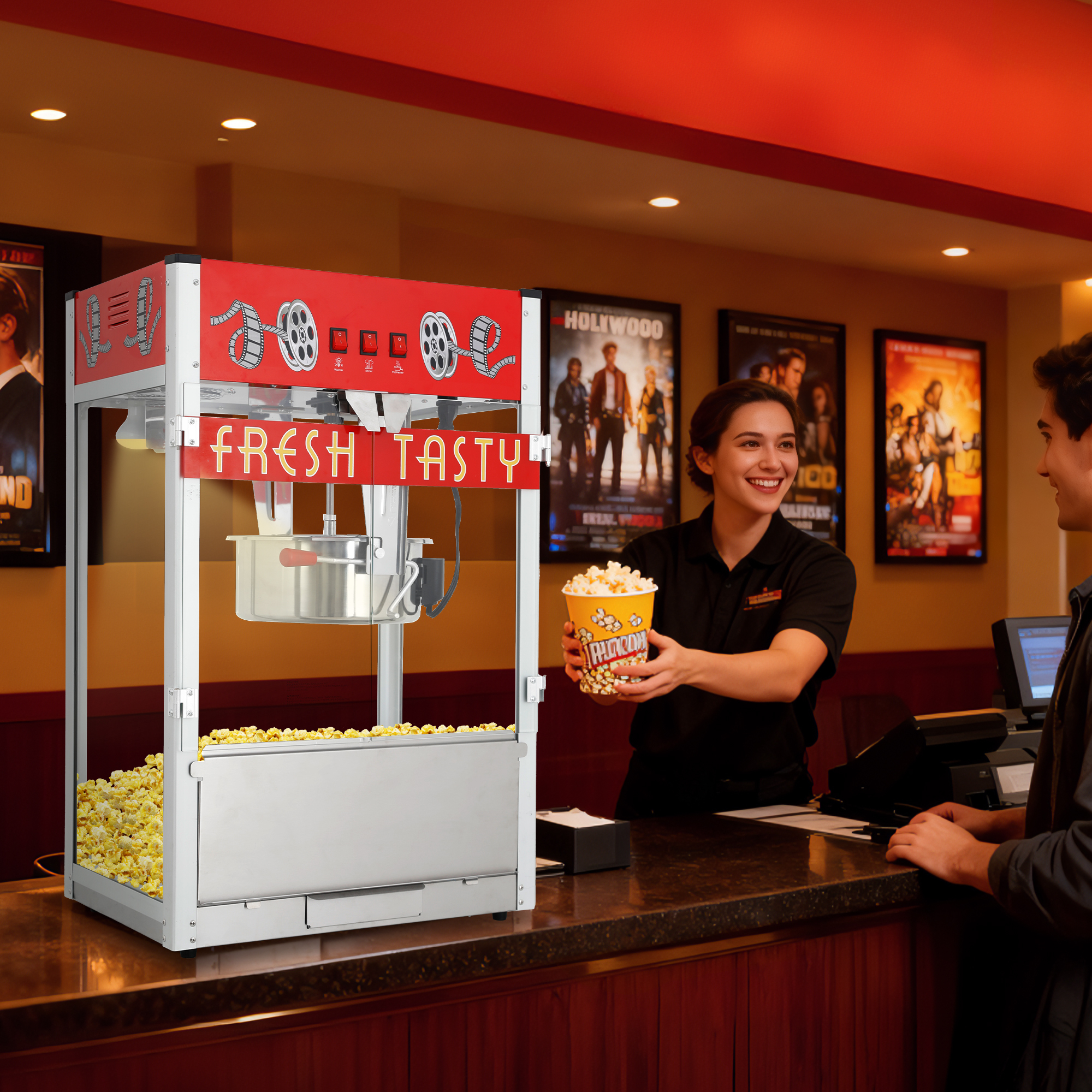
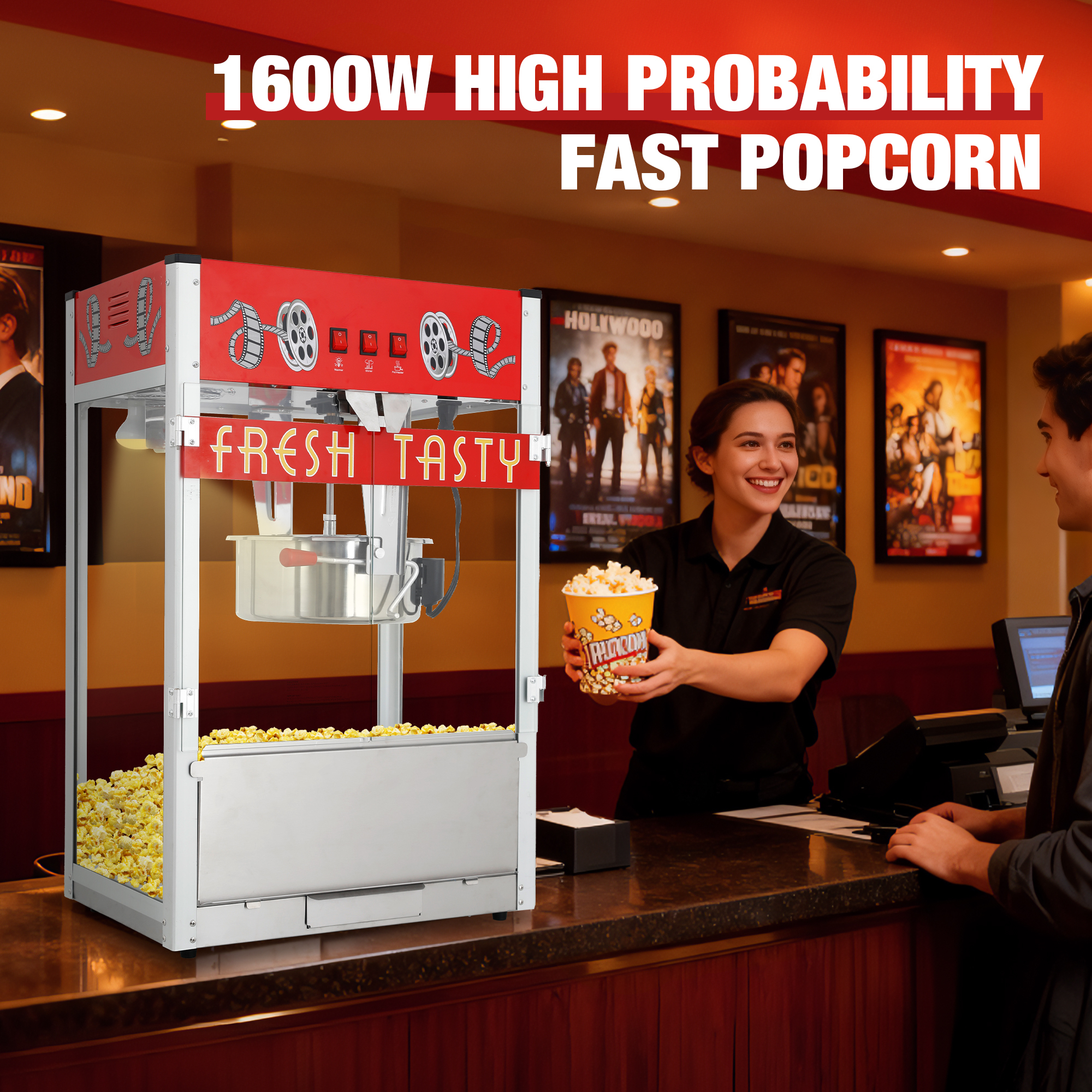
The XHP-1601 commercial popcorn machine offers a 30-ounce capacity with rapid 6-minute popping, engineered for efficiency and durability. Ideal for operators seeking a reliable popcorn machine company or popcorn machine supplier.
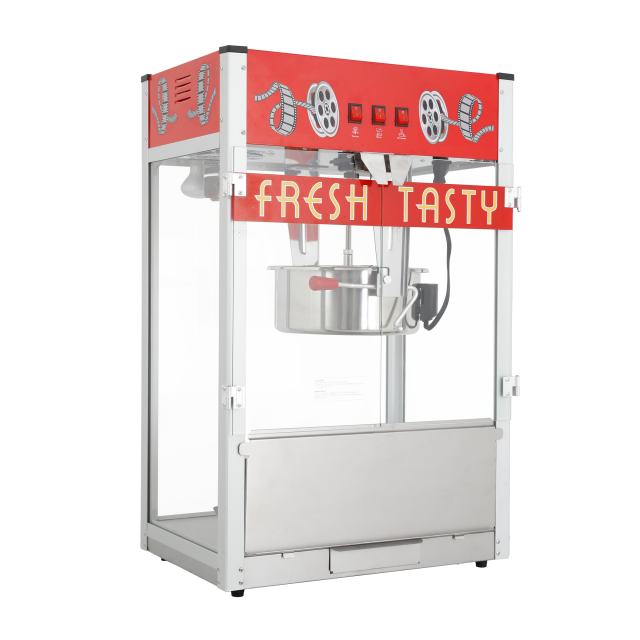
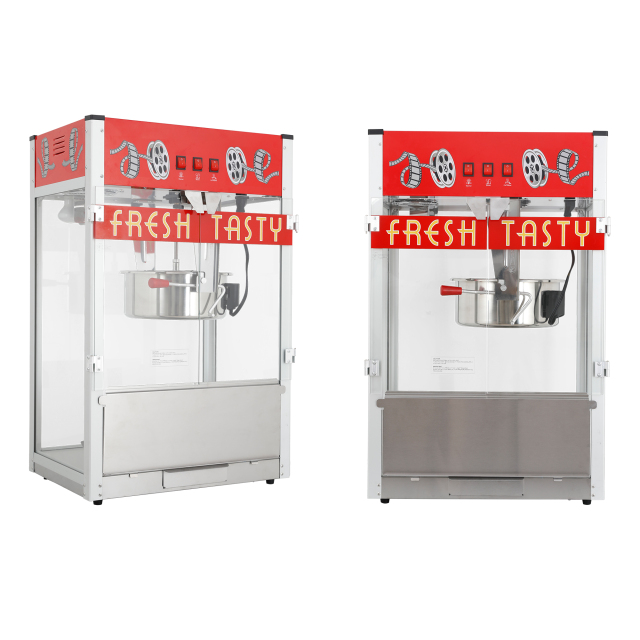
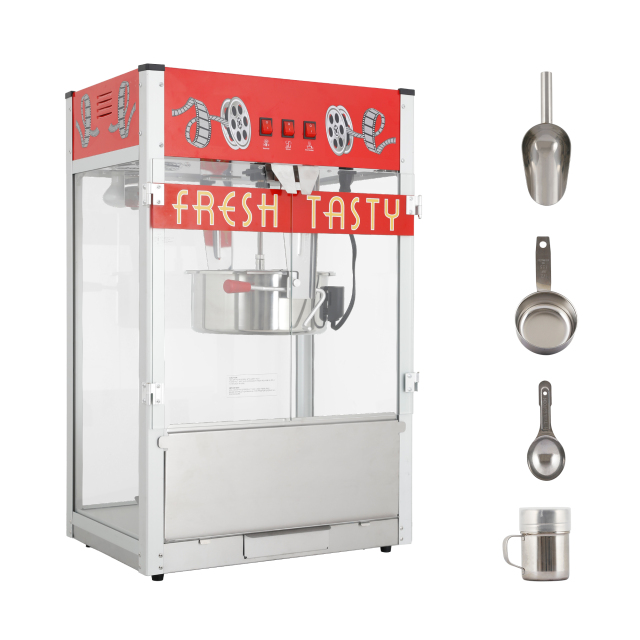
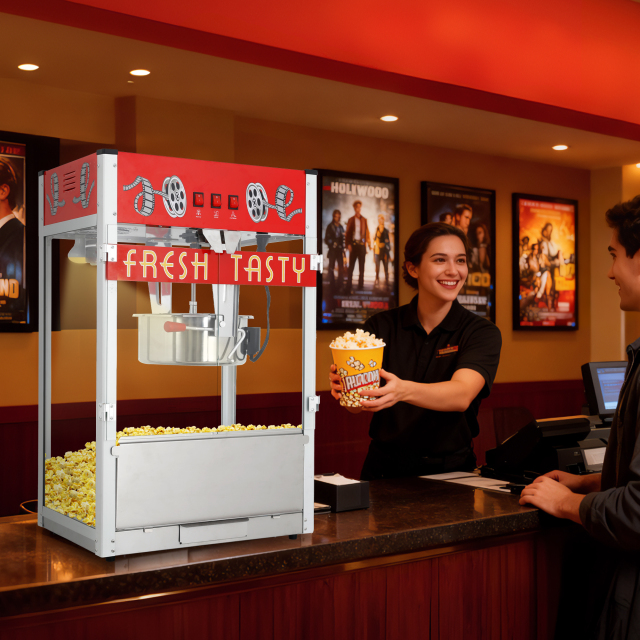
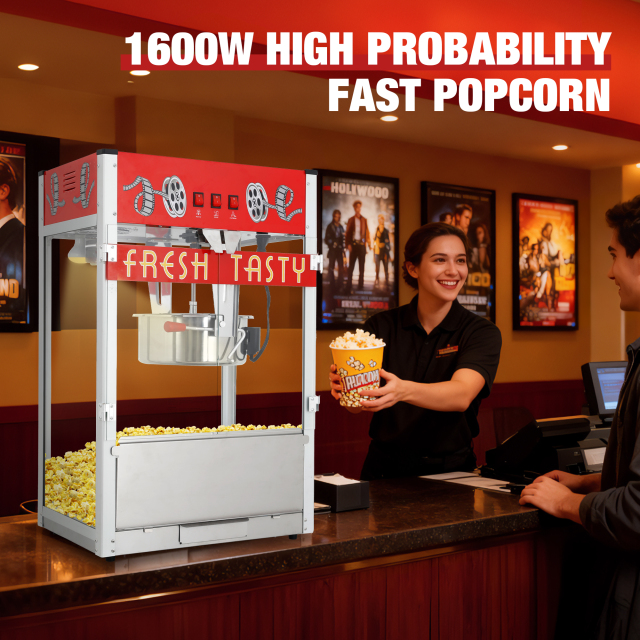
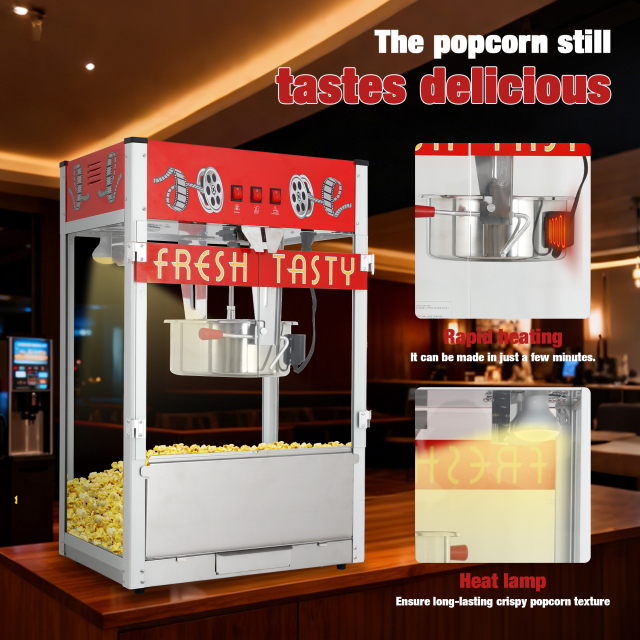
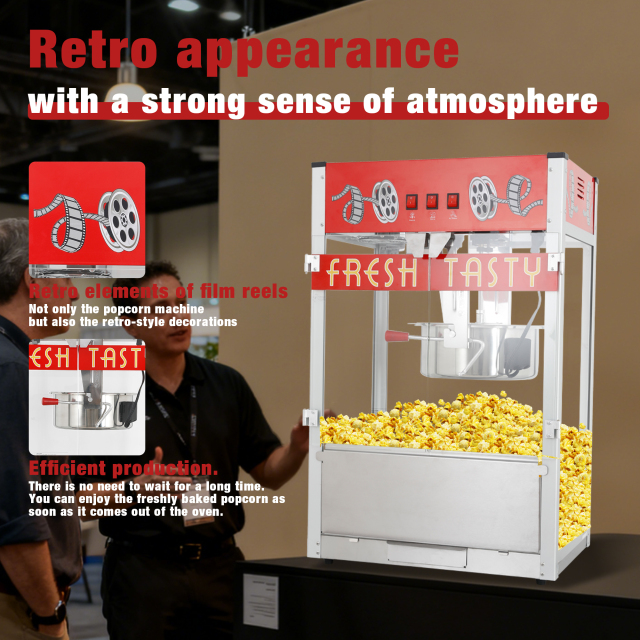
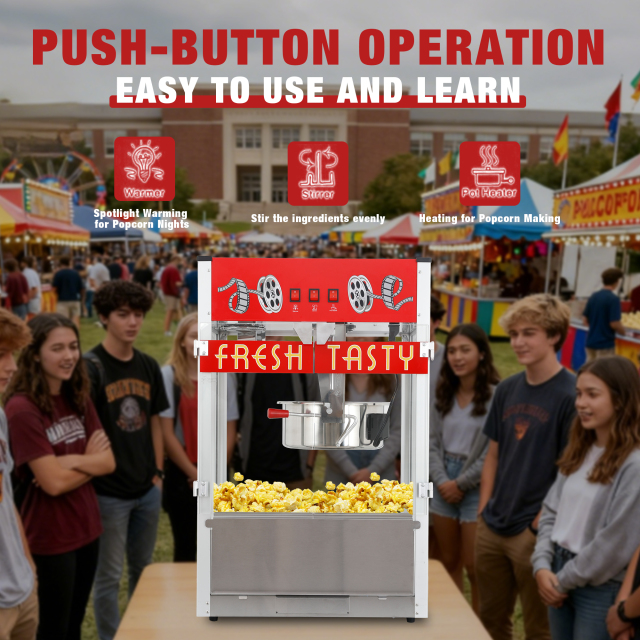
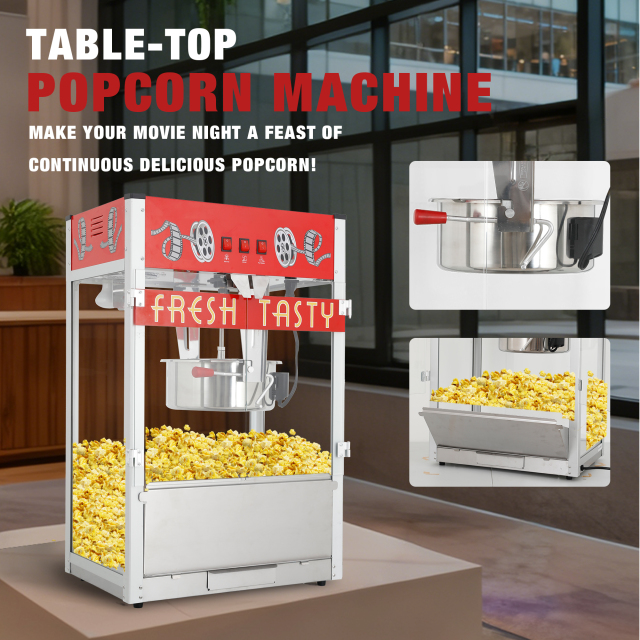
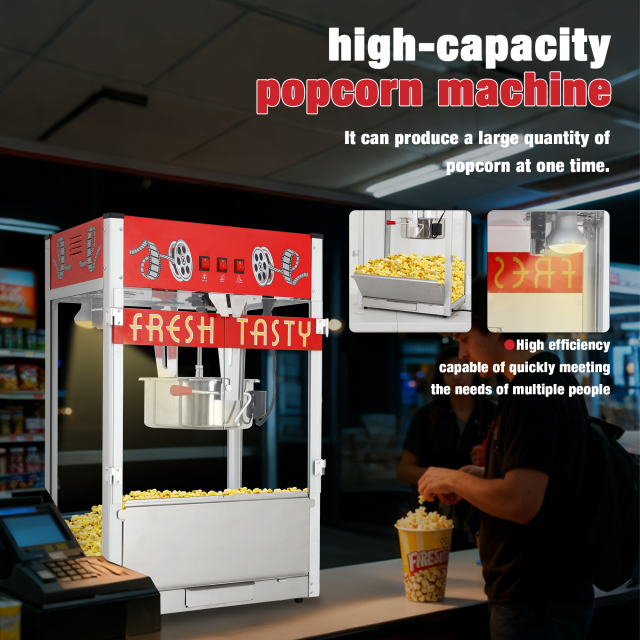
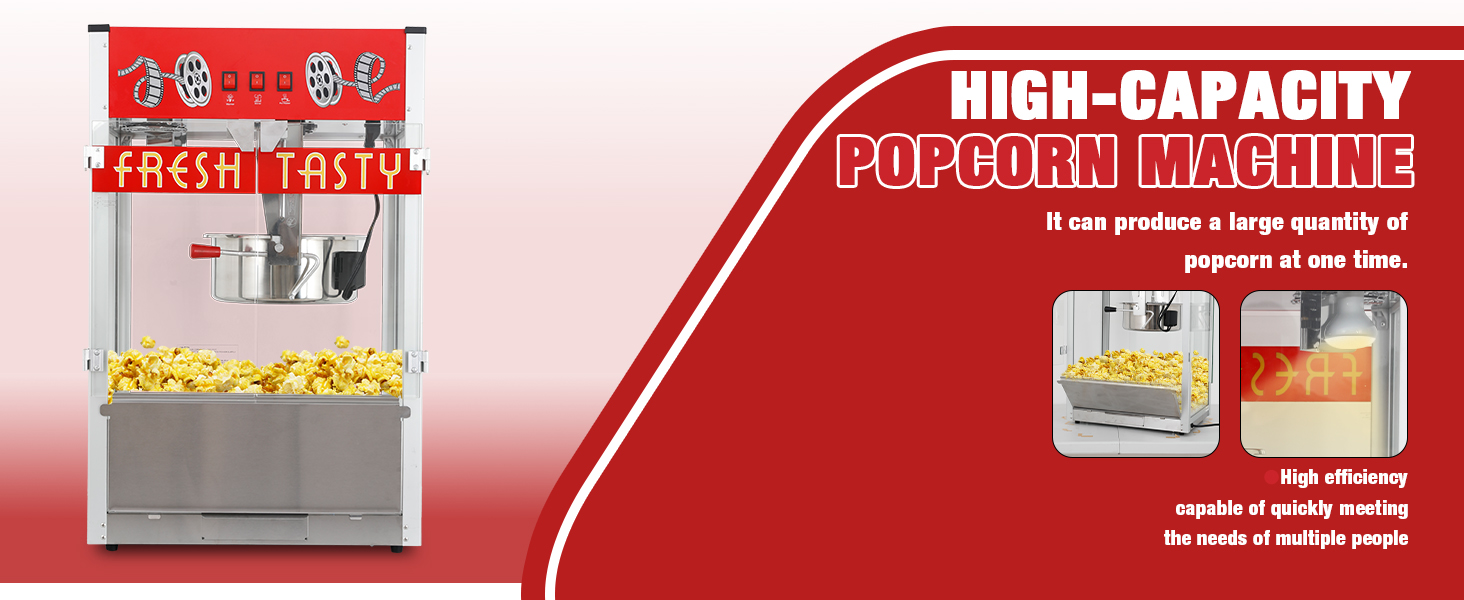
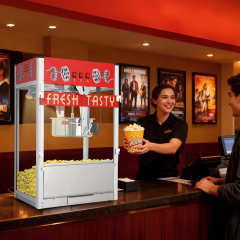
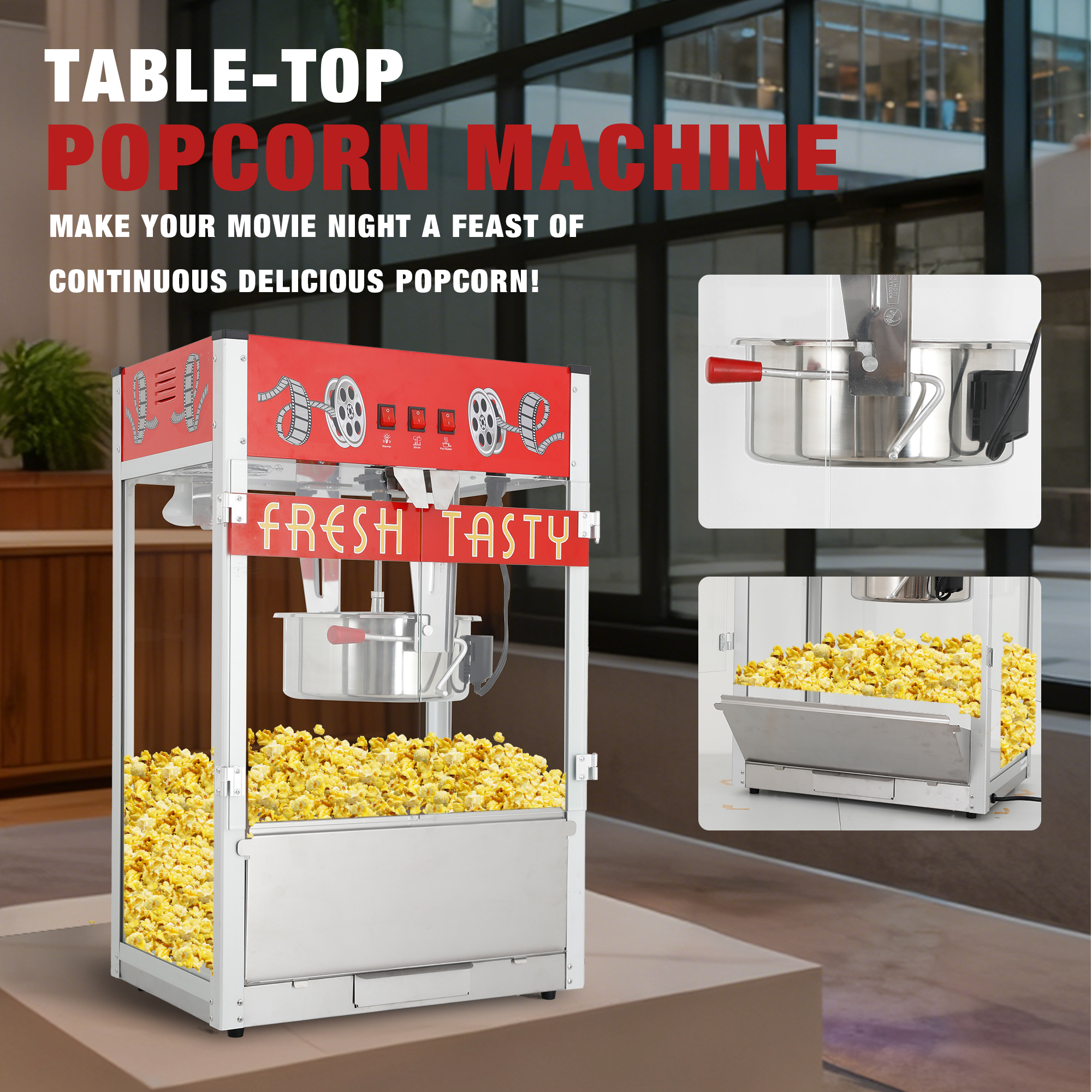
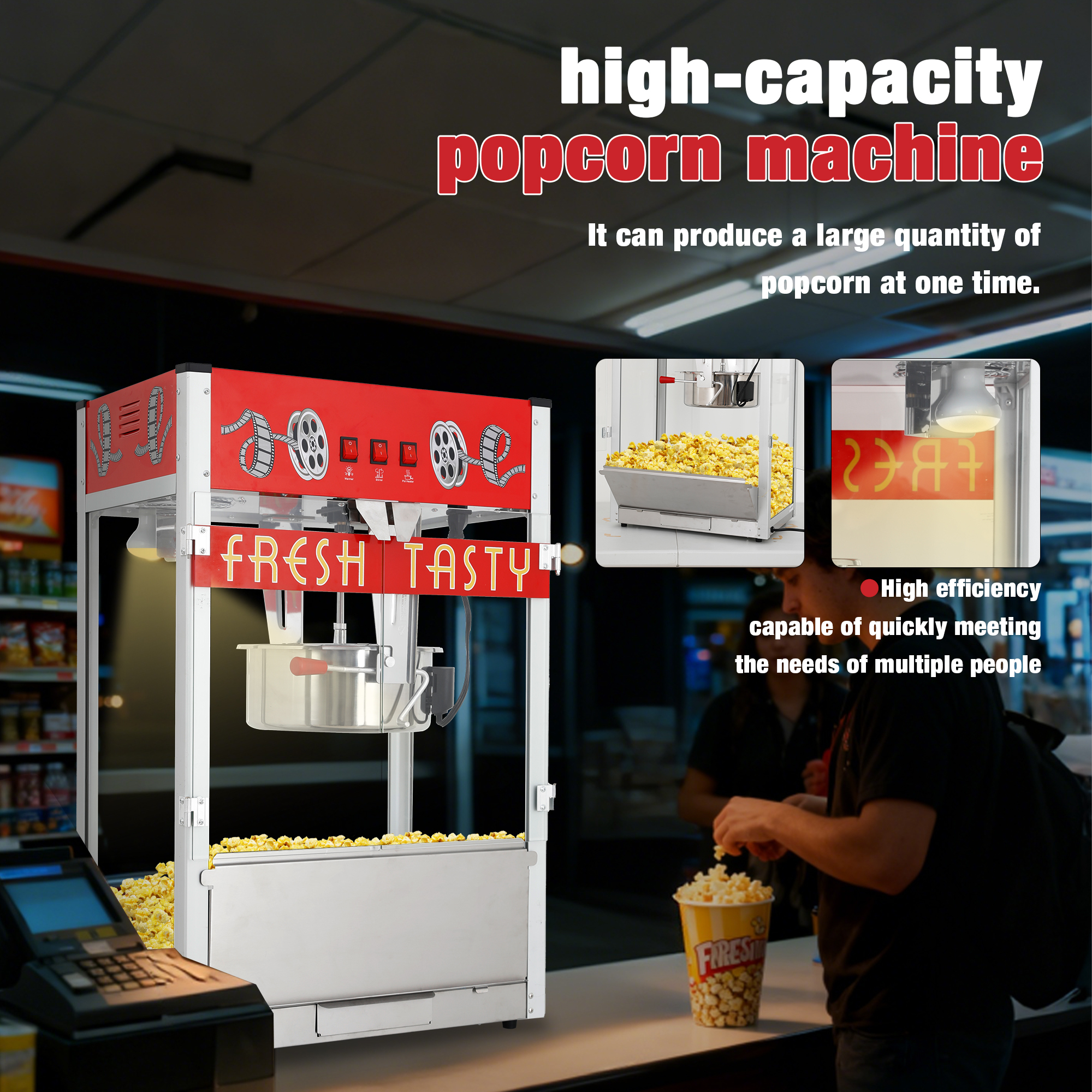
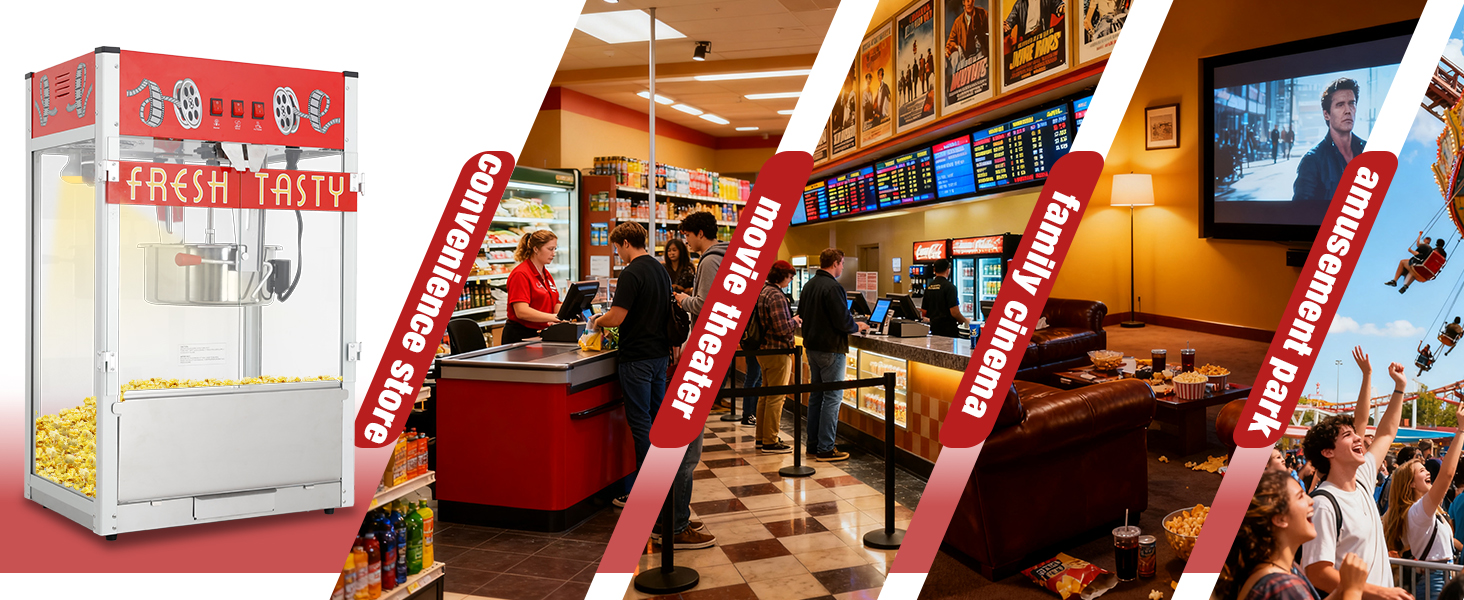
This is the counter-height model in our commercial popcorn range: one kettle under a clear chamber, a lit frontage, and a serving tray at the base. It sits in a practical middle — serious enough for a cinema lobby or a busy convenience counter, small enough to stand on a service counter instead of taking a floor footprint. As a popcorn machine company we sell most of these to operators where popcorn is a side of the trade rather than the whole of it, so the machine has to sell itself from the counter, start without a warm-up ritual, and be simple enough that whoever is on shift can run it.
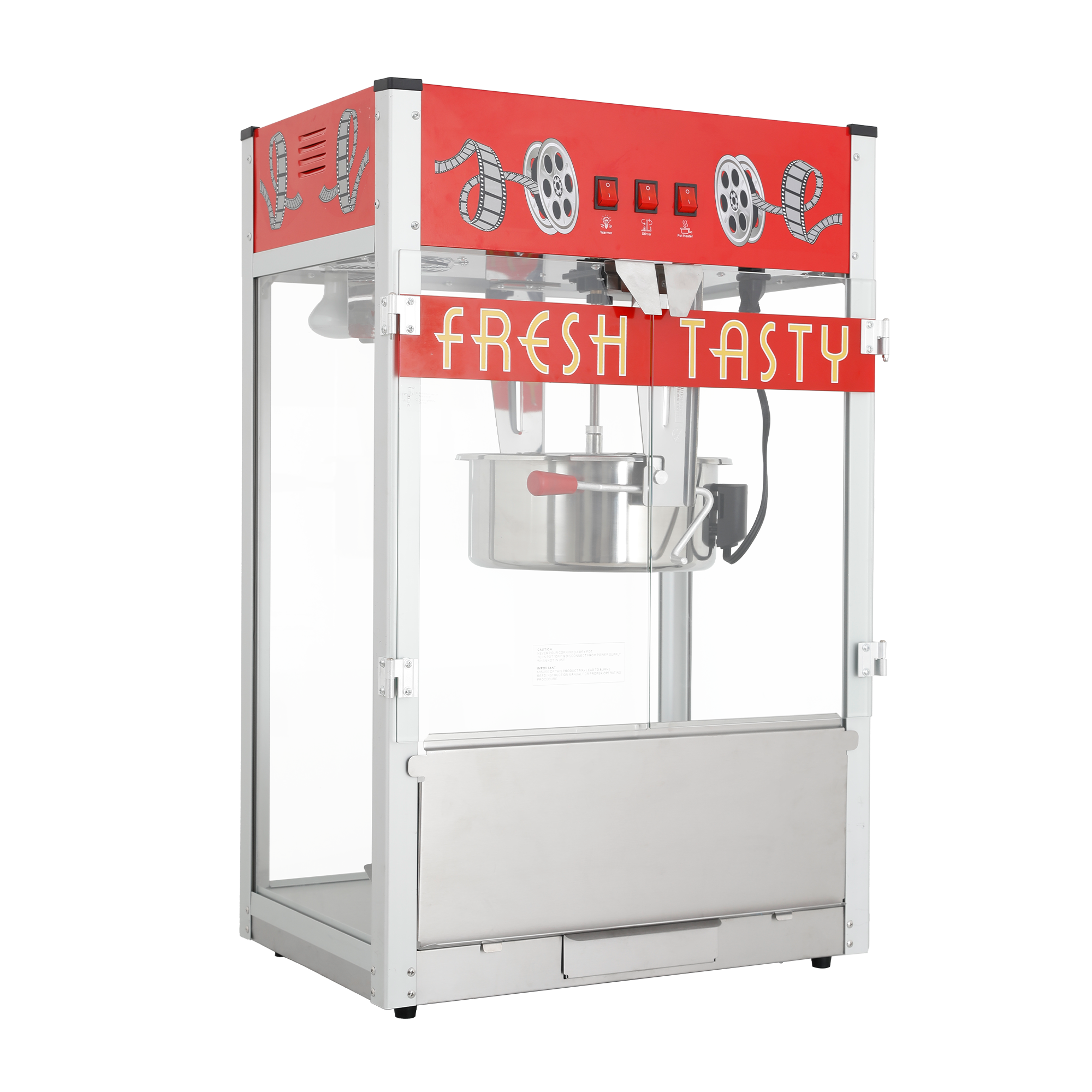
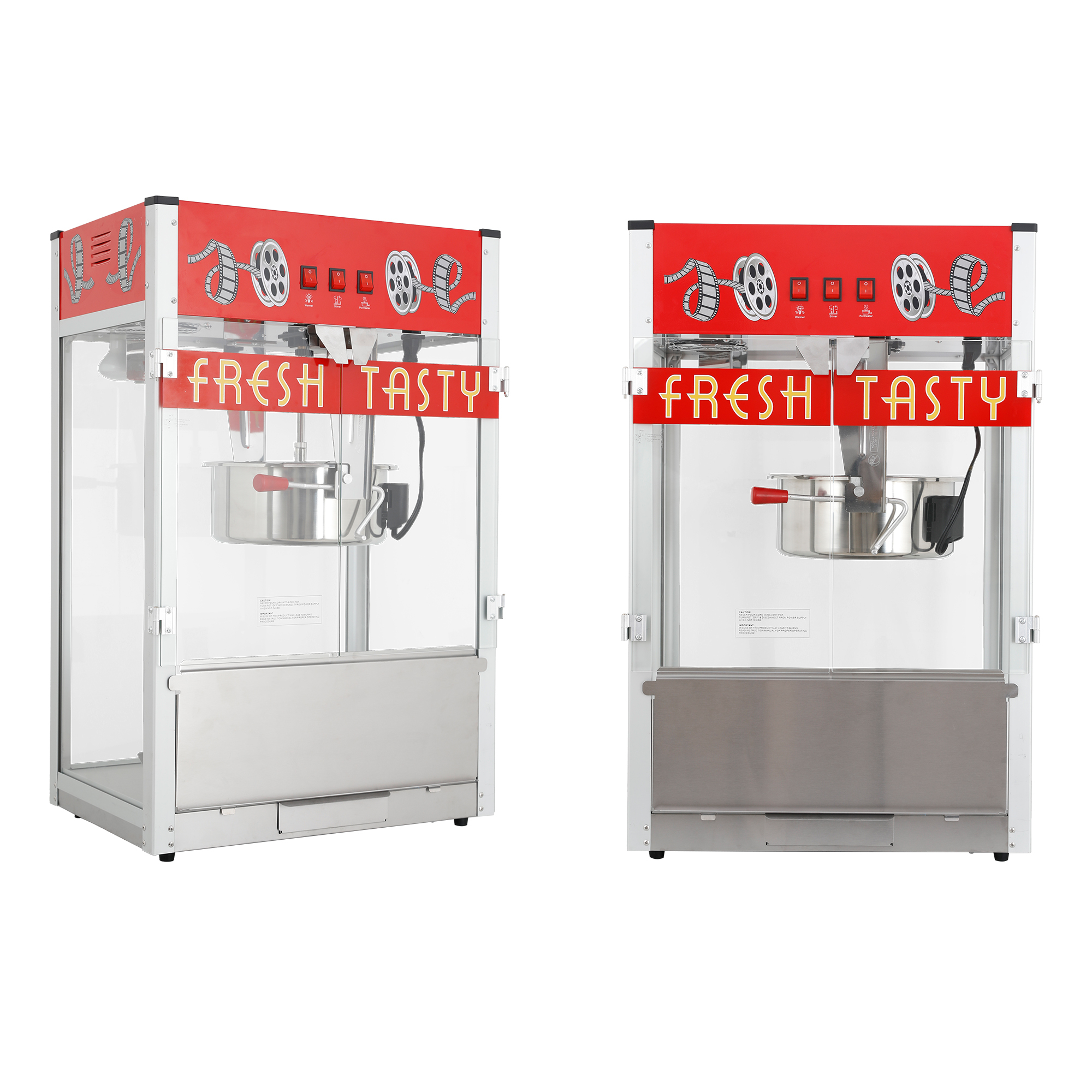
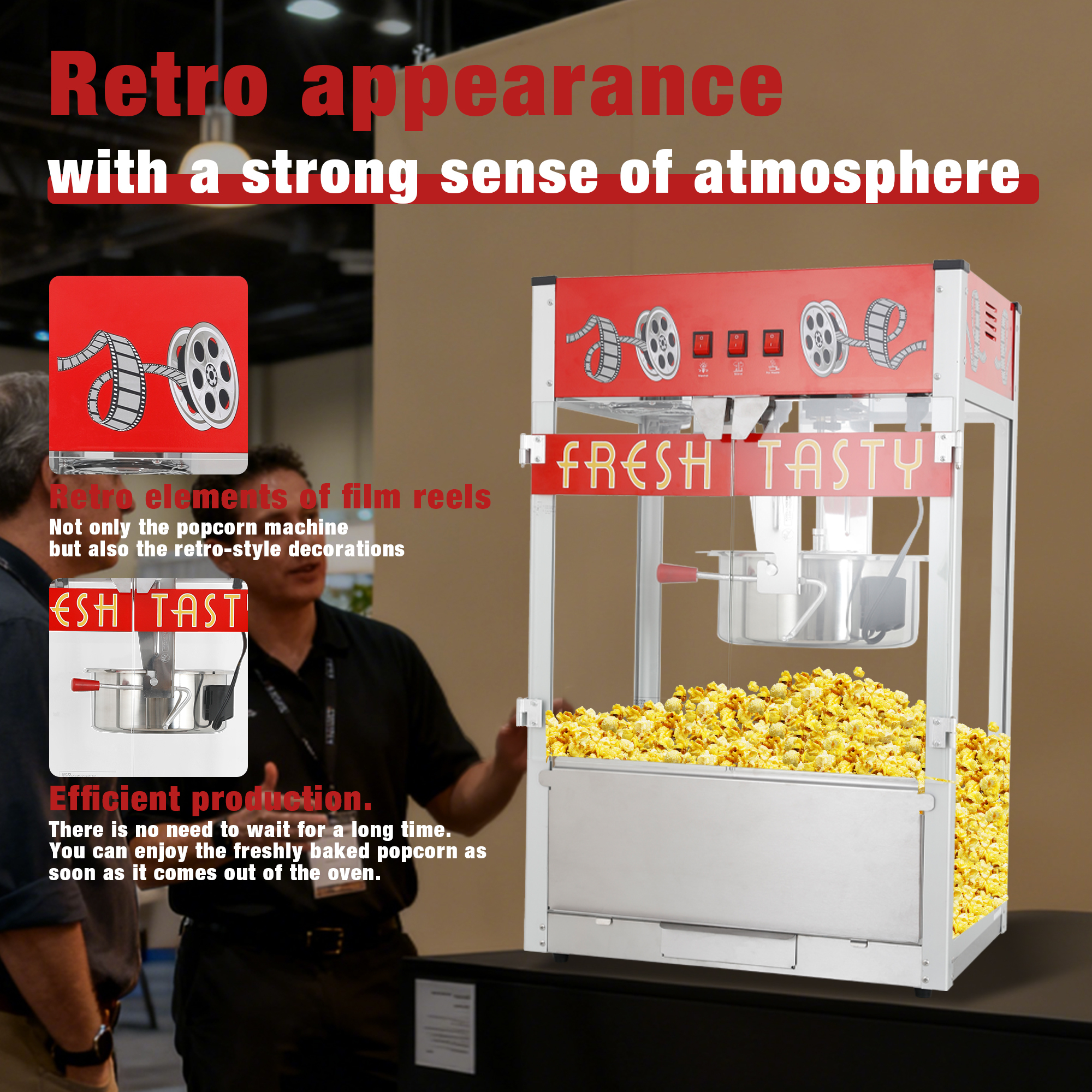
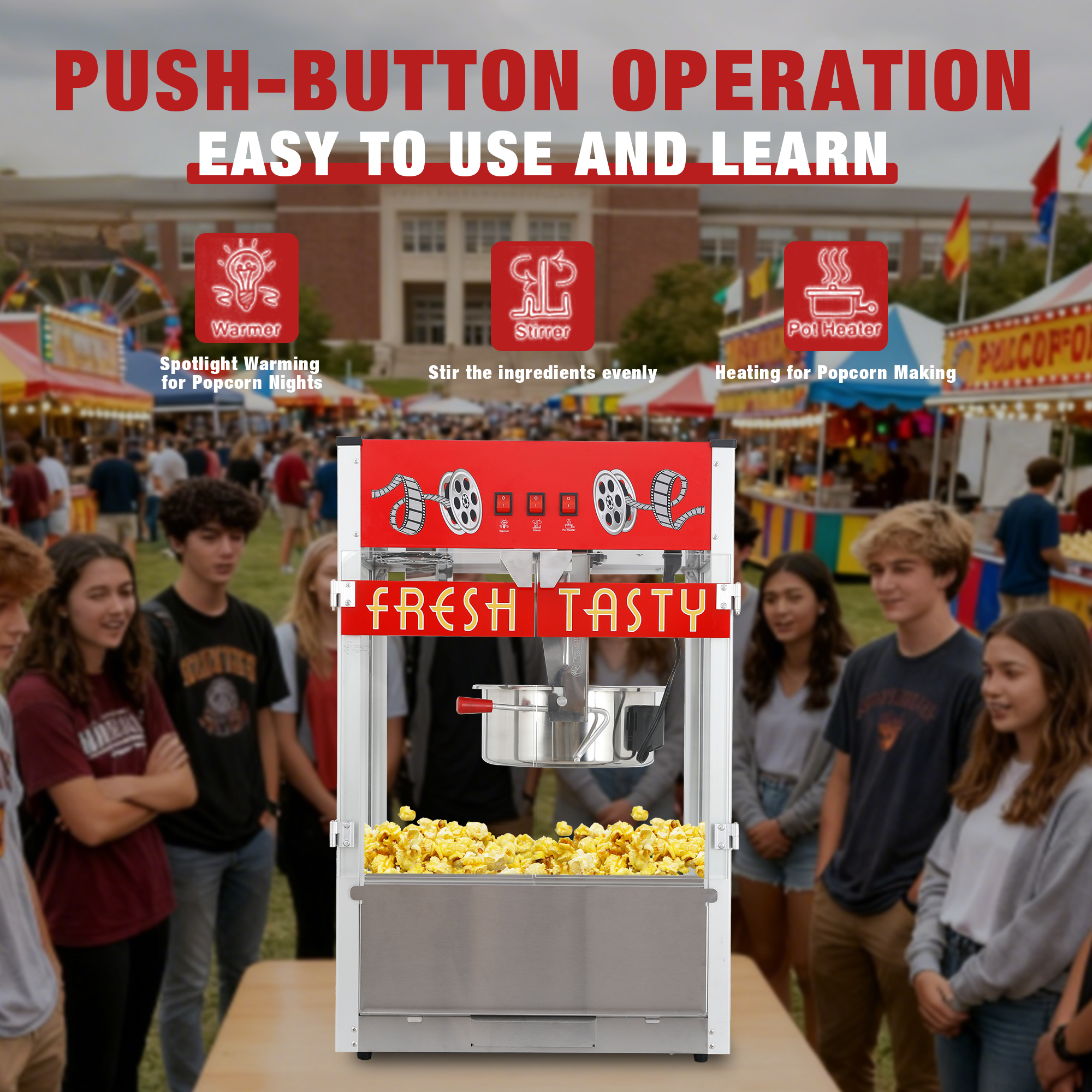
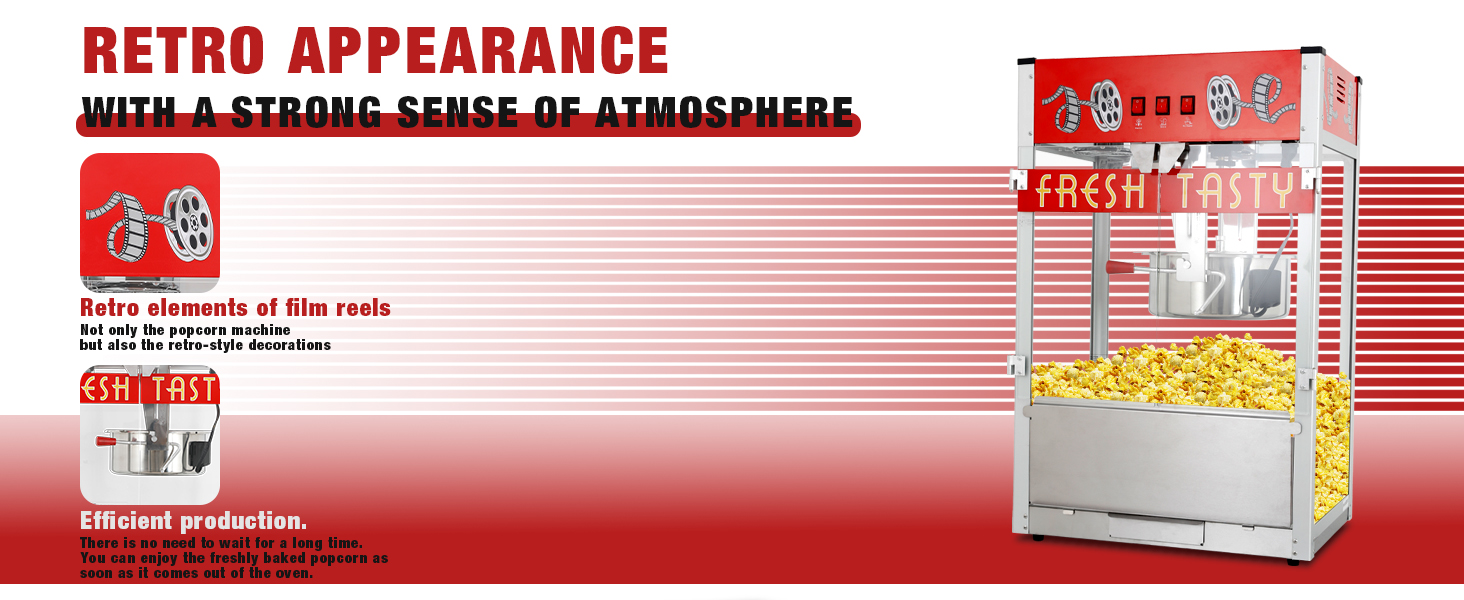
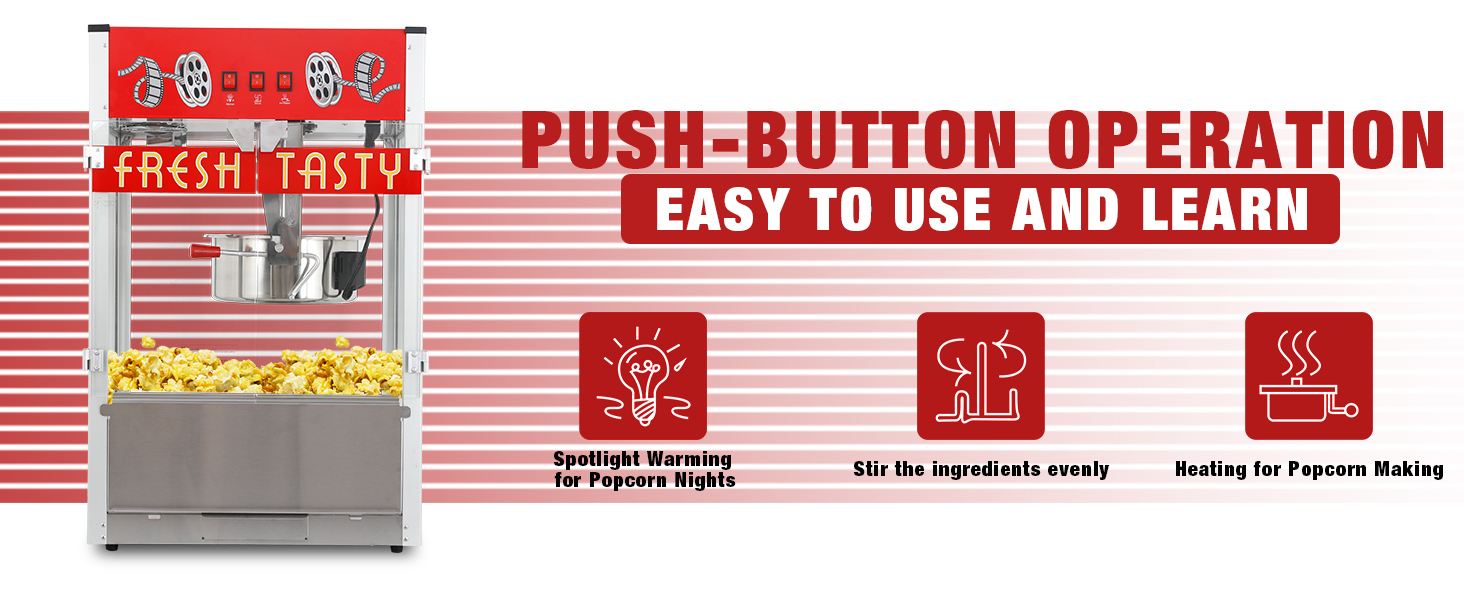
What it is not is a continuous production line. One kettle means batches run one after another, and the cycle time is the pace you plan the counter around: a foyer that needs an uninterrupted supply is better served by a larger model or a second machine, while a counter that serves in waves is exactly the shape this unit was built for. The frontage is deliberately retro — red panels, a brushed steel frame, film-reel graphics and a lit sign reading FRESH TASTY. It looks right on a cinema counter, and it is the same styling that turns up unchanged as a home theater popcorn machine in a converted basement or a family room.
| Model | XHP-1601 |
|---|---|
| Power | 1600 W |
| Voltage and frequency | AC 120 V, 60 Hz |
| Kettle | 30 oz, single kettle |
| Batch output | approximately 550 g per cycle |
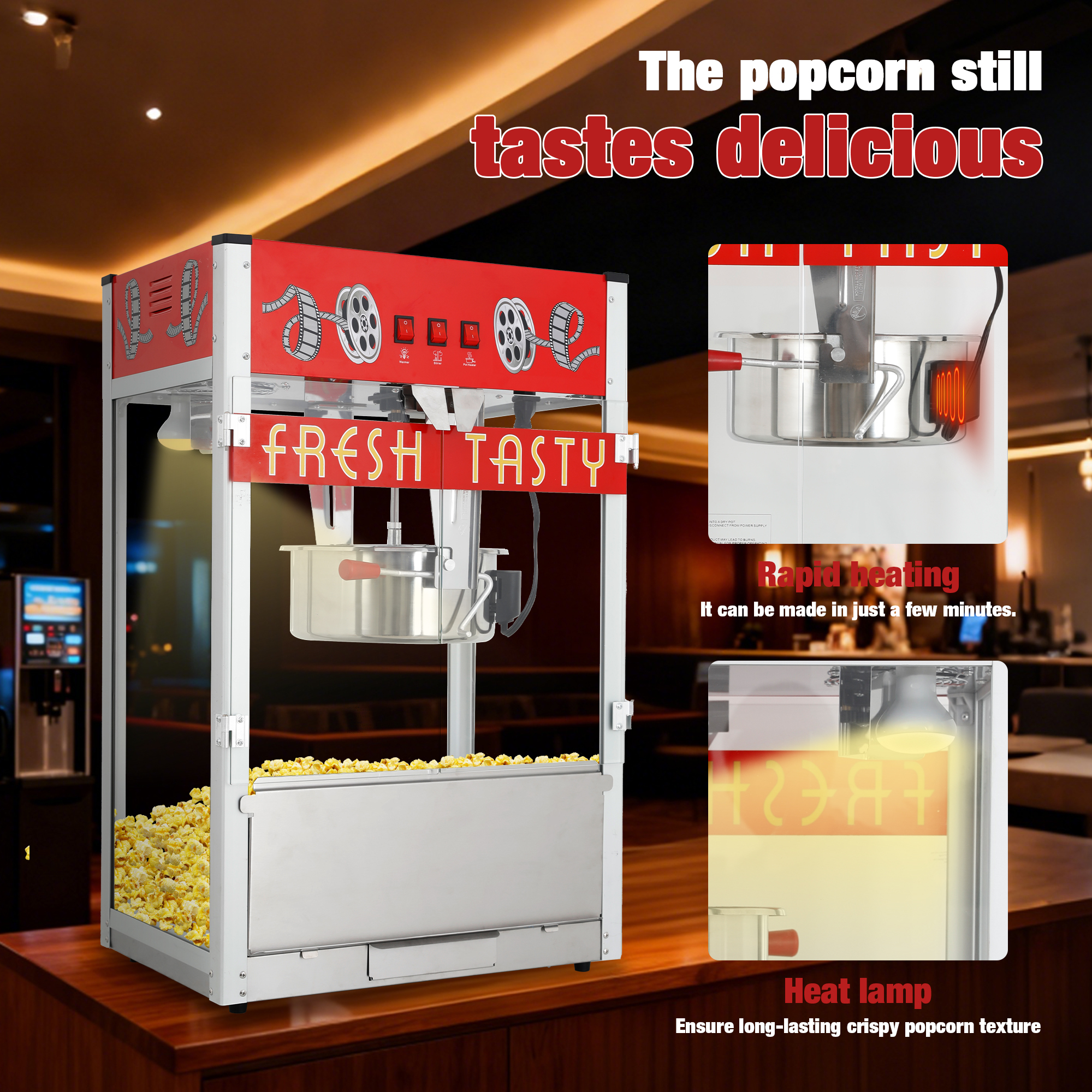
| Popping time | approximately 6 minutes |
| Heating method | heating tube |
| Body material | food-grade stainless steel |
| Controls | thermal protection and temperature control |
| Cleaning | removable pot and drip tray |
| Dimensions | 550 × 380 × 868 mm |
| Weight | 24.89 kg |
The food-contact parts — the kettle, the chamber the popcorn drops through, and the tray it lands in — are food-grade stainless steel. That matters more here than in most kitchen equipment, because those surfaces live in hot oil and salt all day: stainless does not pit, does not carry the smell of yesterday's batch into today's, and wipes back to bare metal at the end of a shift. When buyers compare popcorn machine manufacturers, this is the first thing they check, and it is the first thing we would point to on this machine.
Around that core sits a painted steel cabinet with a brushed frame and clear panels on the front and sides. The panels do two jobs at once — staff can see how a batch is filling without opening anything, and the holding area stays closed against dust between serves. The red panels are a working finish rather than a showroom one: they are meant to be looked at from the customer side of the counter every day, and they hold their colour through a wipe-down at close.
The kettle and the drip tray are separate pieces rather than welded into the body. That is deliberate: the two parts that collect oil, salt and crumbs are the two parts you can carry to a sink, and the cabinet behind them stays dry. The same food-grade standard runs through the range, down to the small popcorn machine builds we ship for countertops, so what separates the models is capacity and controls — not the material the food touches. A cabinet that still looks presentable after two or three seasons is a different purchase from one that rusts at the seams, and that is really the only long-term thing worth judging from a sample.
| Element | Detail |
| Cabinet front | your logo or trading name, placed from print-ready artwork |
| Panel colour | an alternative colour confirmed at quotation |
| Control side | your own label plate if the controls should carry the brand too |
| Electrical build | AC 120 V, 60 Hz as standard; other voltages confirmed with your sales contact before the build |
| Approval | a placement drawing is issued for sign-off before production starts |
| Working core | kettle, heating tube, stirrer and safety controls stay as specified |
| Programme | private-label runs, where a popcorn machine company supplies the same engineering under more than one brand |
MEPK has manufactured popcorn machines since 2005 and runs two factories of our own: a 60,000 m² plant in Zhejiang and a 20,000 m² plant in Thailand, together around 80,000 m², with more than 100 people on the team. The Thailand site works under a five-year tariff exemption, which keeps unit costs down and keeps supply steady when order volumes rise. We hold US and EU certification, release three to five new models each quarter, and take OEM and custom orders from 100 pieces, with product visuals and installation videos supplied for launch.
The kettle, the inner chamber and the drop tray are food-grade stainless steel. The cabinet around them is painted steel with a brushed frame and clear panels on the front and sides. Stainless is used exactly where hot oil and salt sit, because those are the surfaces that have to survive a daily wipe-down without pitting or holding flavour from one batch into the next. It is the same food-grade standard across the range, and the part of the build popcorn machine manufacturers are most often asked to document.
Yes, and it is a normal way for us to sell rather than a favour at the end of a quotation. Send print-ready artwork, tell us which face of the cabinet it belongs on, and add the voltage and plug type if you sell outside North America; we come back with a placement drawing for approval before anything is built. As a popcorn machine company we run private-label work regularly, and the parts that decide how the machine pops — kettle, heating tube, stirrer and safety controls — do not change with the branding.
Two things, and both are quick. The daily part is the pot and the drip tray: lift them out, wash and dry them fully, then wipe the chamber and panels before you close up. The part that protects the machine is the timing check — the kettle should come up to temperature in about the same time every day, and a batch that suddenly takes longer is the earliest sign the element or the controls need a look. A routine check sheet goes out with the machine and we can walk your staff through it. Operators who keep to that routine get years out of popcorn machines that would otherwise be replaced early.
A 30 oz kettle produces roughly 550 g of popcorn per cycle, and a cycle takes about six minutes. In practice that is one full serving tray, with the next batch ready while the first is being sold — which is the step up from a mini popcorn machine, where a batch is a bowl rather than a tray.
AC 120 V, 60 Hz, which is the ordinary commercial supply in North America — no gas line, no extraction hood and no special wiring. Give the machine its own outlet rather than sharing a strip with a fridge or a coffee machine, because the element draws hard for six minutes at a time, and a dedicated circuit is far cheaper to arrange before the counter is built than after.
Yes, and a fair number of buyers do exactly that. The machine is built for commercial counters, but the size works in a large family room or a converted basement, and the retro frontage is half the appeal of a home theater popcorn machine in the first place. Be realistic about the space: it wants a proper counter and its own outlet rather than a spot on a kitchen island. If you only pop for two or three people, the smaller formats in the range are the simpler buy; this one is sized for a room full of guests.